7 gardener habits that make our garden
Over the years I’ve noticed there are some habits I have as a gardener that I credit with both a productive garden and also feeling much more relaxed about the whole thing. I’m not sure I would suggest others follow my lead as I’m also chaos but I thought I’d share these habits in case anyone relates or they help you feel more chill about your outdoor space.
1) Prioritise growing more plants
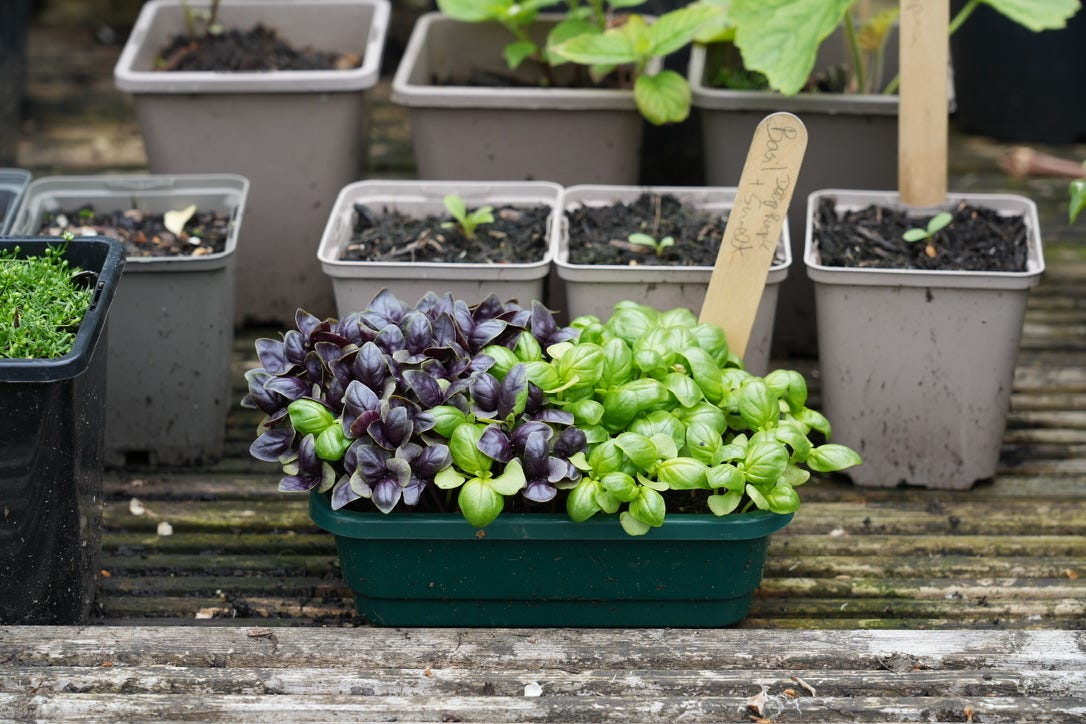
One thing I do recommend to all gardeners: keep growing. Keep sowing seeds, keep taking cuttings, keep dividing plants. Enjoying these processes, they form the engine room of garden success.
My primary focus in our garden has always been to grow new plants above anything else. By prioritising plants I have a constant supply of low-cost or free plants. This means I worry much less about everything else.
I absolutely never prioritise weeding, tidying or other admin over growing new plants. I do these activities but they come last. This is because there is no point weeding an area if you don’t have another plant to fill the gap, everything will just regrow.
Growing new plants all the time also keeps me moving - with a table of plant babies I’ve cared for, eventually they need planting out. That spurs me on to tasks like planting into our garden’s ornamental plant community, or to finally clear a veg bed to plant out the lettuce.
2) Don’t worry about plant losses
Sure, I have a few plants I am more attached to than others but a plant loss is an opportunity to grow something new. In our main garden I planned for a whole bunch of plants that either flowered one year and then vanished, or simply haven’t grown as expected.
I really want Verbascum thapsis everywhere, but whatyagonnado? Our ground is too rich and the planting too dense. I’d have to constantly weed areas and plant them every year to have them. I ain’t got time for that. Instead, I’m leaning into other plants that grow here without my mollycoddling.
If a shrub or tree dies, I’ll plant another. As my friend and expert gardener Stephen Barney once said “we’re gardening, not keeping plants on life support.” Lean into what works.
3) Try at least three times
Gardens are alive. They do what they want. When a plant we try dies, it may be our fault, it may also be something else we had no control over. I will always give a plant at least two to three chances.
I tried growing Penstemon ‘Andenken an Friedrich Hahn’ three times here in Yorkshire, it only survived winter once. I know it definitely isn’t me, it just isn’t hardy enough to bother growing next door to Wuthering Heights. Instead I am growing hardier species because, although I love growing new plants, I am not into plants that act annually adding needlessly to my workload. There are thousands of alternatives.
I’ve also had other plants that haven’t taken at first. I try again and they thrive - always try at least two or three times. Sometimes batches of seed don’t work for whatever reason, always sow again as you never know.
4) Plan ahead
Never do I stand and stare at our garden and think ‘ah that looks lovely, it’s finished.’ No sooner is an area flowering, I’m staring at it planning for next year. Constantly. It doesn’t mean I don’t appreciate the moment too, we can do both.
5) Document everything
Or at least, as much as I can. I’d forgotten I drew the above sketch in the year we moved in before I planted the garden and reduced that left hand hedge.
I constantly take photos of our garden, keep spreadsheets of everything I grow and write about what’s happening. You are actually reading my garden diary right now, I just happen to publish it on the Wild Way and in books and magazines.
Not everyone is as much of a note taking loser as me but at least taking photos and keeping a note of cultivar names is helpful. It’s almost impossible to remember everything, so when it comes to planning, it’s essential to have something to look back on. A photo of summer can inform what new colours to order in winter.
Exact plant names are really important to know how big they will grow and for longterm care.
6) Obsession
I walk around and look at our garden at every opportunity I get. Yes I am obsessed with our garden because I love it. I wouldn’t ever suggest everyone is obsessive as I am but a dash of obsession certainly helps.
Being out there, seeing stuff, makes me do stuff too. I actually spend about 90% of time just looking, and then I act on the important bits that need something - a new plant, a mow, a snip back, whatever. Regularly being out in your garden is key really, and that happens to also be as beneficial for us.
7) Deprioritise boring crap
Weeding out the dandelions leading up to our front door would take me over an hour - why bother? That’s an hour lost on growing vegetables or enhancing an important plant community elsewhere with more biodiversity for wildlife.
I’m being facetious with a point. I actually do like a tidy path or patio juxtaposed with a complex plant community. Most of my designs are actually like that. If I had the time I would point some areas of our front patio, while leaving some for plants.
However, there is a pressure from society to make our gardens just so. Why? Our gardens are our art, they represent us, they should look how we want. I rejoice in the individuality of gardens, people worry when I visit gardens but they don’t need to. If they are happy I am flipping delighted! I love the stories.
As long as they don’t use pesticides or peat, I adore gardens being how people truly want them to be. That could be formal or wild. Reject societal notions of perfection in gardens or any idea that gardens should be a particular way.
Our garden has a 350 year old farmhouse next to moors and grassland that would have had wildflowers up to the front door. I’m able to just about grow lots of vegetables, look after the hedges for birds, meadow, coppice and everything else by not prioritising less important things like weeding the cracks in paving. Though I’ll do it when I have a spare hour, one day.


i enjoyed this. Sorry not to upgrade but at 85 I'm on a budget. I hope you don't mind me tagging along. I can't grow veg because the bottom of my garden is a flood meadow and above that it's too steep .It's heavy clay so is hard to dig. I revel in my flowers which include lots of local wild plants, especially along the edge of the brook. I don't believe there is such a thing as a weed although I do remove plants that become invasive and threaten to swamp other more desirable species - hence my ongoing battle is with Goosegrass and Himalayan Balsam. Nettles are removed because they sting and there's a big patch across the brook so butterflies lay their eggs there. I love Thistles and so do the goldfinches. The flood brings in nutrients and seeds 3-4 times a year so it's an ever-changing situation which I love - so do the birds and even an occasional otter. Lucky me!
That is a beee-yoo-tiful crop of dandelions. I love them. I let them grow in the cracks between setts in my old stable yard. I don't have horses, so after two years in this house I stopped weeding and power-washing because 1) it disturbed the ants and earthworms and woodlice and 2) I love most of the 'weeds' anyway. Dandelions make me smile and I like them so much I've designed ones out of crepe paper and wire to keep in my house. (This was accomplished by pulling apart real dandelions and sketching them...now who's an obsessive note-taking loser?)