

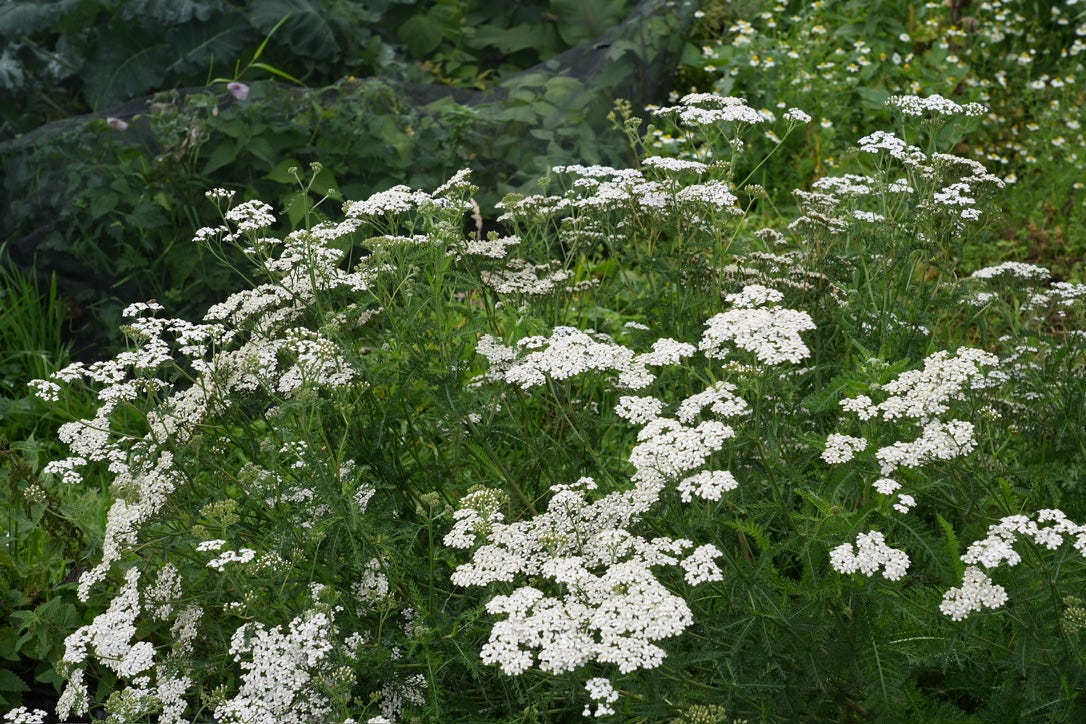
This common dumpy umbel is often overlooked - including by me - for the airy fairy carrot family but it’s beautiful in its own right and adored by pollinators. What I love is its long season of flowers, extreme drought and wet tolerance, and strong horizontal line.
Need to know about yarrow

Achillea millefolium evolved across the whole of the northern hemisphere except North America and Canada. Quite a remarkable range and speaks to yarrow’s excellent adaptability.
During drought in the UK, yarrow is one of the few plants that remains green when all grass in meadows has turned brown. And yet, on our heavy clay-loam soil during our super wet winters in West Yorkshire, it toughs it out too. This proves that while many gardeners are championing exotic plants to cope with climate change, we should really first be looking to tolerances in our existing wild plants. I believe there is room and a need for both, but to dismiss wild plants so readily is a mistake.
Yarrow needs full sun, it doesn’t tolerate shade. Shade from other plants will make it weak, causing it to disappear among larger plants. It will spread by seed and rhizomes, the underground stems that grow new roots and shoots about 20 - 30cm from the parent plant.
Is yarrow good for wildlife?
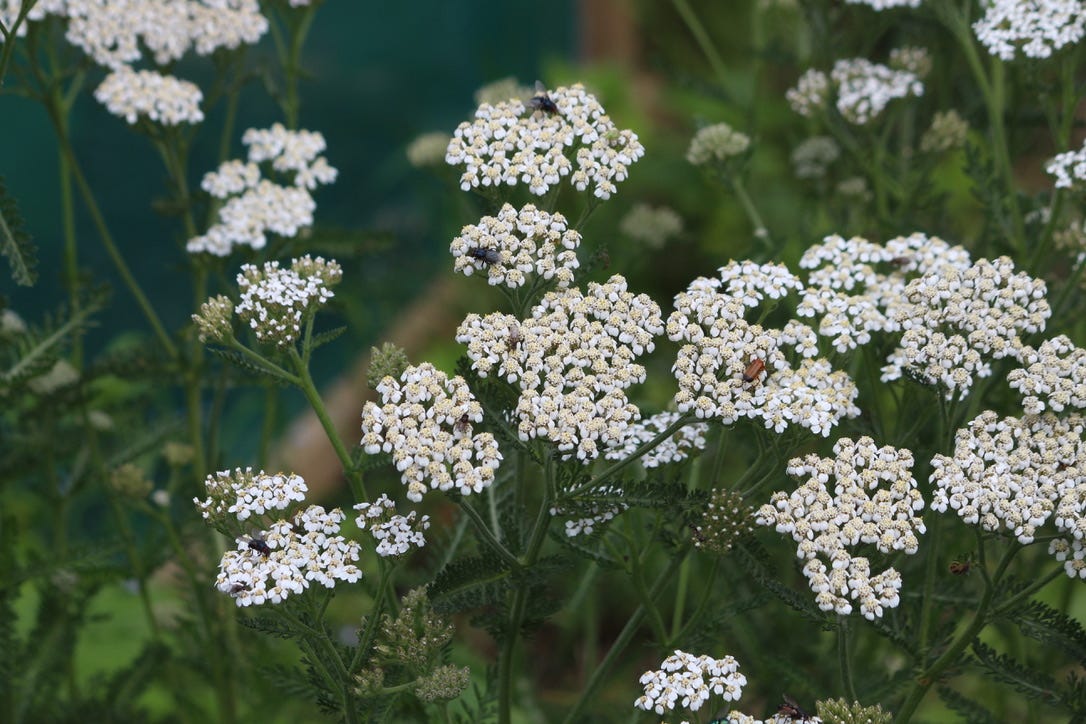
Yarrow, like all umbels, is loved by a wide range of insects including a vast array of species of beetle, fly, hoverfly, moth, butterfly, bee and wasp. Coupled with its long flowering season, it is a backbone of pollinator support.
Using Achillea millefolium in garden design
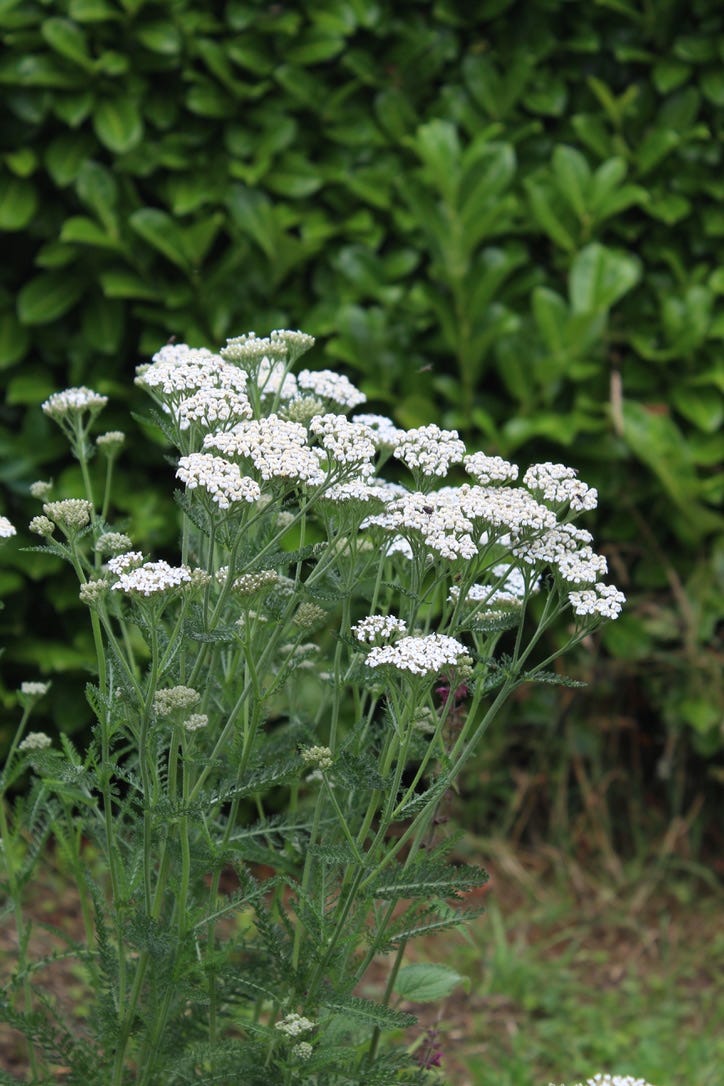
I use Achillea millefolium all the time in my garden designs, it’s one of those plants worth sticking into sunny plantings where it can grow unbothered without really interfering with anything else. combining well with meadow plants and traditional garden plants.
There are specific design benefits to yarrow worth discussing. First, I love its form, with soft olive green feathery leaves beautiful in spring as tufts of foliage. When it sends up its short vertical stems to about 40-60cm, the shape of the plant changes to be slightly taller than wide with tight buds of flower opening in dense horizontal flower heads.
Like Hylotelephium (formerly sedums) this creates a flat area in a planting when all of the umbels join to create a useful low horizontal area of flowers. This is great for a block of colour and creates contrast next to airy, fountain shaped or more vertical plants.
Importantly, their relatively low height creates space above the plant. Gaps in planting create interest as much as the plants themselves. If you plant tall plants and yarrow together, those spaces above them create windows to plants beyond to look through and around.
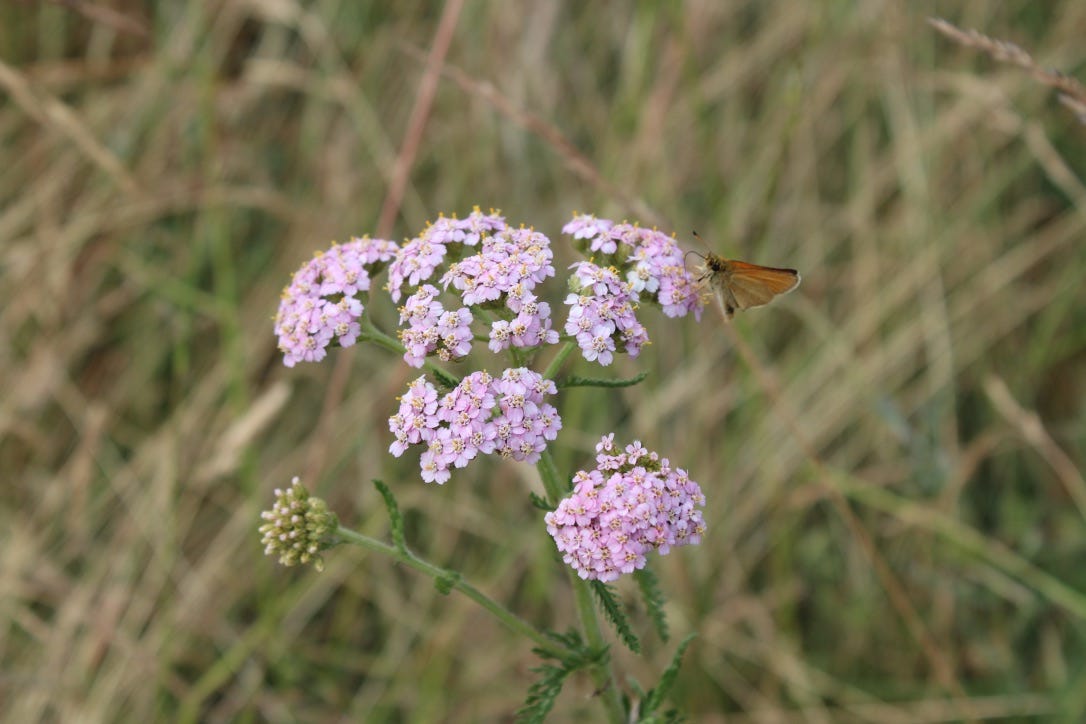
Wild Achillea millefolium naturally comes in white to a pale pink. Often with a mix of the two in the same colonies. There are many cultivated colours too in a wide variety of hues and shades such as orange, terracotta-red and yellow. I like them all but recommend not overlooking the white or pale pink species.
The wild species is an incredibly tough plant whereas the cultivated varieties I have always found to be far weaker, especially on heavy or wet soils. In drier areas or very free draining soil, the cultivars fair better.
Another thing to note with yarrow is that while it forms clumps, its mild creeping nature means it spreads between and through other plants without really impacting their growth. This makes the plant a good mixer and is why it’s such a successful grassland wildflower where it primarily grows.
From a design perspective, that gentle movement as the plant spreads is exciting and useful. It means yarrow self propagates around the garden for free and with no effort, reducing the likelihood it will die and disappear. It also creates surprising new combinations we may not have thought of.
Cut back spent flower stems at the base and more flowers will soon grow to extend the season.
How to propagate Achillea millefolium
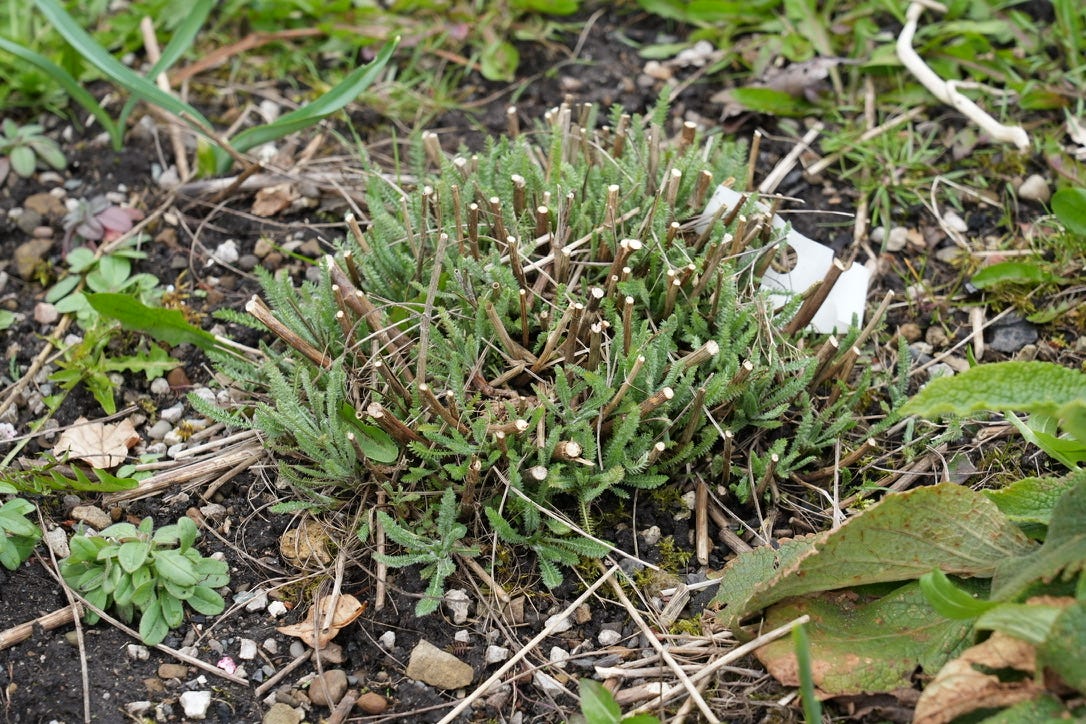
While you can grow achillea from seed, I personally wouldn’t ever bother doing this because dividing them or digging up rooted rhizomes is ten times easier. Rootle around for a shoot outside of the main clump, dig it up with roots using a trowel and plant where you want it. Either direct in the ground or into a pot of compost to grow into a larger plant first. Oh, I should mention due to their drought tolerance and lack of need for nutrition, yarrow grows really well in pots.
Is yarrow edible?

Yes, the leaves and flowers are edible with a strong floral taste. I’m not overly keen but you can use them in salads or for teas. People use yarrow for herbal medicine but I can’t say I would ever use it in this way as the effects are not backed up by credible research.
Are there any downsides to yarrow?
None that I know of - the main downside I mentioned with the colourful cultivars, they are far weaker than the straight species.
Give Achillea millefolium a go for guaranteed flower power all summer as part of my surefire butterfly and moth wildflower mix.
Happy growing!


When we were kids we always used the leaves to stop the bleeding on cuts and scratches. We would wrap it around the finger and hold it in place for a couple of minutes.Years later I read somewhere one of its common names was Soldier’s Woundwort. It really does stop the bleeding quickly.
I planted some a few years ago in my garden, my soil is on the lighter side so it does run through the borders and seed itself around if you don’t keep an eye on it, however it’s very easy to pull out if it gets too much. It always bounces back and adds a really lovely wild feel to the planting.