

Climate resilience in existing soil
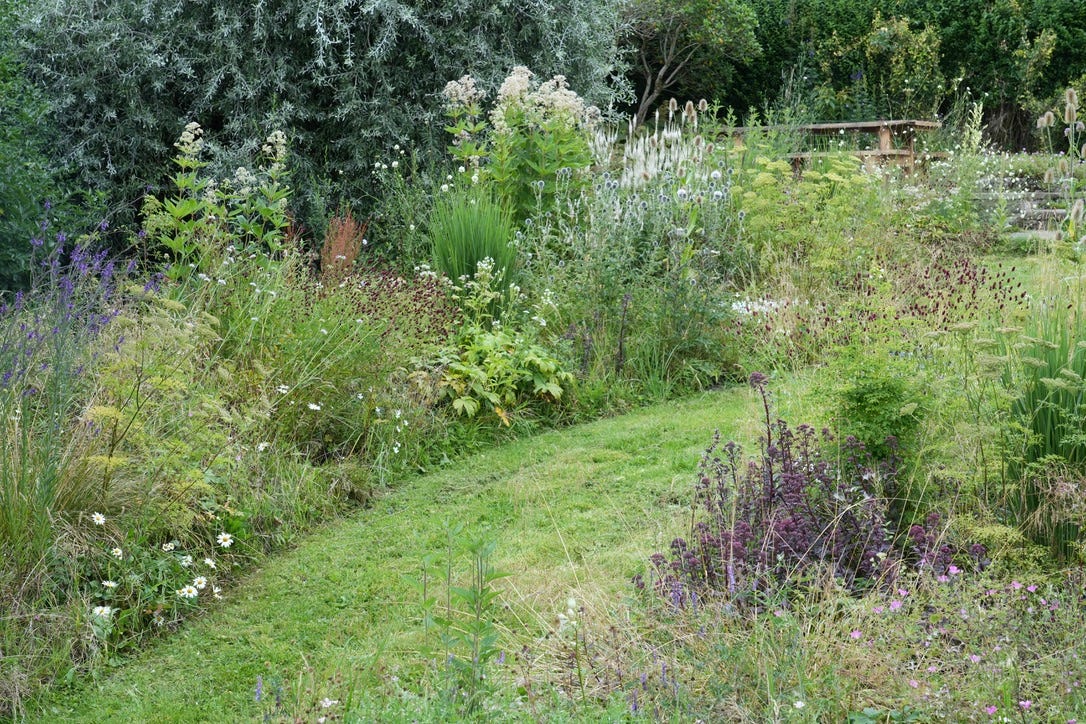
Human caused climate change has been altering weather patterns for some decades. Here in Europe it is making drought in summer more likely and longer for much of the continent, as well as winters milder and wetter. This is particularly true of the British Isles where we live, smack bang in the middle here in West Yorkshire.
This has big implications for wild habitats, farming and gardens. In gardens, many people are exploring possible options to build climate resilience with techniques and ideas for drought coming to the fore. This includes the use of aggregates - in the form of sand, gravel and grits - to help lock in moisture, and land sculpting to build habitat or conditions to help insects and other wildlife. As well as plants that are both drought and wet tolerant.
This is all really useful and important, though I worry about significant human alterations to habitats and land as being seen as the main solution. While we know they can and do help wildlife and achieve resilience to extremes in weather, they almost always have other consequences.
In gardens, everything we do has an impact, even introducing a single new plant. That doesn’t mean we can’t do anything, we can and should, it just means we have to try and be smarter. Understanding exactly what we do and the potential impact we have on wildlife, and trying to document it to help future generations.
Here in our garden, early on I decided not to radically alter the land or existing framework of planting. Partly because I unexpectedly found myself attracted to the layers of story from previous owners, and my fear that major land or habitat change would have impacts on what was clearly already a nature rich place.
Our garden has seen some big changes in the past, the meadow has been ploughed, had heavy fertilisers or potentially weedkiller sprayed on it in the last hundred years. The species mix is too different to the adjacent unmodified grasslands, it lacks diversity in plants. And there were huge land drains dug and installed in Victorian times, stone quarried and a woodland planted (which we call the coppice). Originally it was probably woodland, wetland or even moor - but that was hundreds, if not thousand of years ago. Wildlife now knows our area as mixed woodland and grassland.
Every time we make a big change to an area of land we have to be aware that we are likely resetting the baseline of wildlife. The baseline being the wildlife that has settled into that habitat since major change. This is the main reason changes to our garden have been quite slow, the slower the better with changes to gardens because we need to monitor extremely carefully how we are altering the biodiversity. Unfortunately ‘slow change’ doesn’t fit into current gardening trends and lifestyles. And doing nothing at all to maintain the status quo certainly isn’t exciting. Often slow isn’t possible during building work and renovations.
But in any case, that is what I’m exploring in our garden. Slow plant additions to improve habitats, with a plan to make them as stable as possible for the decades ahead. In most areas of our large garden, I am actually doing nothing but maintaining what’s there and monitoring. I am doing all of this in a way that I also find aesthetically pleasing. I do believe we can support wildlife while also including our own style preferences. And I’m not saying the other methods are wrong or should stop, we need them all.
I am trying to document everything in as much detail as one person can, making records and sharing my notes with you all. We can all compare our gardens and learn together.
Area one: main garden
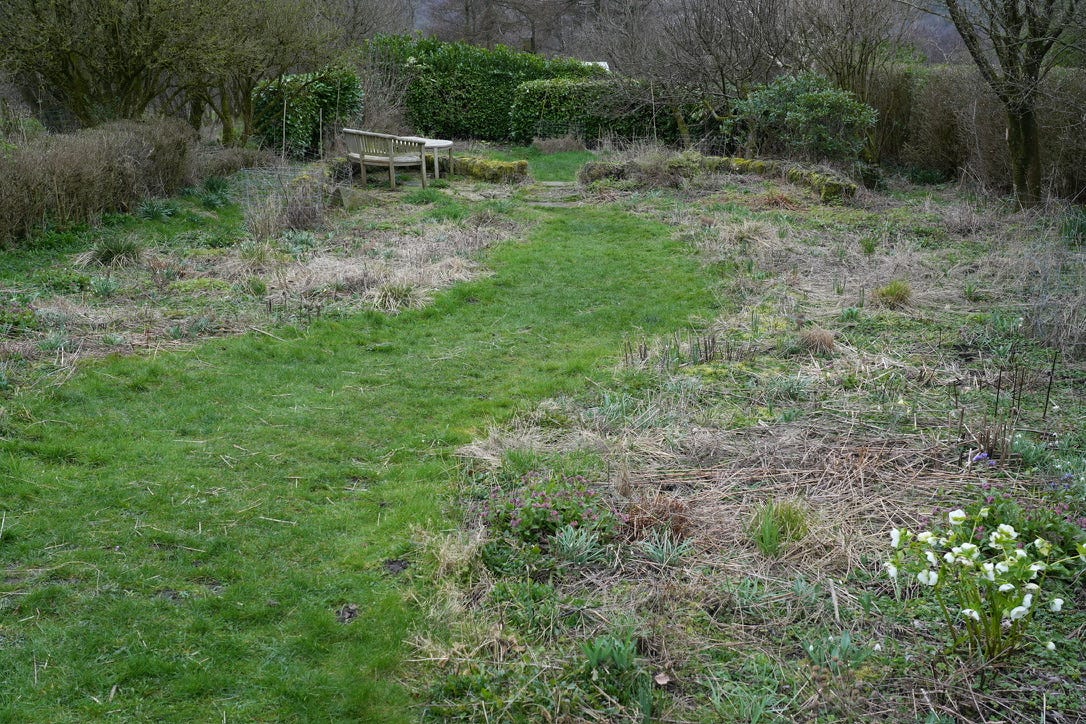
Size: approx 250 square metres - the size of an allotment - large to me but apparently the average in the UK.
Conditions: full sun south facing, sloped, highly biodiverse. Soil about 1m silt and clay loam over heavy clay and then bedrock. It can dry out almost completely in midsummer during long drought.
Baseline: when I arrived it was largely lawn surrounded by mixed hedging, some trees and bedding down two sides.
Change: I expanded the beds on the right and added a matching one on the left, I kept a reasonably large lawn path down the middle. I feel I can take an already wildlife friendly garden even further with an even more biodiverse and stable plant community. Removing some less useful plants while adding many other species. I haven’t altered the soil except for covering areas of the lawn initially with cardboard and a thin 2-3cm layer of peat free compost. Though I am not playing down the fact changing the lawn to other plants does in itself alter the soil biome.
Management: there are a lot of serious thug plants in here like ground elder, three cornered leek, creeping buttercup, couch grass and stinging nettles. In recent years I have almost stopped weeding entirely. I do cut back and pull out nettles in some areas, as well as any rose or bramble seedlings that sneak in. Otherwise I am just trying to outgrow stuff. I don’t add any brought in mulch, I don’t water established plants at all - and often not new plants, I don’t feed or add compost mulch, I don’t support plants. I cut back everything in late-winter leaving the clippings as the mulch. Including the hedge clippings.
Plants: mix of wildlife supporting cultivated plants and native wildflowers.
Of interest: I am exploring increasing organic matter in and over the soil using only the plants and their clippings or natural leaf litter. I’m interested to see if this, alongside plant choices, increases drought resilience.
Area two: wilder garden
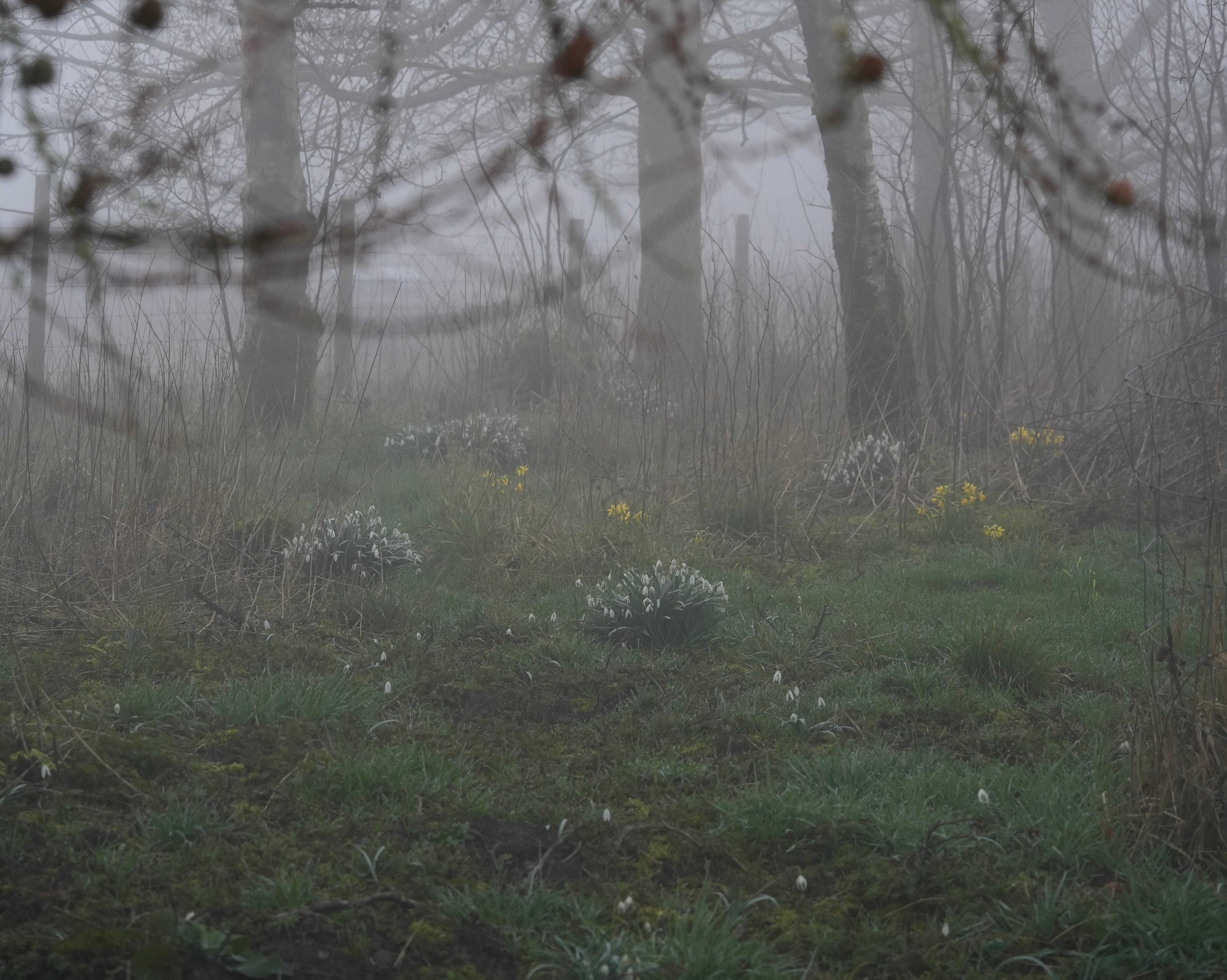
Size: 250sqm approximately, with a longer narrow bit beyond.
Conditions: directly under the main garden and has the same conditions with areas of full sun but with lots more native trees creating many areas of part to dense dry shade.
Baseline: when we arrived it has the existing trees that were planted, one long side of existing and old mixed native hedging, rough grass, lots of nettles, bramble and other. There are patches of introduced snowdrops, daffodils, fritillary, primrose and a few fruit trees. Which I’ve left.
Changes and plants: I haven’t removed any plants or added or changed the soil at all here. I have added a new daffodil cultivar, a few more fritillary and spread around the snowdrops. Apart from that, everything else I am adding here has been native wildflowers - and that’s my core focus.
Management: I mow paths and might pull out the odd nettle through summer. Then in autumn I have been cutting back the grassy areas and removed the clippings. I’ll adjust this over the years as wildflowers establish.
Of interest: this area leans more into a wild habitat but is still cultivated. I haven’t dug out beds or covered areas to create them. Instead I am adding wildflowers into dense grass and nettles to see how they compete. I haven’t really thought of a good way to describe this area except calling it ‘wilder’, wilder but not quite wild!
Area three: mini meadow
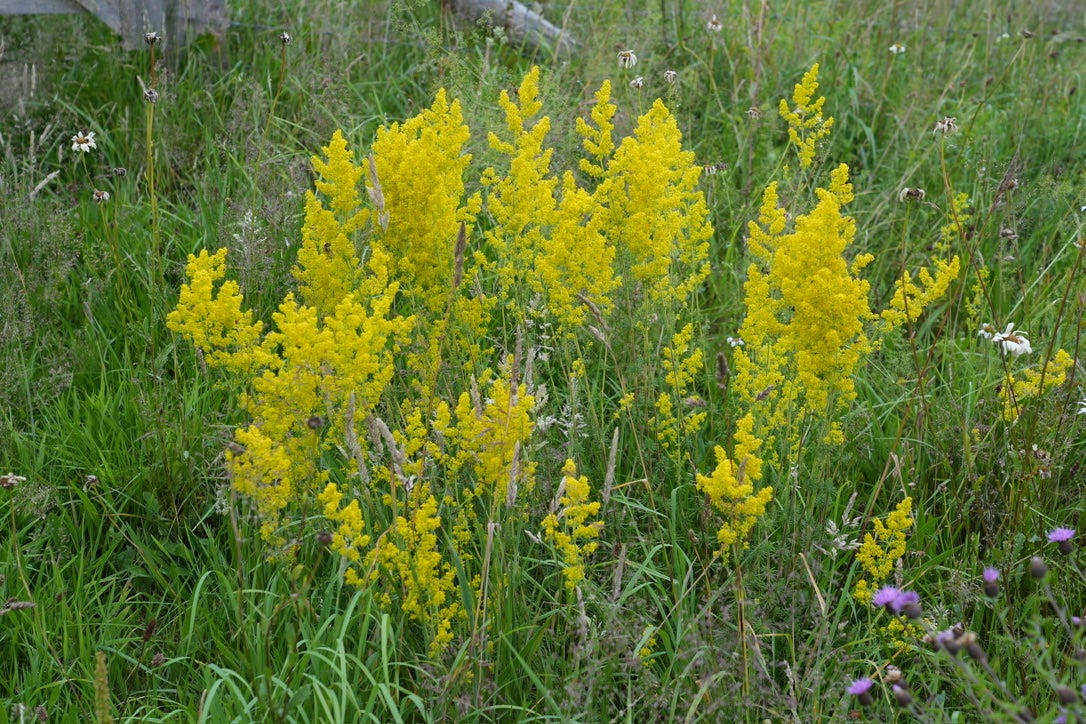
Size: about 5m x 6m
Conditions: full sun grassland that does dry out in summer.
Baseline: when we arrived it was a small triangle corner of the meadow where previous owners have introduced native wildflowers. Not all native to our area but they are used heavily by insects making them important today. There is no yellow rattle here.
Change: none. I haven’t touched this area at all. There is perhaps more bramble on the sides.
Plants: some key plants are two species of bedstraw, knapweed, ox-eye daisy, musk mallow and field scabious as well as the grasses seen across the meadow.
Of interest: the thing I find interesting about this corner is that I literally do nothing to it. The corner can’t fit the tractor so it doesn’t get mowed by the farmer, I don’t mow it. So the plant community lives and dies itself each year. Deer nibble the wildflowers but only eating the flower heads of field scabious. It is essentially as low maintenance as it comes. This year I may have to pull out some bramble to prevent them taking over and shading it all. The wildflowers have good and bad years. Last year was good, winter was mild and right now there appear to be more wildflower plants. All despite me not cutting back or removing plant material. Interestingly it has no yellow rattle or other hemi-parasitic plant.
Area four: main meadow
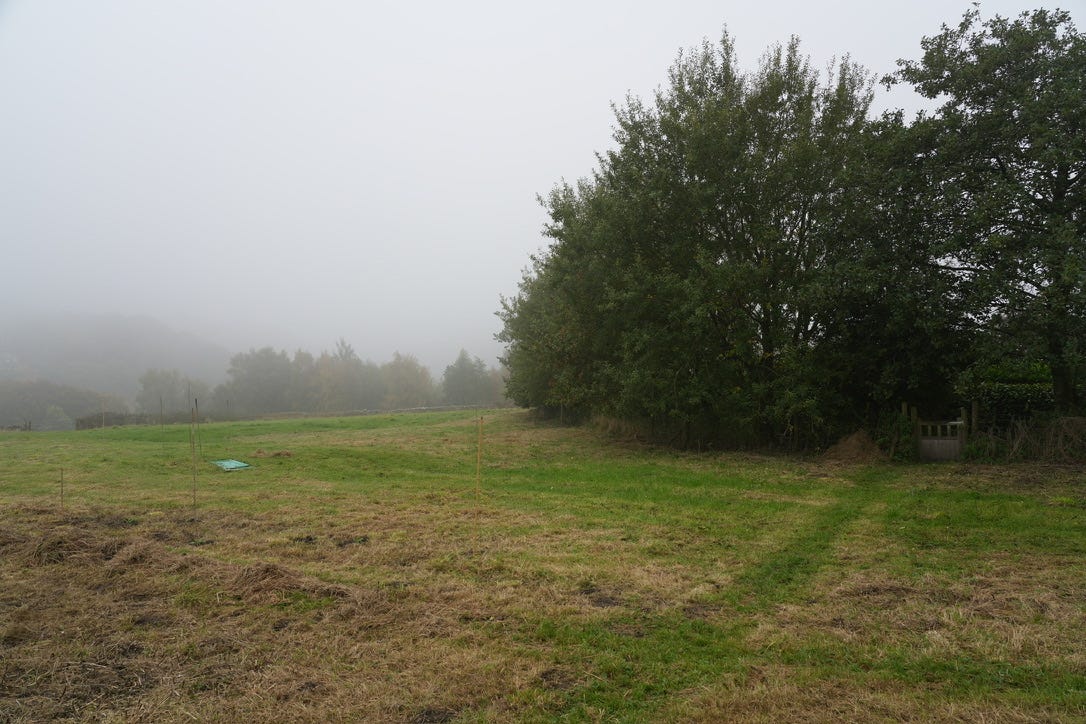
Size: approx 2 acres
Conditions: largely full sun free draining slope with the same loam over clay and shallow bedrock. Some tiny pockets of wet from leaking ground drains.
Baseline: heavily modified upland grassland from past management with stronger, taller grasses and lower biodiversity than adjoining grasslands.
Change: I moved the cut date back from June/July, to mid-August as recommended by conservationists I spoke to. I have also planted some wildflowers at the top using seeds sourced from elsewhere around the meadow to try and increase their numbers. The previous owners only cut the meadow in the last few years they were here without grazing it. We did try grazing it as well but have settled back into a single cut without grazing. This seems to be more effective here, as the previous owners told us - I should have listened.
Plants: I am trying to change this meadow as little as possible except to try and increase the number of late-season wildflowers to increase biodiversity while being extremely careful to also increase the early season species. It’s a balance. I am aware of the grassland fungi and other species that are also part of this mix, which is why I am going extremely slowly and carefully here. There is yellow rattle and eyebright, it’s the latter I would like to try and increase based on evidence I’ve seen elsewhere locally.
Of interest: a distinctly average field for plant and insect biodiversity that I am hoping to re-balance. I’m focusing on specific plant species in different areas, so there are actually a variety of different plant communities within this same field. But largely, I’m not doing anything except maintaining and improved management plan. A bit less exciting than instant meadow makeovers but I think the slow approach on a habitat this large and important is critical.
That’s a whistle stop tour of some of our mainly ornamental/wildlife areas. I’ll explore each of these in more detail this year and I will cover the food producing habitats and plant communities in a future newsletter - I find them very exciting.
Is climate resilience in existing soils alone possible? Perhaps not, we’ll see.
Hopefully you found that useful. I’ll share more about the progress of each area as they continue to grow.

This is really interesting Jack - thank you! Like you I garden primarily with nature in mind but I believe that I can still have a garden that is beautiful and practical for us to use too. I’m continually trying to maintain a balance. We inherited a 60 year-old garden (nowhere nearly as large as yours, but still a decent size) and some plants have remained and others have been replaced during the 7 years we’ve been here. The biggest change I see now, and one that really makes me happy, is that there are plentiful self-seeded flowers such as scabious and foxglove, whereas before there were none. I hope you have a great gardening year in 2026!
What a great article. Your reference to not making unnecessary changes and discovering how previous occupants had tended the land resonated, in these times of speedy, immediacy in gardening.