Drought tolerant plants in ordinary soils - survey results
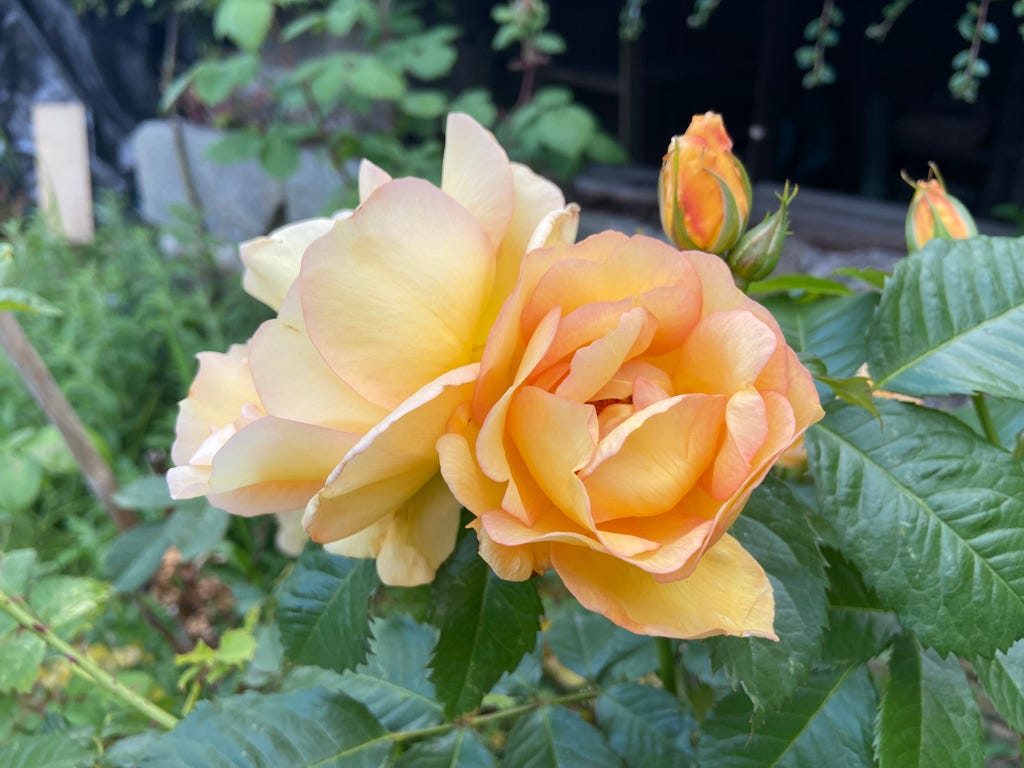
In the last week of July 2026 I ran a simple online survey asking British gardeners which plants are thriving in this year’s heatwave and drought conditions. I requested people only include plants grown in ordinary existing soils (not pots), were established and had not been watered this year.
I had 103 responses of which 90 were used, discounting 13 that were watered or from outside the UK. 76 from England, 8 from Wales, 6 from Scotland - it would have been nice to have an equal split to offer country specific advice and also to have data from countries across Europe and elsewhere. Unfortunately this survey was limited by numbers of people responding but in terms of growing is still helpful.
90 is a reasonable sample that has produced useful results and although my survey is limited and imperfect it has proven that on a larger scale this kind of survey has value. My recommendation would be to run a similar survey to many more gardeners and also perhaps a second survey or category specifically among a network of professionals (gardeners, ecologists, farmers). I’m interested in collaborating with others to make a larger survey happen.
That said, this survey shows there is a large number of plants that can thrive, let alone survive, in regular soils during some of the toughest heat and drought the UK has faced so far. There will be many more plants not included in this list to draw on, discoverable with a bigger sample of people and gardens.
I’ve grouped some plants reported into genera or species, especially across regions and soil, which suggests a high likelihood of drought tolerance within those. Equally, by asking which plants were suffering I could counterbalance some entries giving a fairer result. E.g. Hydrangea were reported by a few people as thriving but by far more as suffering, allowing me to remove it from the drought tolerant thriving list.
Due to the size of the sample I thought it was best to split results roughly into ‘Drier south/east’ (54 responses) and ‘Wetter west/north’ (36 responses). This could be taken further with more accuracy but it does offer a useful list of plants that were mentioned a lot of times for both areas. I think it is useful to compare the two to spot drought tolerant plants on both lists, this gives drier regions an idea of drought tolerant plants that can also tolerate wet winters in ordinary soil. Even with climate change southern and eastern winters will usually have less rainfall than the north and west.
Limitations of this survey
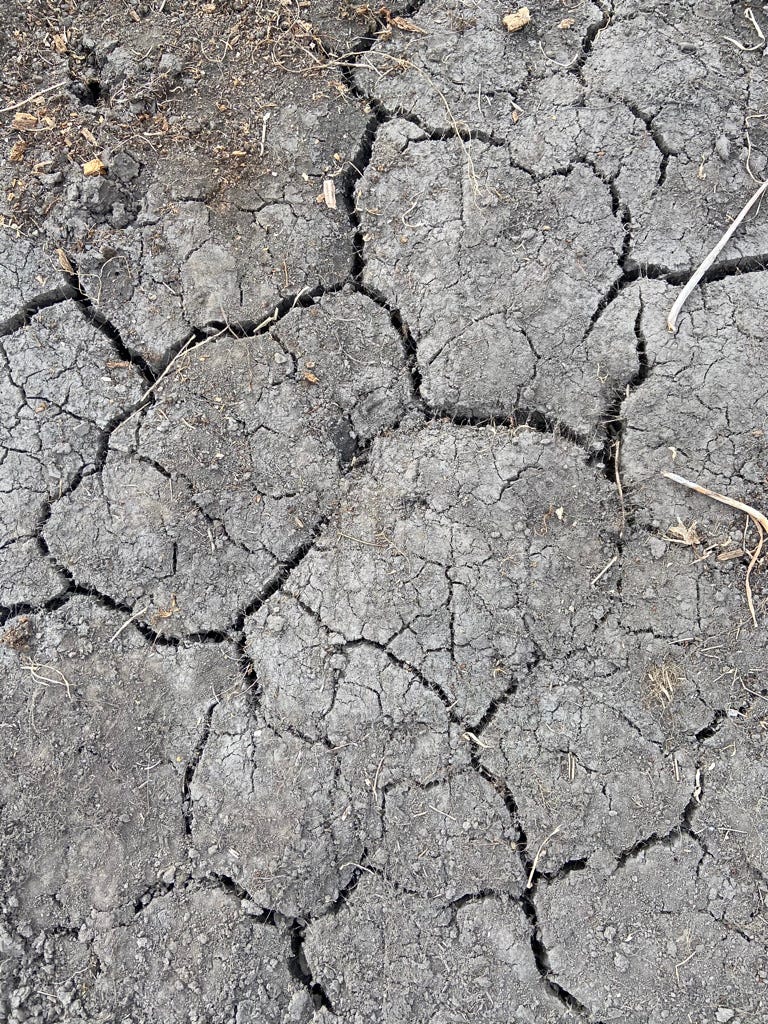
As mentioned, the sample size is reasonable but much more could be learnt with even more responses. With many more people from all regions of the UK, area specific advice could be given and better advice for soil types and planting conditions (full sun, part shade, full shade).
One of the big question marks I noticed is that people have focussed on perennials and small shrubs more and less on larger woody plants, such as trees and climbers. For that reason I have pulled out a dedicated list to spotlight trees, large shrubs and climbers. As these plants are likely to be drought tolerant, I can only think something around my wording of ‘thriving’ led to woody plants being overlooked. I.e. perhaps peoples’ idea of thriving means factors such as flowers, which many trees don’t have right now.
A self selected survey where people see a link and choose to fill it in captures responses from people keener to take part. I shared it on my Wild Way newsletter and social media where it was shared by a number of people to their networks.
In this instance, I suspect that probably worked in our favour as it will have attracted keen gardeners generally with a good amount of experience with plants. Who will likely have been good at identifying reasons for plant success and failure linking it to drought and heat.
That said, it is an open survey and people could report a suffering plant that could be so for other reasons such as disease. Because the focus is on thriving plants, I personally think this is less of an issue. And I suspect most people who took part will understand what drought stress looks like.
Top 30 plants thriving this year in ordinary soils without water across the UK by number of responses
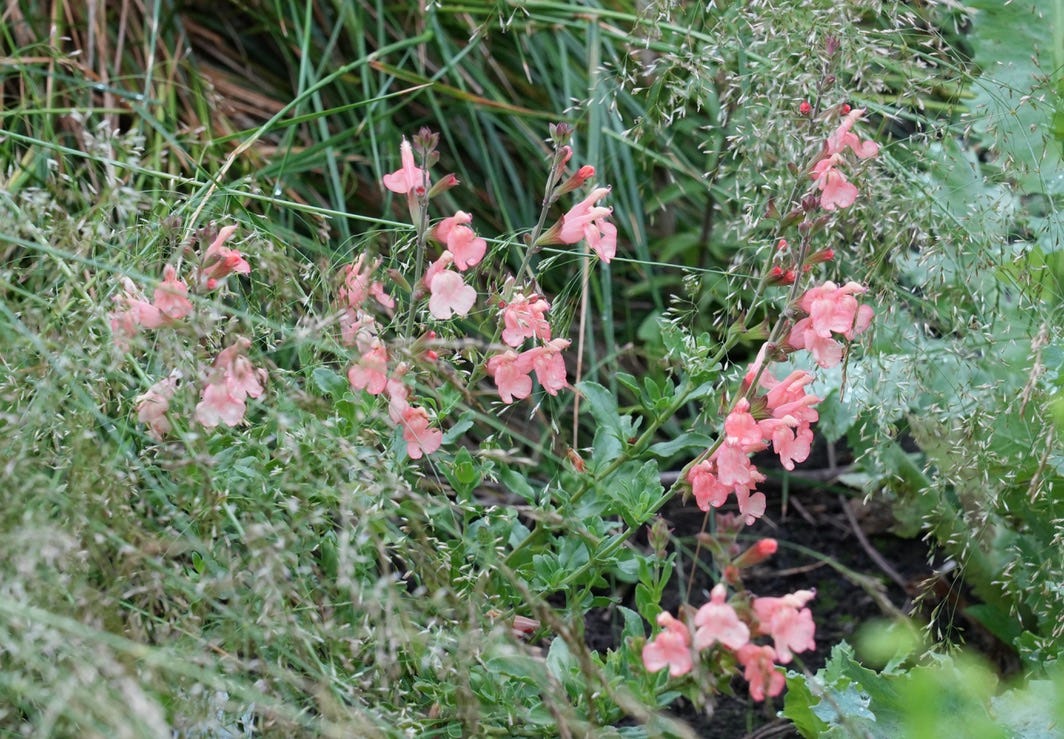
Quite often people named cultivars or species and this could lead to twenty different names or cultivars that could be grouped together roughly into one entry, such as roses, Rosa spp. Please note that within each of these groupings occasionally people reported they struggled, this was used as a negative score to down rank them. Caution must be taken to still individually research cultivars or species within these groups and choose those noted to be drought tolerant because some won’t be. For instance, many achillea are very drought tolerant - especially the species - but some cultivars are not as tolerant. Many roses are drought tolerant but some aren’t. Some cultivars will be more drought tolerant than others.
Rosa spp. (roses)
Lavandula spp. (lavender)
Echinops spp. (globe thistle)
Salvia rosmarinus (rosemary)
Salvia spp. (salvias including culinary sage)
Origanum vulgare (oregano)
Verbena bonariensis
Achillea spp. (yarrow)
Hylotelephium spp. (sedum)
Euphorbia spp.
Foeniculum vulgare (herb fennel)
Stachys byzantina
Lonicera spp. (climbing honeysuckles)
Hedera helix (ivy)
Eryngium spp. (sea holly)
Agapanthus spp.
Alcea rosea (hollyhock)
Asters (various)
Nepeta spp. (cat mints)
Salvia yangii
Buddleja spp.
Verbascum spp. (mulleins)
Fatsia japonica
Crocosmia spp.
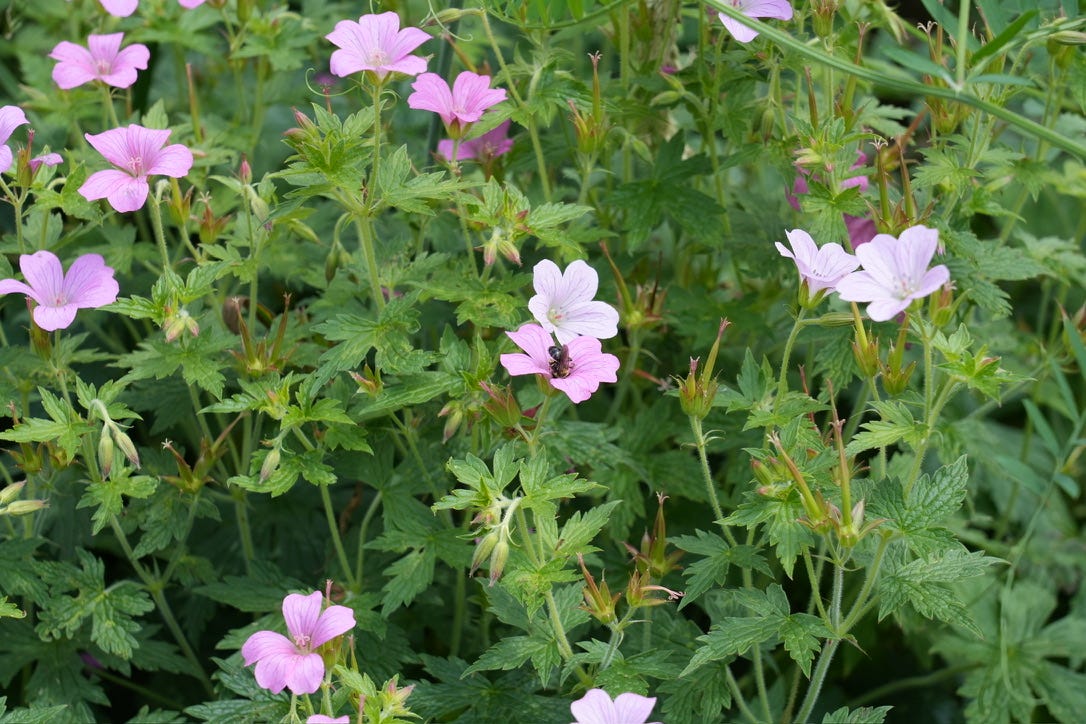
Geranium spp.
Nepeta × faassenii ‘Walker’s Low’
Knautia macedonica
Euonymus spp.
Erigeron karvinskianus
Ferns (particularly native evergreen Dryopteris and Polystichum)
Drier south/east
Top 30 plants thriving this year in ordinary soils without water across the drier south/east by number of responses
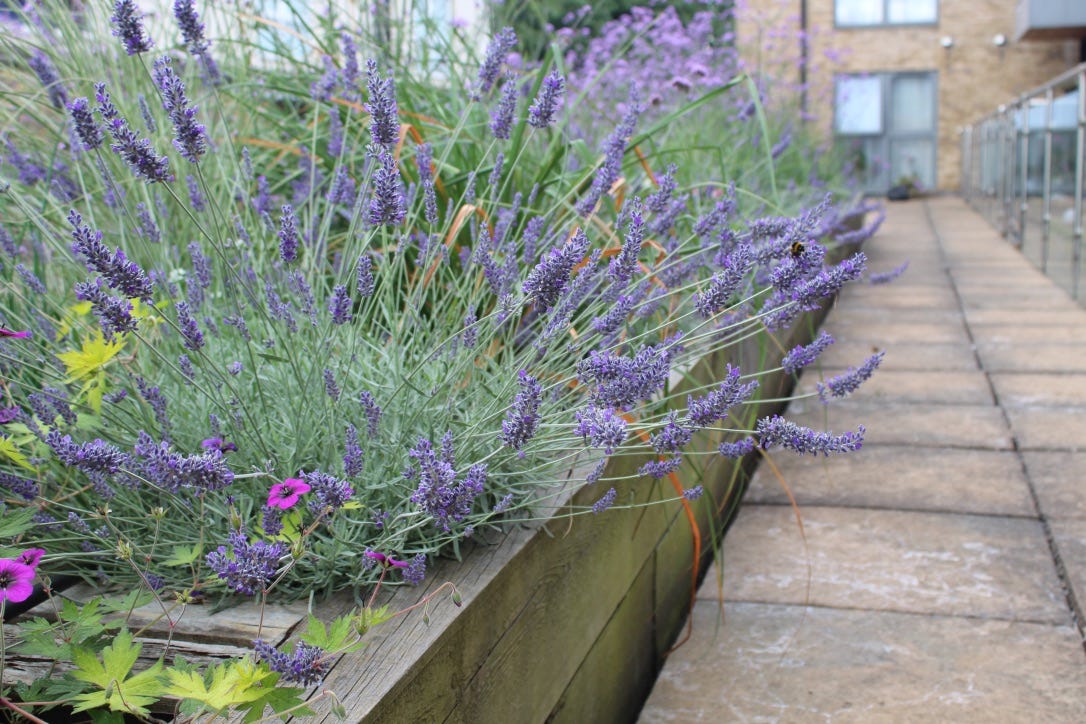
This list is perhaps the most telling as these are plants thriving in the most heatwave and drought hit areas.
Rosa spp.
Lavandula spp.
Salvia rosmarinus
Salvia spp.
Echinops spp.
Verbena bonariensis
Lonicera spp.
Ferns (particularly native evergreen Dryopteris and Polystichum species)
Stachys byzantina
Geranium spp.
Origanum vulgare
Buddleja spp.
Hylotelephium spp.
Achillea spp.
Crocosmia spp.
Clematis spp.
Nepeta spp.
Hedera helix
Salvia yangii
Erigeron karvinskianus
Euonymus spp.
Sambucus nigra
Euphorbia spp.
Alcea rosea
Asters (various taxa)
Foeniculum vulgare
Fatsia japonica
Eryngium spp.
Lavandula angustifolia ‘Hidcote’
Verbascum spp.
I’ve long pointed out that some ferns are much more drought tolerant than people would assume and it’s good to see them so high even in the drier regions of the UK.
Wetter north/west
Top 30 plants thriving this year in ordinary soils without water across the wetter north/west by number of responses
Rosa spp.
Echinops spp.
Lavandula spp.
Salvia rosmarinus
Geranium spp.
Origanum vulgare
Euphorbia spp.
Hylotelephium spp.
Salvia spp.
Foeniculum vulgare
Agapanthus spp.
Paeonia spp.
Geranium ‘Rozanne’
Achillea spp.
Eryngium spp.
Phlomis russeliana
Knautia macedonica
Nepeta × faassenii ‘Walker’s Low’
Ferns (various)
Verbena bonariensis
Helichrysum italicum
Allium spp.
Penstemon spp.
Verbascum spp.
Iris spp.
Hedera helix
Alchemilla mollis
Acanthus spp.
Crocosmia spp.
Stachys byzantina
It’s worth noting that the north and north west of Britain is suffering from heat and to a lesser degree, low rainfall, but it is not facing the same drought and heatwave as down south or east this year yet.
Woody trees, shrubs and climbers thriving in the drier south/east
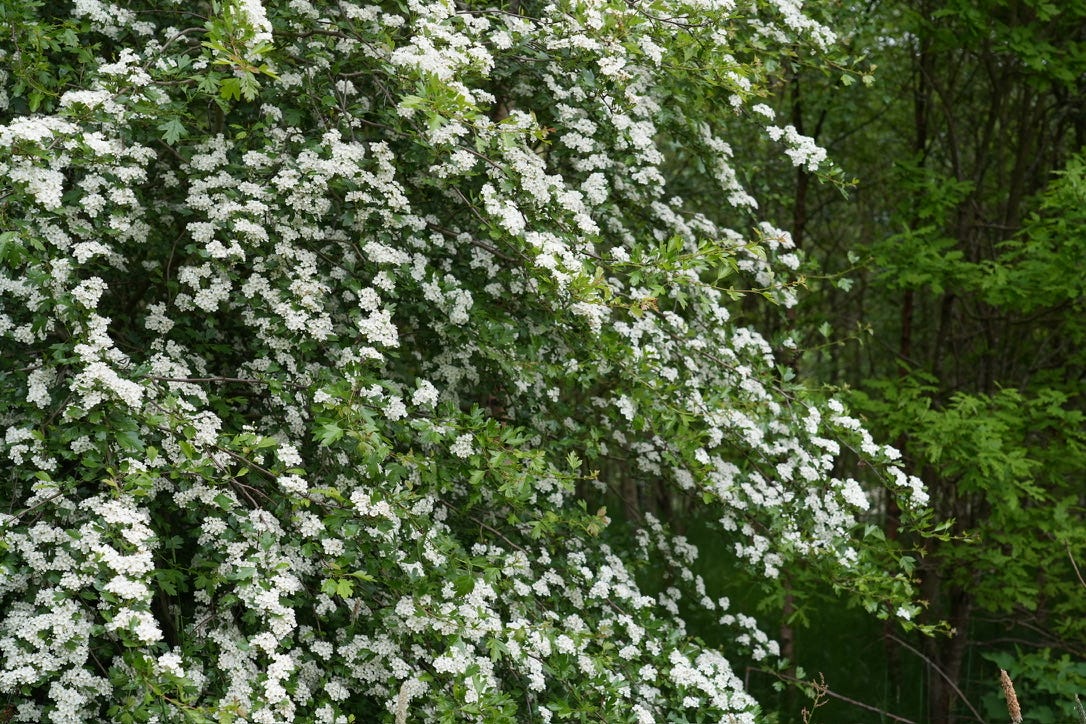
My gut feel is that woody species, especially trees, are underrepresented in this survey. That needs further research. Especially as I see one of the big solutions to a warmed climate being drought tolerant shade and organic matter giving large trees. For instance, the likes of oak and London plane should be mentioned, among others - obviously they are too large for most gardens explaining why they aren’t I guess!
Rosa spp.
Lavandula spp.
Salvia rosmarinus (rosemary)
Buddleja spp.
Hedera helix
Clematis spp.
Euonymus spp.
Lonicera spp. (climbing honeysuckles)
Salvia yangii
Ilex spp.
Crataegus monogyna
Jasminum spp.
Sambucus nigra
Fatsia japonica
Hebe spp.
Hypericum spp.
Philadelphus spp.
Pyracantha spp.
Rubus spp.
Betula spp.
Malus spp.
Pittosporum spp.
Viburnum spp.
Corylus avellana (hazel)
Laurus nobilis
Full list of all plants said to be thriving in the drier south/east
One of the most useful things I thought I could do is share the full list of plants respondents said were ‘thriving’ in this year’s most heatwave hit areas. This is unedited and allows you to draw your own conclusions. All in ordinary soils without watering. When I see this full list and how you all heard the call for help and responded like this, it lifts my spirit and gives me hope.
A bell shaped clematis
a smallish maple
Acacia dealbata.
Acer japonicum
Acer Orange Dream
Acer palmatum dissectum x 3
Achillea ‘Terracotta’
Achillea Credo
Achillea Milifolium
Achillea Milifolium
Achillea spp.
Achillea spp.
Achillea spp.
Achillea spp.
Achillea spp.
Achillea spp.
Achillea spp.
Agapanthus (sorry don’t know variety)
Agapanthus (unknown but blue hardy variety!)
Agapanthus (various)
Agapanthus spp.
Agapanthus spp.
Agastache ‘Blue Fortune’
Agastache ‘navajo sunset’
alchemia mollis
Alchemilla mollis
Alchemilla mollis
aliums
alkanet
all peonies (herbaceous
all pittisporum varieties
All roses
all Roses
all the roses
all varieties of Hemerocallis tried
Allium Lavender Bubbles
Allium Millenium
Allium sphaerocephalon
Allium sphaerocephalon
Allium Summer Beauty
Alliums
Amenanthele lessoniana
Amsonia Blue Ice
Anaphalis margaritacea (pearly everlasting)
Anemanthe lessoniana
anemanthele lessoniana
Anemanthele lessoniana
angelica archangelica
Anisodontea El Rayo
Anthemis tinctoria ‘E.C. Buxton’
Apple (scrumptious)
Arbutus unendo.
Armeria ‘Abbey Deep Rose’
Artichokes (globe
Ash
Ash tree
Aster ‘monch’
Aster ageratoides Ezo Murasaki
Aster amellus
Aster Little Carlow
Asters
Astrantia major
athyrium niponicum
Balotta pseudodictamnus
Baptisia Lemon Meringue
bay
Bay
Bay tree
Bearded Iris
bearded iris
bearded irises a bit crispy but ok
beech (hedge)
Beech hedge
Berberis
berberis
Berberis
Bergenia
Bergenia various
black elder (sambucus)
blackberry
Blackberry
Blackcurrant
Blackcurrant salvia
Blackthorn
blackthorn (sloe)
Borage
Box
Brachyglottis
Brunerra Jack frost
Brunnera Alexanders Great
Brunnera Jack Frost
buddleia
Buddleia
Buddleia
buddleia
buddleia
buddleia
Buddleia davidii
buddleija
Buddleja
Buddleja Butterfly candy little white
Buddleja davidii ‘Blue Horizon’
Buddlieja davidii ‘Black Knight’
Budleia
buxus
Buxus
Calamagrostis brachytricha
Calamagrostis Karl Foerster
calamagrostis Karl foerster
Calamagrostis Karl Foerster
Calamagrostis Karl Forster
California poppies
California Poppies
Californian Poppy ‘Orange King’
Callistemmon.
Camellia
camellia (30+ years old)
Camellias
cannas
Cardoon
Cardoon
Cardoon
cardoons
Cardunculus
Carex morrowi ‘Ice Dance’
Carex pendula
Carex pendula/ pendulous sedge
Caryopteris ‘blueblossom’
caryopteris clandonensis
Ceanothus ‘Skylark’
Centaurea scabiosa
Centranthus ruber
Centranthus ruber
centranthus ruber (seeding quickly but very happy)
Centranthus ruber/alba
Cephalaria gigantea
Ceratostigma
Ceratostigma plumbaginioides
Ceratostigma willmottianum
Cestrum parquii
Chaemerops Humilis.
Cherry tree
Chilean glory flower
Chocolate Vine (akebia quinata)
Choisya ‘Aztec Pearl’
choisya ternata
Choisya ternata
Choysia ternata ‘Sundance’
cistus
Clary Sage
Clematis
Clematis
Clematis Advent bells
Clematis Etoile Violette
clematis Montana
clematis tangutica
Clematis: Betty Corning
Clematis: sweet summer love
climbing
climbing honeysuckle
Climbing hydrangea
climbing hydrangea
Climbing rose generous gardener (DA)
Climbing rose Malvern hills
comfrey
Comfrey
Comfrey (creeping wild type)
Common Elder
common holly
common mallow
common rosemary
Common sage
common yarrow
conifers (fairly slow growing ones)
Continus Royal Purple
Convolvulus sabatius
coreopsis lanceolata
cornflower
Corylus avellana ‘Fuscorubra’
Cotinus [not sure which]
Cotinus Golden Spirit (or similar)
Cotinus Royal Purple
Cotinus Royal Purple
cotoneaster
cotoneaster
Cotoneaster franchetii
Cotoneaster oriacus [possibly: a tree
Cotton lavender
cow parsley.
Crocosmia
crocosmia
Crocosmia
crocosmia
Crocosmia
crocosmia
Crocosmia ‘lucifer’
crocosmia (unknown orange variety)
Crocosmia Lucifer
crososmia
Curry plant
Cytisus
Cytisus scoparius
dahlias . Coping well - hosta
damson
Dandelion
Daphne
daucus
Daucus carota
Daucus carota
day lilies
Day lily
Deschampsia cespitosa ‘Goldbaum‘
Deschampsia cespitosa ‘Goldbaum’
Deutzia
Deutzia
Deutzia (sorry not sure which one)
Dianthus
Dianthus carthusianorum
Dianthus Carthusianorum
Dianthus carthusianorum
Diascea
Digitalis purpurea
Dill ‘Mammoth’
Dipsacus fullonum
Dogwood
Dogwoods - midwinter fire
Dogwoods and a dark purple one
Dogwoods Ani’s orange
echinacea
Echinacea Fatal Attraction
Echinacea Pallida Hula Dancer
Echinops
Echinops
echinops
Echinops
Echinops
Echinops
Echinops
echinops
Echinops ritro
Echinops ritro
Echinops ritro
Echinops Ritro V. Blue.
Echinops Taplow Blue
Echinops. Fargesia rufa Itoh poenie. Aloe striatula
Echium
Echium vulgare
edelweiss
Elaeagnus ebbingei Gilt Edge
elaeagnus x ebbingei
elder
Elder (black leaf)
Elder Black lace
Elder ivy comfrey green alkanet rosemary tutsan yew
Elephants ears - bergenia
Emily Brontë
English lavender
English lavender
English lavender (Hidcote)
Epediums various
Epilobium
Erica cinerea ‘Katinka’
erigernon
erigernon kravinskus. All coping well
Erigeron
erigeron
Erigeron
Erigeron karvinskianus
Erigeron karvinskianus
Erigeron karvinskianus
Erigeron karvinskianus
Erigeron karvinskianus
Erigeron karvinskianus
Erigeron karvinskianus
Erigeron karvinskianus
Eryngium
eryngium ‘big blue’
Eryngium bourgatii ‘Picos Amethyst’
Eryngium bourgattii
Eryngium Giganteum ‘Miss Willmott’s Ghost’
Eryngium Jos Eikling
Eryngium variifolium
Erysium ‘bowles mauve’
Erysium Bowles Mauve
Escallonia
Eschscholzia ‘Orange king’
Euonymous
Euonymus - various
euonymus (various)
euonymus emerald
Euonymus fortunei
Euonymus fortunei ‘Emerald
Euonymus fortunei ‘Silver Queen’
euonymus japonicus
Euonymus macrophylla
Euphorbia caracias
Euphorbia characias
Euphorbia characias
Euphorbia Characias Wulfenii
Euphorbia Fens Ruby
Euphorbia mellifera
Euphorbia Miners Merlot
Euphorbia palustris
Euphorbia robbiae
euphorbia Robbiae
Euphorbia segueriana
Euphorbia Silver ?
euphorbias (various)
evening primrose
evening primrose
evergreen jasmine
fancy poppy
Fatsia
fatsia
Fatsia Japonica
Fatsia japonica
fatsia japonica
Fennel
Fennel
fennel
Fern ? (Large)
festuca glauca
Field Maple
Field Scabious Small Scabious wild marjoram roses philadelphus tansy echinops ivy harebell sedum musk mallow knapweed elder sage thyme
fig brown turkey
fig trees (brown turkey
fleabane
Foeniculum vulgare
Foeniculum vulgare ‘Purpureum’
Forsythia
foxglove
Fuchsia
Fushia
Galium oderatum
Galium odoratum
Garden roses
Gaura
Gaura
gaura ‘white sparkler’
Gaura lindheimeri
Gaura whirling butterflies
Gaura whirling butterflies
Gaura whirling butterflies
Geranium ‘Heidi Jane’
Geranium himalayense ‘Gravetye’
Geranium Macrorrhizum
Geranium macrorrhizzum
Geranium Mrs Kendall Clarke
Geranium psylostemon Catherine Deneuve
Geranium Rozanne
Geranium Rozanne
Geranium rozanne
Geranium St Ola
Geranium x magnificum
Geraniums (cranesbill) - various varieties
Geraniums hardy
Geraniums Rozanne and dreamland- less happy in sunnier positions. All the roses again. Trachelospermum. Erigeron again
Geraniums- all hardy geraniums
Gertrude Jekyll
Geum marmalade
geum totally tangerine
Giant Echium
gigantea
Gillenia Trifoliata
Gingko biloba
Gladioli
Globe Artichoke I leave this to do its own thing. Currently flowering and teaming with bees.
Globe thistle
Gold’
golden rod
Gorse
Grasses
Grasses: Molinia caerulea ‘Dauerstrahl’
Green alkanet
Green Herb fennel - leaves have gone brown but flowering well and standing tall
Guara
Guara Whirling Butterflies
Guelder rose
Hakonechloa macra ‘Mediovariegata’
Hardy fuchsia (variety unknown)
Hardy geraniums
hawthorn
hawthorn
Hawthorn hedge
hazel - loads of nuts to come
hazel trees (curly
Hebe
Hebe - grey green leaves
Hebe ? (small)
Hebe ‘donna britta’
Hebe Sutherlandii
Hedera helix
Hedera helix (west facing)
Hedges- purple beech
Helenium
helianthemum
Helianthus annus
helianthus lemon queen
Helianthus Lemon Queen
Helichrysum italicum
Helichrysum italicum subsp microphyllum
Helicotrichon sempervirens
Hellebore Single slate
Hellebores - various
Helleborus foetidus
Hemerocallis
hemerocallis
Hemorocallis lilioasphodelus
Herb fennel
Herb fennel
Hesperis
heuchara
heuchara ( except for scorching)
Heuchera sanguinea
Heuchera Walnut
Heucheras - midnight rose
Himalayan honeysuckle - wilting a bit but still green and flowering well. Blackbirds are loving the fruit!
himalayan silver birch
Hogweed
Holly
holly
holly hock
Hollyhock
Hollyhock
hollyhocks
Hollyhocks
Hollyhocks
hollyhocks
Hollyhocks
Honeysuckle
Honeysuckle
Honeysuckle
honeysuckle
honeysuckle
Hornbeam
Horsetail (unfortunately)
hostas (various)
hot biscuits amaranth
Houttuynia cordata
Hydrangea likely Annabelle
Hydrangea petiolaris
Hydrangea petiolaris (west facing)
Hydrangia (variety unknown
Hylotelephium matrona
Hylotelephium Matrona
Hylotelephium spectabile
Hylotelephium spectabile
Hylotelephium x mottramianum ‘Herbstfreude’
Hylotelephiums
hypericum
Hypericum
hypericum
Hypericum hidcote
Hypericum perforatum
Hypericum x inodorum
Hyssop
ilex shrubs
Indian Bean tree
Inula
iris
Iris siberica
itoh
ivy
Ivy
Ivy
Ivy
japanese acer
Japanese anemone
Japanese anemone
Japanese anemone
Japanese anemone
Japanese anemone
Japanese Anemones
Japanese Aralia
Japanese Honeysuckle.
Japanese quince
Jasmine
Jasmine
Jasmine ‘Clotted Cream’
Jasmine (a pink one
Jasmine Clotted Cream
jasminium
Jasminum officinale ‘Devon Cream’
Jerusalem artichoke
Jerusalem artichoke (grrr)
Jerusalem)
knapweed
Knautia arvensis
Knautia Macedonia
Knautia Macedonica
Kniphofia
Kniphofia
kniphofia
Kniphofia ‘Pyromania Orange Blaze’
kniphofia (unknown yellow variety)
korean chrysanthemums
Ladies bedstraw
Lambs ears
Laurel
Laurel hedge
Laurus nobilis angustifolia
Lavandula
lavandula
Lavandula ‘Munstead’
Lavandula angustifolia ‘Ashdown Forest’
Lavandula angustifolia ‘Hidcote’
Lavandula angustifolia ‘Hidcote’
Lavandula hidcote
Lavandula intermedia ‘Grosso’
Lavandula x intermedia ‘Old English’
Lavateria ‘Barnsley Baby’
Lavender
Lavender
Lavender
Lavender
lavender
lavender
Lavender
Lavender
Lavender - various including London pink
lavender (english)
lavender hidcote
Lavender Hidcote
Lavender intermedia Grosso/Phenomenal
lemon balm
Lemon balm
lemon balm
lemon balm
lemon balm
Leucanthemum Becky
Leucanthemum vulgare
leucantheum
leycesteria formosa
Libertia chilensis (survived 3 winters so far in thick clay)
Libertia Grandiflora
Lilac
Lilac (white)
Lilies
Linaria
Linaria purpurea
Linaria Vulgaris
Little Miss Figgy)
Lobelia tupa
Lonicera Hall’s prolific
Lonicera x 4 types
lost the name: small purple bloom
lupin
Lychnis Coronia
Lythrum salicaria Robert
Magnolia ‘Susan’
Magnolia grandiflora
Magnolia stellata
magnolia susan
mahonia
Mahonia x media
mallow
malus
malus red sentinel
Malus sylvestris ‘Evereste’
Margherita comune
Marjoram
marjoram
Marjoram
Marjoram
Mature Silver Birch
Medlar
Melica altissima ‘Alba’
Melica Ciliata
mexican fleabane
michaelmas daisies
Mint
mint
Miscanthus
miscanthus
miscanthus malepartus
Miscanthus sinesis
mock orange
mock orange
Monarda menthofolia
Monbretia
Morello cherry
Muehlunbeckia complexa
mullein
multiple hedychium varieties
musk mallow
Nandina
Nandina domestica
Nandina domestica
Nepeeta Walkers Low
Nepeta
Nepeta
nepeta
nepeta
nepeta
Nepeta mussini
Nepeta racemosa
nepeta racemosa
Nepeta racemosa ‘Walkers Low’
Nepeta walkers low
Nepeta Walkers Low
nepeta wild marjoram
Nerine
Nerium oleander
New Zealand flax
Nicotiana ‘sensation’ (supposedly annual/tender perrenial that has survived not too harsh winter)
nigella
Nigella
oaks
Oenothera lindheimeri
Olive
Olive
Olive tree
Olive tree
Onites vulgare
oregano
Oregano
oregano
Oregano ‘rosenkuppel’. - exceptional at front of border
Oregon Thornless blackberry
Origanum
Origanum laevigatum ‘Herrenhausen’
Origanum laevigatum ‘Herrenhausen’
Origanum laevigatum ‘Hopleys’
Origanum Thumbles
Origanum vulgare
Origanum vulgare
Origanum vulgare ‘Compactum’
ornamental cherry (prunus serums). Ivy. Clematis (not sure which one - climber with small purple flowers with white stamen).
ornamental grasses
ox eye daisy
ox-eye daisies
Oxeye Daisy
oxeye daisy
Pampas grass
Panicum Nothwind
Passion flower
Passion Flower
Passion Flower (Passiflora?)
Paul’s American Pillar
Pear tree (unknown type
pears
Penissetum((dark flowered). All are possibly a bit shorter this year
pennisetum
Pennisetum orientable ‘shogun’
penstemon
Penstemon fruticosa ‘garnet’
penstemon- no variety names
Peony
peony (several different varieties)
perennial cornflower
Perennial cornflower
perovskia
Perovskia
Perovskia ‘Blue Spire’
Perovskia ‘Blue Spire’
Perovskia Little Spire
Persicaria ‘fat domino’
Persicaria firetail - a bit wilted and small but flowering OK
pheasant grass
Pheasant’s tail grass
philadelphus
philadelphus
phillyrea
Phlomis ‘Le Sud’ (P. fruticosa x longifolia)
Phlomis russeliana - a bit smaller than usual and leaves a little droopy
Phlomis russeliana (but not other kinds of Phlomis!)
Phlomis russelliana
Phlox Mount Fuji
Photinia red robin
photinia red Robin
Phylostachis bamboo.
Physocarpus diablo
physocarpus opulifolius
Physocarpus opulifolius ‘Diable D’Or’
Physocarpus opulifolius ‘Lady in Red’
physocarpus purpurea
Pink snowberry
Pink Valerian
Pittasporum hedge
pittosporum
Pittosporum - green leaved
Pittosporum ‘gold ball’
Pittosporum Tom Thumb
Pittosporum variegated
Plants in border:
Plum ‘Czar’
Plumbago auriculata
Poa labillardierei
Ponytail grass
Portuguese laurel
Potatoes
Potentilla
Potentilla Fructosa
Potentilla fruticosa ‘Primrose Beauty’
Potentilla fruticosa Abbotswood
privet
Prunus avium ‘Sunburst’
Pulmonaria
Pulmonaria officinalis
purple palace
Pyracantha
pyracantha
pyracantha
Ragwort
Ragwort
Ragwort in wild patch
ragwort.
rambling
Rambling Rector
rambling roses
raspberries
Raspberry
raspberry
Raspberry
Red currant
Red currant
Red leaved Acer (don’t know it’s name)
Red orach
Red valerian
red varieties) silver birch
Rhubarb
rhubarb
Rhubarb
Rhubarb:
Rick hyssop
rogersia
Rosa ‘Absolutely Fabulous’
Rosa ‘Buff Beauty’
Rosa ‘Chandos Beauty’
Rosa ‘Munstead Wood’ [I read somewhere that David Austin have discontinued this as it’s vulnerable to drought
Rosa ‘Princess Alexandra of Kent
Rosa ‘Rambling Rector’
Rosa ‘Summertime’
Rosa ‘You’re Beautiful’
Rosa “Albertine’
Rosa bonica
Rosa Compassion
Rosa Gertrude jekyll
Rosa Girlguiding UK centenary
Rosa moyesii ‘Geranium’
Rosa new dawn
Rosa Noble Anthony
Rosa Olivia Rose Austin
Rosa Rhapsody in blue
Rosa souvenir du dr jamain
rose
rose
Rose (tea rose)
Rose Campion
Rose City of York
rosemarinus
Rosemary
Rosemary
rosemary
Rosemary
Rosemary
Rosemary
Rosemary
rosemary
Rosemary
rosemary
Rosemary
Rosemary
Rosemary
Rosemary
Rosemary
rosemary
Rosemary ‘Miss Jessops Upright’
roses
Roses
Roses
Roses
roses (shrub
roses (various)
Roses: Crown Princess Margareta
Roses: Pilgrim
Rosmarinus Miss Jesspos Upright
rowan olympic flame
Rowan tree
Rowan tree
Rudbeckia
Rudbeckia
rudbeckia
Rudbeckia ‘goldsturm’
Rudbeckia fulgida Deamii
Rudbeckia Henry Eilers
Russian sage
Russian sage
Sage
sage
sage
Sage
Salix Kilmarnock
salvia
Salvia
Salvia ‘Amethyst lips’
Salvia ‘black
salvia ‘hot lips’
Salvia ‘nachtvlinder’
Salvia ‘Nachtvlinder’
Salvia ‘Phyllis fancy’
Salvia ‘Red Rumble’
salvia (hot lips)
Salvia Amistad
Salvia blue spire
Salvia Caradonna
Salvia clotted cream
salvia hot lips
Salvia Nachtvlinder
Salvia Nachtvlinder
salvia nachtvlinder
Salvia nemerosa Chardonnay
Salvia nemorosa ‘Amethyst’
salvia nemorosa caradonna
salvia officianles
salvia officianles
Salvia officinalis Icterina
Salvia perovskia
Salvia rosmarinus ‘Green Ginger’
Salvia rosmarinus (unknown variety)
salvia royal bumble
Salvia Royal Bumble
Salvia sweet lips
salvia Sylestris rose queen
salvia Sylestris rose queen
salvia x jamensis
Salvia x jamensis ‘Nachtvlinder’
Salvia x sylvestris ‘Sky Blue Marvel’
Salvias (don’t know cultivars)
Salvias (various including hot lips and amethyst lips).
Salvias: several including Hotlips
Sambucus ‘Black lace’
Sambucus black lace
Sanguisorba Burr Blanc
Sanguisorba canadensis ‘lilac squirrel’
Sanguisorba Tanna
Sanguisorba White Tanna
Santolina chamaecyparissus
Santolina chamaecyparissus
sarcocca
Sarcococca
Scabiosa
scabiosa o
sea holly
Sea holly
sedum
sedum
Sedum ‘Autumn Joy’/
sedum (large pink flowerheads)
Sedum Herbstfreude
Sedum Herbstfreude A. Joy
sedum spectabile
sedum spectabile
Sedum stonecrop type
sedums
sedums are coping but not growing
self heal
self seeded cosmos
self seeded verbena b
Sesleria autumnalis
Sesleria autumnalis
Seven Sisters
Shasta daisy
Shasta daisy Shropshire Lad
shrub roses
shrub roses - rhapsody in blue
shrubby salvia with large pink flowers
Silene conoraria
silver birch
Silver birch
Sisrynchium striatum
Sisyrinchium californicum
Sisyrinchium striatum
Small Scabious
Smoke bush
Spindle
spiraea
Spiraea billiardii
spiraea is an unsung hero during droughts!...I have 4 different varieties and all are bulletproof
Spiraea Japonica white gold
Spiraea pink ice
Spiraea Warburton’s plumtastic
Stachy byzantium
Stachys
stachys Byzantia
Stachys byzantina
Stachys byzantina
stachys byzantina
Stachys byzantina
stachys byzantina silver carpet
stachys byzantina silver carpet
Stachys Byzantium
Stachys Hummelo
Stachys hummelo
stinking iris
Stipa gigantea
Stipa gigantea
Stipa tenuisima
Stipa tenuissima
Stipa tenuissima
Stipa tenuissima and Erigeron thriving in a more well drained area
Stock
strawberry plants (fruiting kind
Succisa pratensis
summer fruiting raspberry (can’t remember which variety)
summer jasnine
Swamp Lily/Crinum powellii
Symphyotrichum‘Little Carlow’ large healthy plant even though it was only planted this spring
Tall Privet hedges
tayberry
Teasel
Teasel
teasel
Teasels
Teasels
Tetrapanex rex
Tetrapanex rex
Teucrium hircanicum
Teucrium lucidrys
Teucrium Lucidrys
Teucrium x lucidrys
Thalictrum flavum glaucum
the lark ascending
Thriving - roses (various)
Thuja plicata ‘4ever Goldy’
Thyme
thyme
Thymes - various
toad flax
Torquay palm
Trachelospermum jasminoides
Trachleospernum
Tracholospermum jasminoides
Trachycarpus fortunei
tree lilies
tree peonies
Trees: Goat willow
Trees: medlar
Trifolium pratense
twisted hazel
Twisted hazel
twisted willow (coppiced)
Valeriana officinalis
various Eryngiums
various roses
Various roses!
Verbascum
verbascum (mullein)
Verbascum bomyciferum Arctic Summer
Verbascum Sixteen Candles
Verbena
Verbena bampton
Verbena Bampton
Verbena bonararis
Verbena bonariensis
Verbena bonariensis
verbena bonariensis
Verbena Bonariensis
Verbena Bonariensis
Verbena bonariensis
Verbena Bonariensis
Verbena bonariensis
verbena bonariensis
Verbena bonariensis
Verbena bonariensis - positively thriving with masses of seedlings too
verbena bonariensis lollipop
verbena bonariensis lollipop
Viburnum opulus opulus
viburnum tinus
Viburnum tinus
Vicia sativa
Vinca minor
Virginia creeper (the best coper of all)
Wall germanda
Wall Germander
Wayfaring tree
Weigela
Weigela (not sure which one)
white clover!
white flowers
wild achillea
Wild carrot
Wild carrot
wild daisy
Wild hawthorn
Wild Rocket
wild thyme
winter honeysuckle
wisteria
Wisteria
Wisteria sinensis
Wisteria sinensis
Wollerton Old Hall
Woodruff
yarrow
Yarrow
yew
Zantedeschia aethiopica ‘Crowborough’
Thank yous
Thank you to everyone who shared or took part anonymously and named below: Shirley Judd, Lesley, Jo, Paul Fletcher, Anthea, Jo, Emma, Rachel Gibson, Lauren, Elizabeth Ellis, Natasha Stewart, Lisa Taylor-Pugh, Linda Bruce, Sean Smith, Mel Driver, Kevin Evans, Rosalynde Grum, Sara Saunders, Barbara, Peter Cool, Joanne McCudden, Donna Brooks , Carole Kirk, Susan Kay-Attwood, June Girvin, Gale Pryor, Claire Pepper, Anna Ballard, Lynne, Daniel Tusting, Kate Gibbs, Noel Kingsbury, Helen, Charlotte Filcek, Alex, Ruth Hirst, Anne Pickering, Linda Wood-Thomas, Sue Davies, Jane, Kate Main, Heather Graham, Jo Cryer, Trudi Brown, Lorna Devenish, Mandy Gordon, Martin Allen, Sarah Brown, Shirley Broughton, Louise Branch, Martin Gilmour, Liz Maidment, Anne Bell, Hilary May, Emma Price, Barbara Anning.
Final thoughts
I suppose the main thing that stands out for me is that the findings in this survey generally fit my existing knowledge of drought tolerant plants - what do you think? All of these genera groupings hide a wide variety of cultivars with a big mix of colours, shapes and textures for gardeners to choose from. And there will be many more species out there to discover that will cope with a changed climate, even in 50+ years, that could grow in ordinary soils. It reinforces my thinking that we need to focus more on exploring and testing plants in heatwaves in ordinary soils with some urgency - and we can all contribute our observations in surveys like this.