

In support of scrappy grass paths
Why I changed my mind on grass paths to become their champion
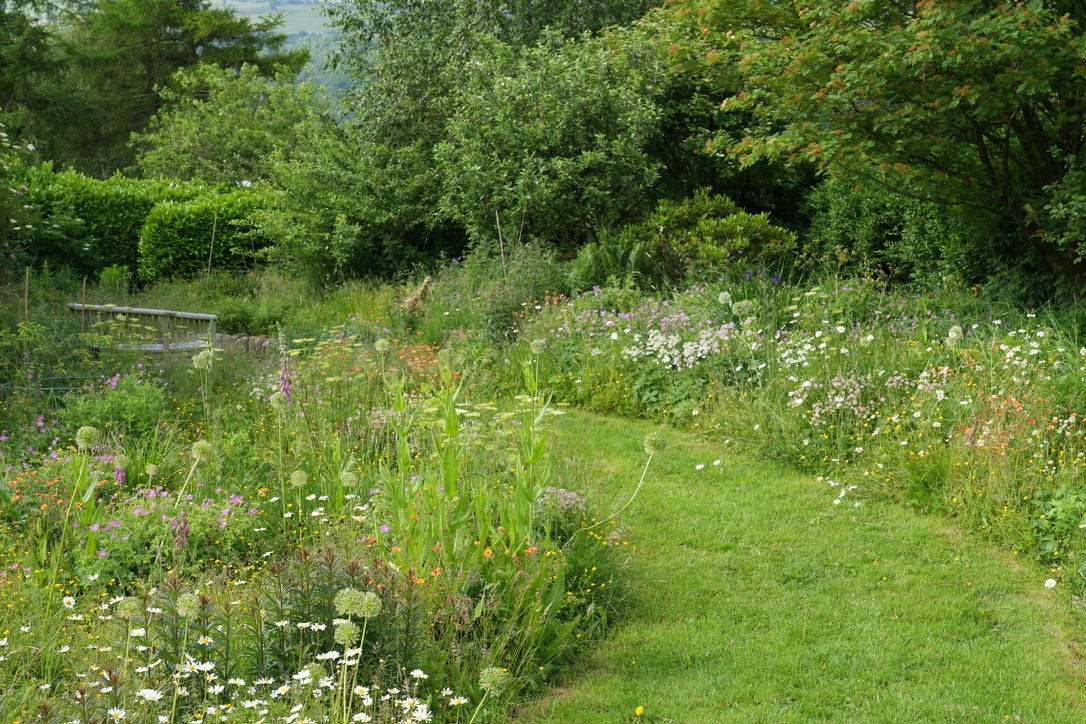
There was a time when I shunned grass paths, they just didn’t look right to me. Then we moved to our new garden in Yorkshire and the idea of paved or gravel paths felt wrong in this luscious part of the world, alive with green.
I umm’d and ah’d about what material to make our garden paths out of and during that dillydallying the answer grew in front of my eyes.
It wasn’t grass paths I didn’t like, it was the dated 20th Century ideal of immaculate cut grass. Unnaturally flat and green without moss or daisies. The juxtaposition of complex flower borders against a monoculture bore, that’s what didn’t work - not the grass path itself.
So I embraced the scrappy grass path...
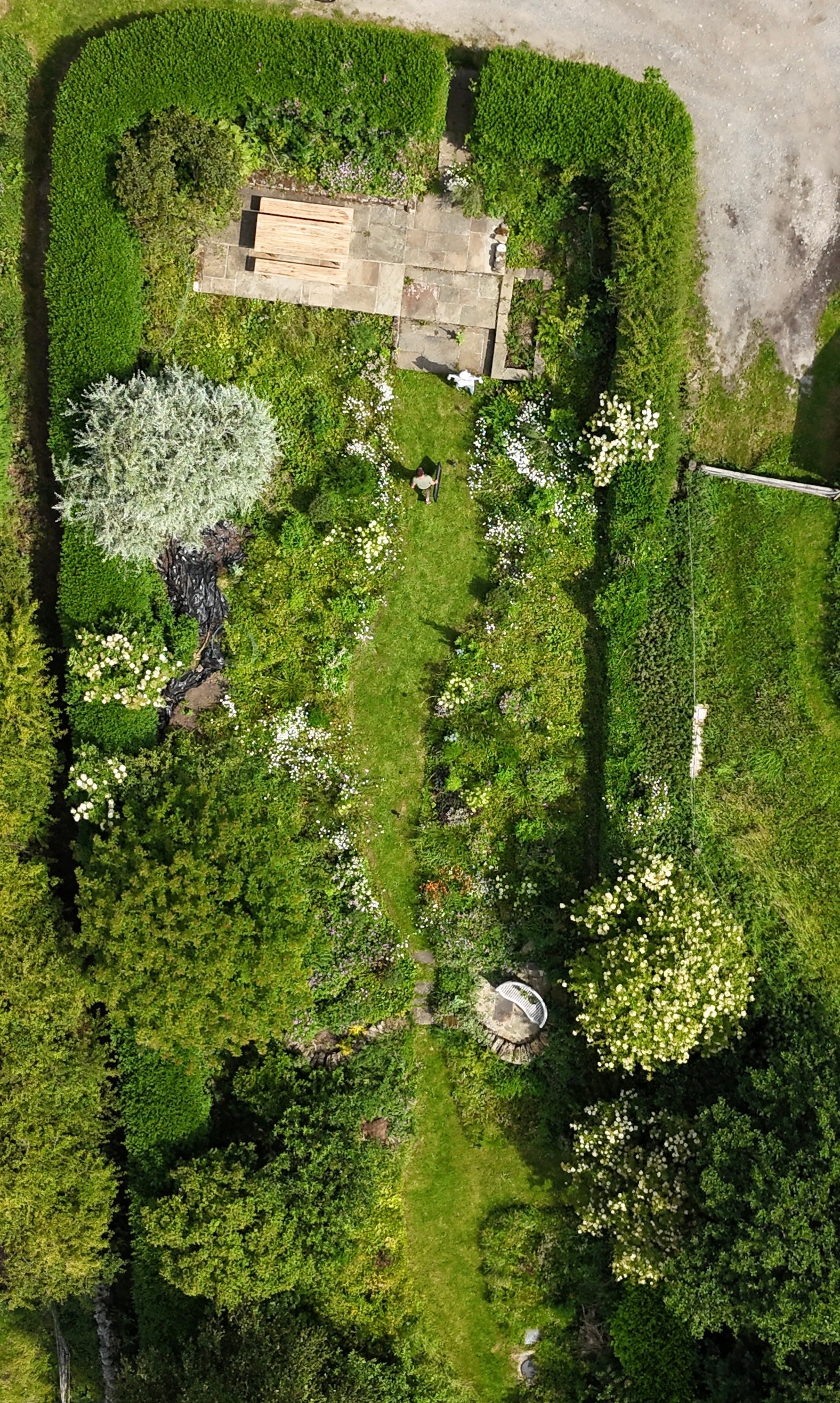
I set out a shape and occasionally mow it through the spring and summer months on high to let the dandelions and self-heal flower. Little hummocks and tufts develop, as do bare patches and mole hills. All of this creates an unevenness and complexity in shade and texture that blends better with our ramshackle planting.
It is a habitat in itself. Attracting small plants, fungi, insects and birds that need this kind of low-grass open and sunny plant community. With only 20 or so mows a year on a mulch setting with an electric mower our scrappy grass path is likely sequestering more carbon than the mower uses.
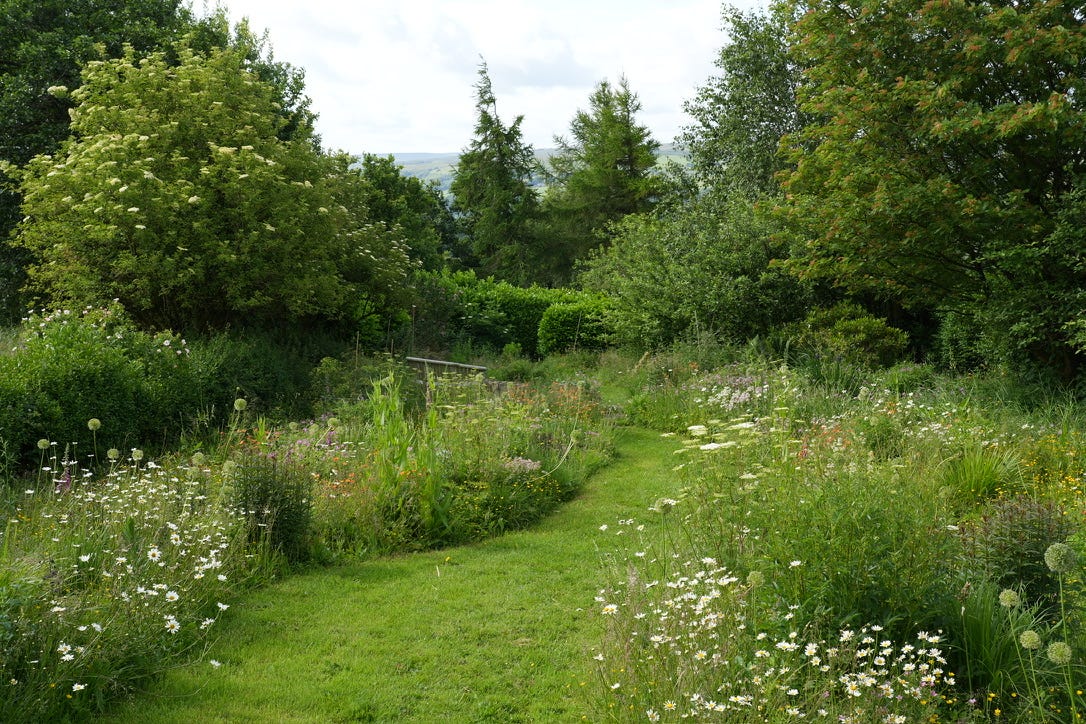
It has brief moments of neatness after a mow giving me a breath of fresh air, a space to walk through that forgives the mess of the rest. Perhaps there’s no point in gardening if all we need is a narrow grass path to walk through and frame the chaos.
I love our unkempt grass path. It is a fluffy green hug that embraces the entire garden and me in it.

Every year we reduce the amount of 'lawn' as we gradually turn it into meadow or forest garden, but we also find that grass paths through the planting work really nicely. There are several benefits-We mow, or 'harvest' with a battery mower (on sunny days so its charged from solar panels) and then the cuttings are used in our layered compost heaps. It also helps keep human traffic, and therefore compaction, to a defined area rather than compacting the soil where plants and trees are growing.
Here in the US, what grass I have left in my urban yard is scrappy grass (very mossy in winter) that functions as path. I use no chemicals or spray, have overseeded with yarrow (which in our increasingly summer dry climate in Southern Oregon stays green even in drought periods. The grass goes fairly brown as I don't water my lawn much in summer and we get little rain the end of May-October). I allow English Daisies and such to grow at will. My neighbors mostly have typical American lawns-abundant and monoculture, though many water and fertilize less. I do have some gravel paths. But they take a lot of attention with a garden torch to keep the weeds clear. I can't use the torch in summer-fire danger is too high, so have to resort to hand weeding. Even weed chemicals seem to have an effect on Mason Bees and other pollinators. So I refuse to use them. "Scruffy" Grass paths are easier to maintain.