

Lean into garden problems
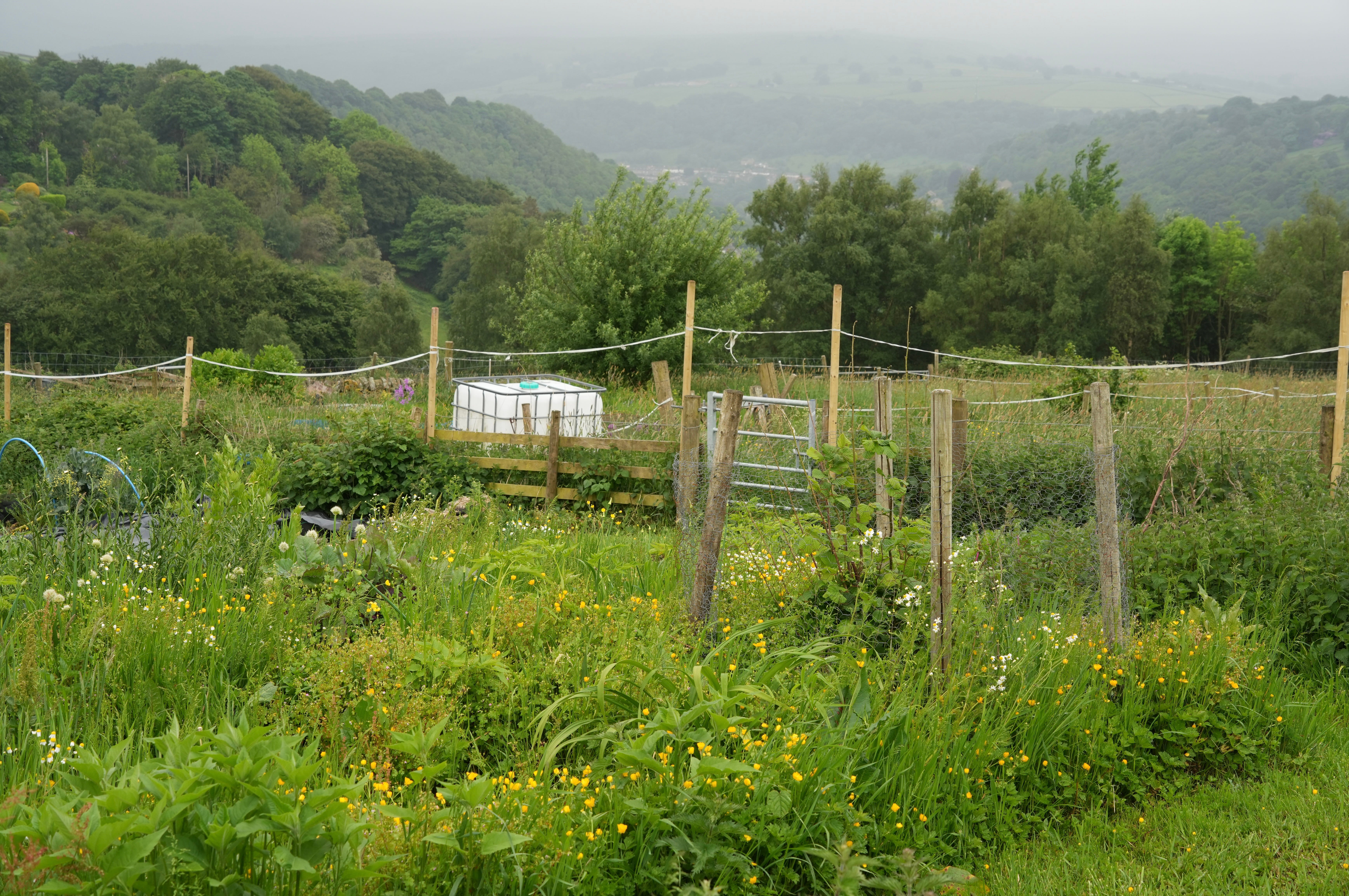
Weeds and pests. It seems for some people worrying about these two things is a large part of gardening. Personally, I gave up worrying about the concept of weeds and pests in gardens years ago when I realised they weren’t the problem they were made out to be. Problems? Pff. Throw those thoughts away. Gone! Poof!
Take one of my young food forests above, I know many people would be itching to get those creeping buttercup and grasses out. But if you look closely, like one of those Magic Eye pictures from the 90s, you’ll start to spot the leaves and flowers of other plants that I intentionally planted. They’re growing happily regardless. The problem is in our head.
Sure, I do stomp, yank or cut back the leaves of some around the younger plants until they are established and we do have to keep the roe deer out of some areas of the garden otherwise those large fluffies eat everything. I net some brassicas in summer, though not all, to preserve some leaves for us to eat, but that’s it.
I’m not going to spend hours weeding out everything for it to grow back a few weeks later and I’m certainly not going to wage war on gentle slugs and snails. I simply do not have the time and those weedy interlopers are actually serving an important purpose. One they are a moisture locking groundcover, two they increase biodiversity and three they help improve soil fertility.
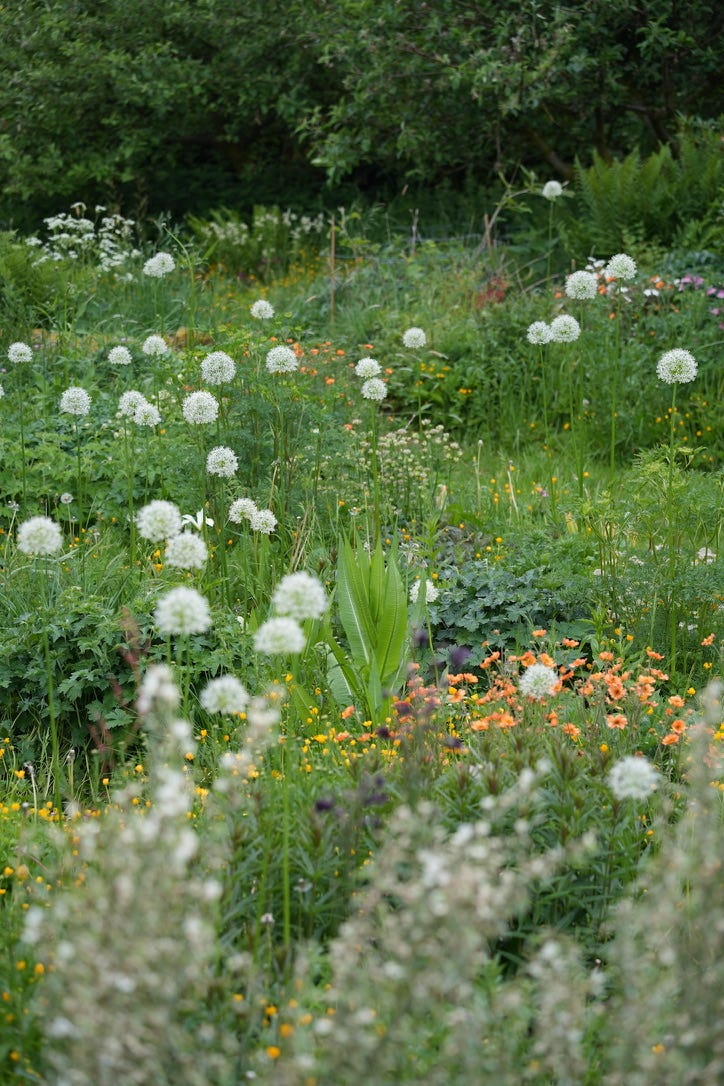
In our main garden I’m following the same laissez-faire approach and with each year it works better and better. Perennials establish and spread (naturally or by my helping hand) slowly crowding out the buttercups and dandelions. The buttercups will always be there, benefiting wildlife and the garden only more diluted.
I went cold turkey on worrying about insect and mollusc damage years ago. As soon as I did I saw gardens differently, I focussed on the big picture, not the odd lost leaf or plant. My eyes were also opened to the complex ecosystem in our garden and the joy to be had from knowing each plant supports tens, sometimes hundreds of species of animal. In turns sometimes supporting other animals that eat the smaller ones.
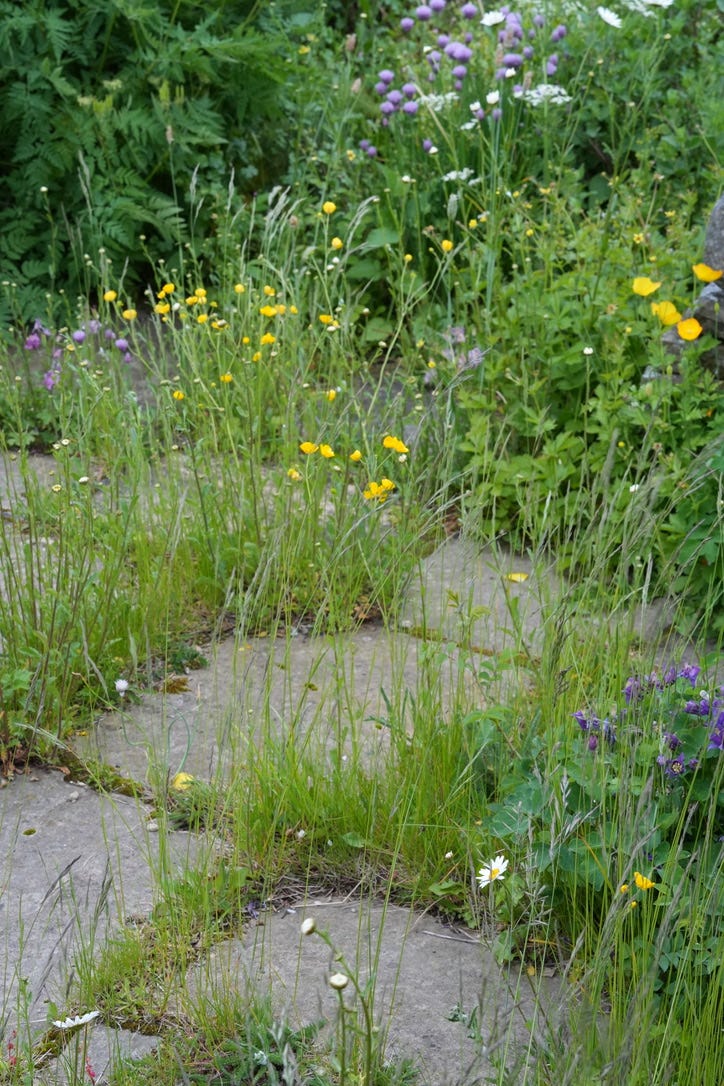
Outside our house is a small patio we don’t really use for sitting on so I co-opted it as an extension of the planting areas, discussed in last week’s newsletter. It’s pretty fun watching this space change each year as the plants seed, kinda like slices of a meadow with some ornamental plants thrown in. We do have another patio with pointing and no plants in the cracks, I like that look juxtaposed against the chaos. It’s good everyone has a choice by casting aside society’s expectations of what a garden should look like.
I know I won’t win some people over with all of this, their world view of gardens is too fixed. But when I hear people spending money and time on remedies for things like a leaf being nibbled or whatever, I want them not to worry about it for their benefit as well as the wildlife.
I’ve learnt that by accepting perceived problems in gardens it reframes everything and we plan accordingly - they are no longer problems. Rather than weeding out buttercups, what will grow alongside them? Rather than worrying about slug nibbles on leaves, what is tolerant or resistant to them?
My number one tip is to focus your time on growing more plants. When you know there is a constant supply of plants to fill gaps or cover buttercups, it makes everything better. Growing plants from seed, cutting or division is always time well spent.

Keep learning with a Wild Way paid subscription
10 flowers for late-May colour

The transition between spring bulbs finishing and summer flowers opening can leave a gap of a couple of weeks at this time of year. Here are some plants that are guaranteed winners in the right conditions.
Silene flos-cuculi | ragged robin

Ragged robin is one of my favourite perennial plants. Flowering from May to August with delicate, finely divided petals in a strong pink held on tall thin stems above narrow smooth and lush leaves. That ragged appearance to me is as contemporary a style icon as flowers come.
What is plant community design and does it work?

Our garden is a loose plant community that changes every year. As the gardener I of course steer it in one direction by adding or dividing plants, but the plants are my gardening partners. Foxgloves, teasel, tufted hair grass, oxeye daisies and many other plants self sow where they want and I often leave them to surprise me. I didn’t plant any of them in the above photo.
Cytisus scoparius | broom

Broom gets its name from the old use of its tough stems with wiry ends. Cut, dried and upturned, with lots of stems tied together, broom was once used to sweep floors. Who knows why we all stopped using it.
Crataegus monogyna | hawthorn

Wind twisted, gnarling and angular. Weather cragged bark, vicious thorns of dagger. Frozen in motion. Overlooked contemporary tree of our time. Loved by moths and butterflies, birds and mammals. Hawthorn captures the wild way like no other plant.
Definitely fits with my philosophy of ‘life’s too short’. When my Dad was alive he was a slave to his lawn: mowing, feeding, raking; eradicating every last scrap of moss, daisy and buttercup. He was obsessed and it robbed him of both time and money. I think it stole his joy of gardening too because he was chasing an imagined perfection he was never going to achieve. When he died we couldn’t get anyone to cut the lawn for week and weeks and it grew into a beautiful patch with daisies, clover and mixed grasses. I thought it looked delightful. He would have been horrified! We sold the house with it like that, too.
This approach is the main reason I subscribe to your substack, thanks for changing my thinking! This year, for the first time, I've learned to embrace our garden's wilder bits, which means I now really enjoy gardening without feeling overwhelmed by "weeds". Just one example - realising that Herb Robert actually makes nice ground cover has made my life much easier! And the bees love it