

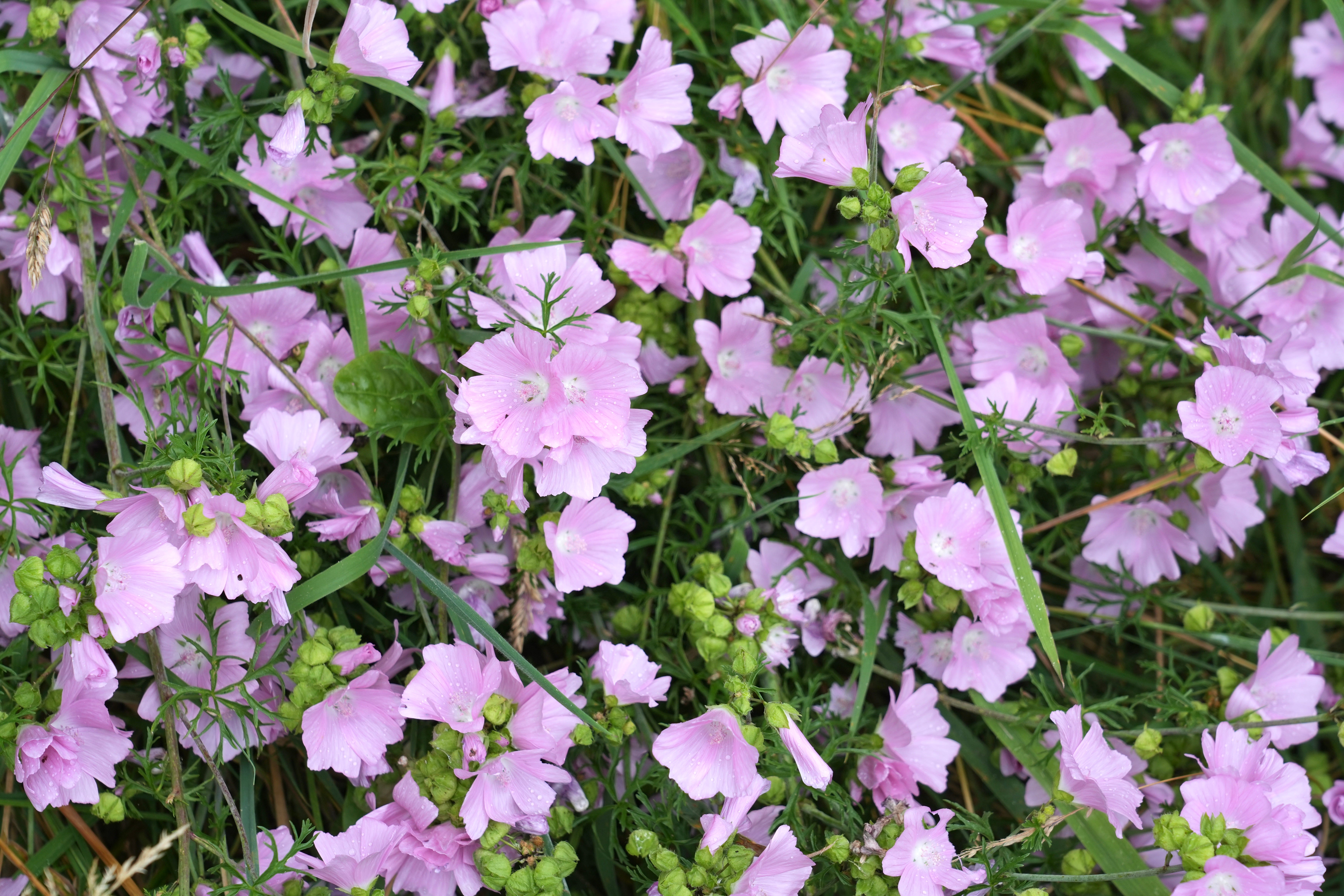
Down at the bottom of the garden, among the birds and the bees, there’s a lot of friendly flowers, they’re called Malva moschata, more commonly known as musk mallow.
I love all mallows, they tend to flower all summer long and often into autumn too. They’re a real joy in the wild, and now I’m interested in bringing them into gardens too.
Need to know information about musk mallow
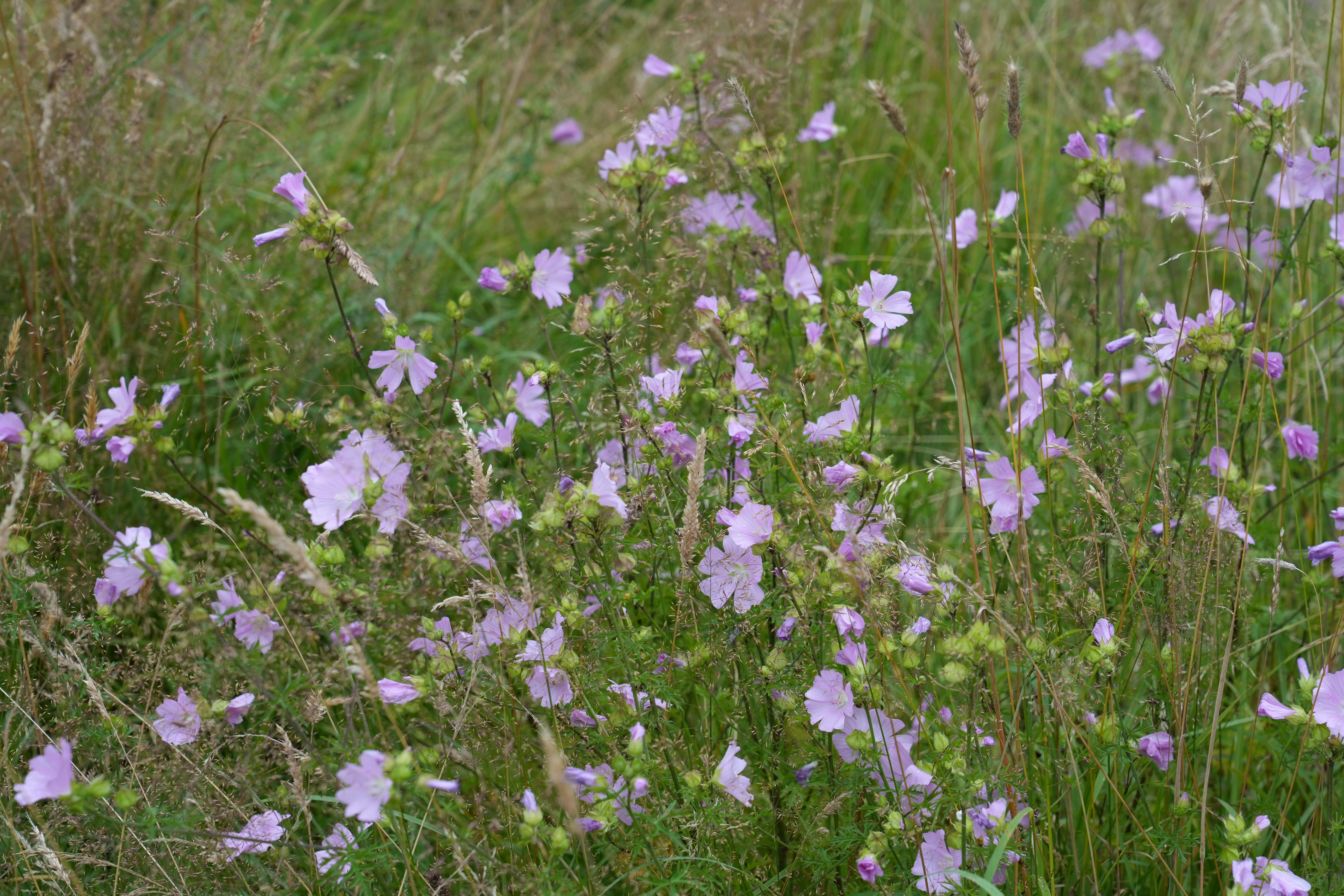
Malva moschata originates from all across Europe, though botanists at Kew don’t think it made it all the way to Ireland, which might tell us something about the timing of its historic spread.
It doesn’t seem to be a wild plant in our area of Yorkshire, so these plants will almost certainly have been introduced to the garden in the past, probably as part of a meadow seed mix.
That said, it does grow in the wild around the UK, including nearby parts of Yorkshire, and is a fairly innocent wildflower that will spread by seed but not too vigorously.
On warm sunny days, the flowers have a subtle musky scent.
Preferred conditions for musk mallow are full sun and soil that drains well. From my observations, it is extremely drought tolerant, continuing to flower through lengthy dry spells and heatwaves. I am growing some plants in part shade and they seem happy.
Musk mallow will grow to about 90cm tall and wide, but remains airy making it a great meadow plant or mixer in borders.
How to propagate musk mallow
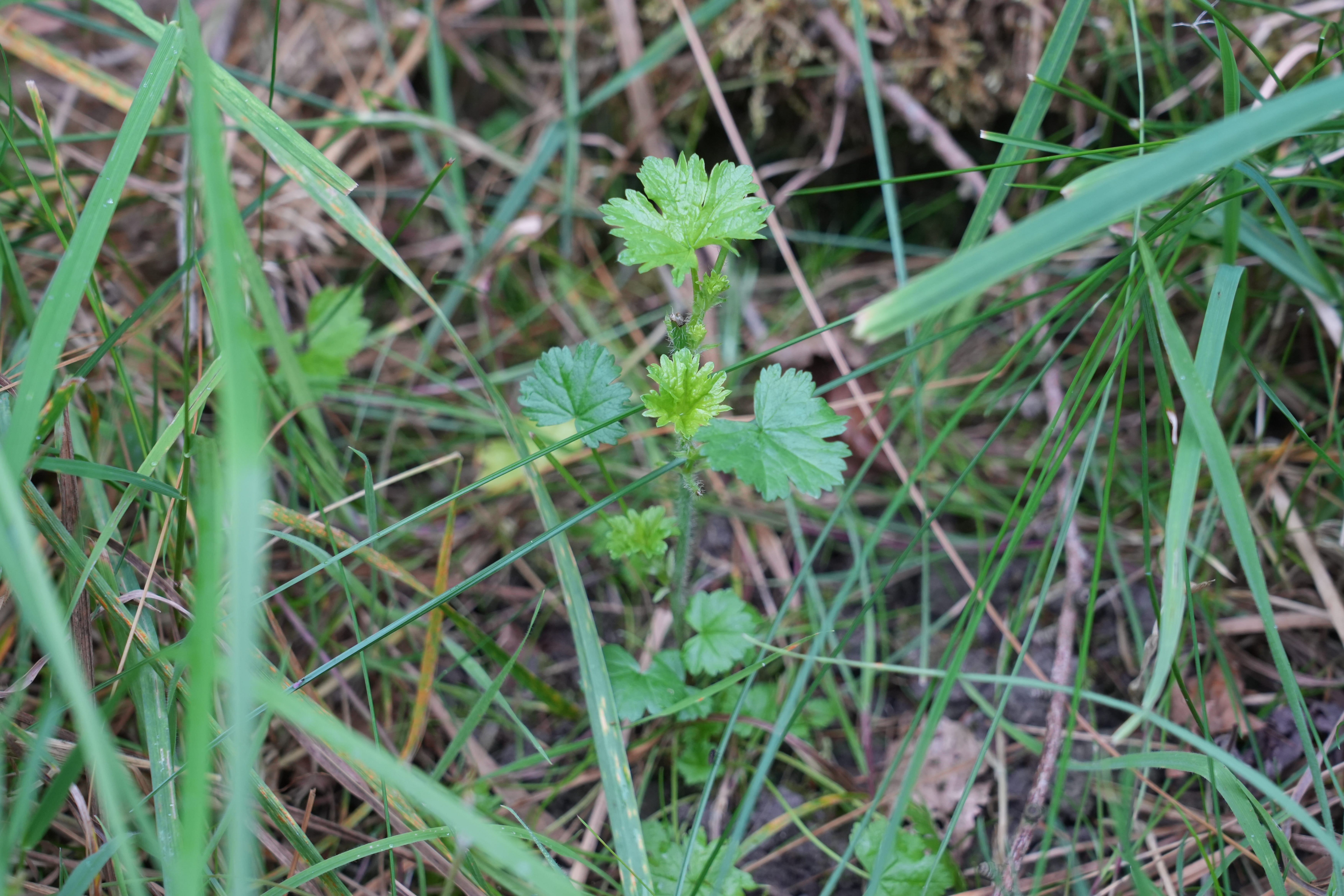
The easiest way to grow more musk mallow is from seed. Collect from a plant in late summer through autumn. Sprinkle onto soil where you’d like the plants to grow. Alternatively, grow them in pots of compost first.
If you have one plant, it will gently self sow around itself, and then you can always dig up and transplant seedlings.
It is also possible to take stem cuttings in summer, but with this plant I’d suggest going for seeds as it’s less of a faff.
Is musk mallow edible?
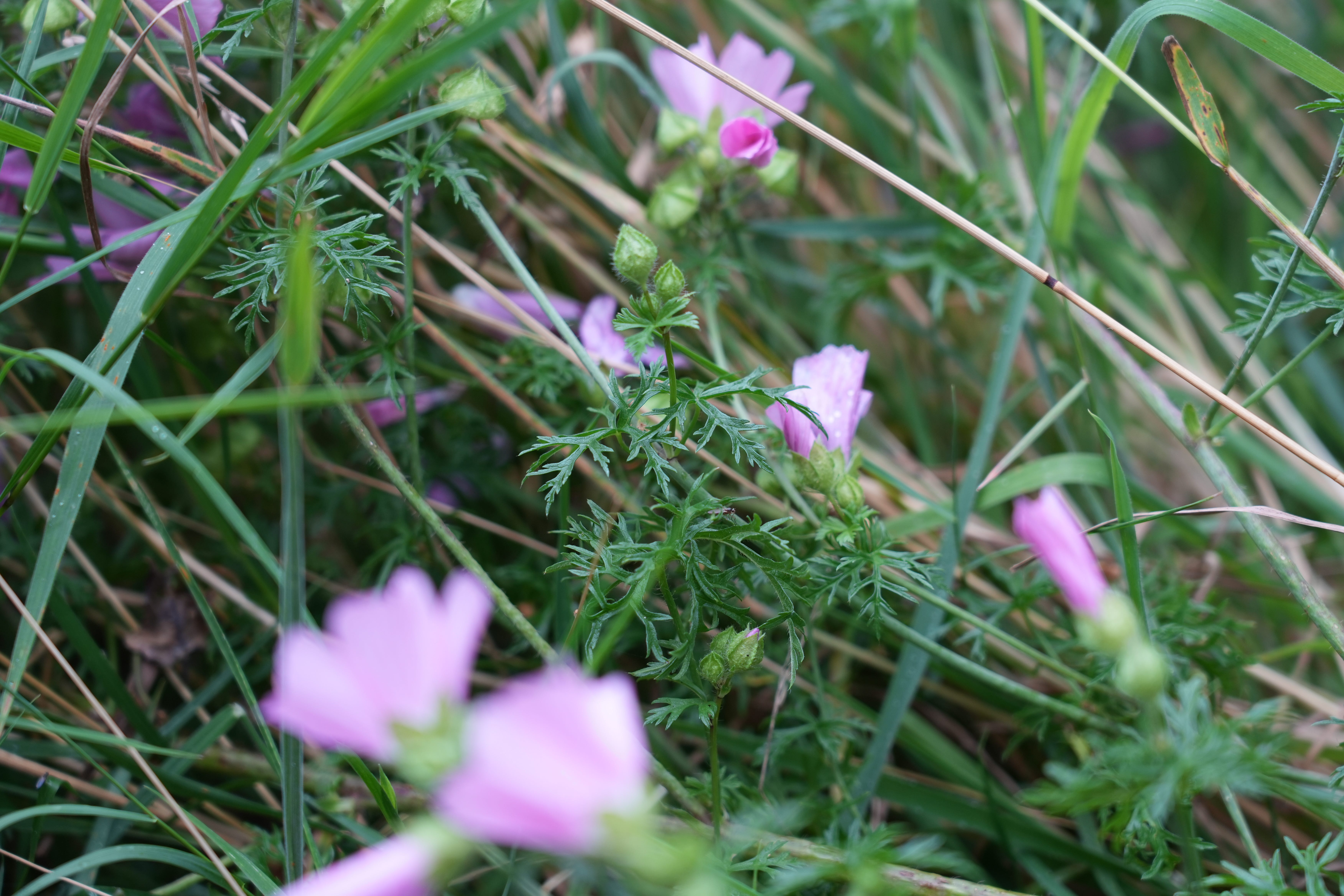
Flowers and leaves of Malva moschata are edible, as are seeds. As with most wild forage plants, the leaves are tastiest when young. Use the leaves in salads.
Is musk mallow good for wildlife?
Yes, Malva moschata is used by a wide variety of pollinating insects.
Using musk mallow in design
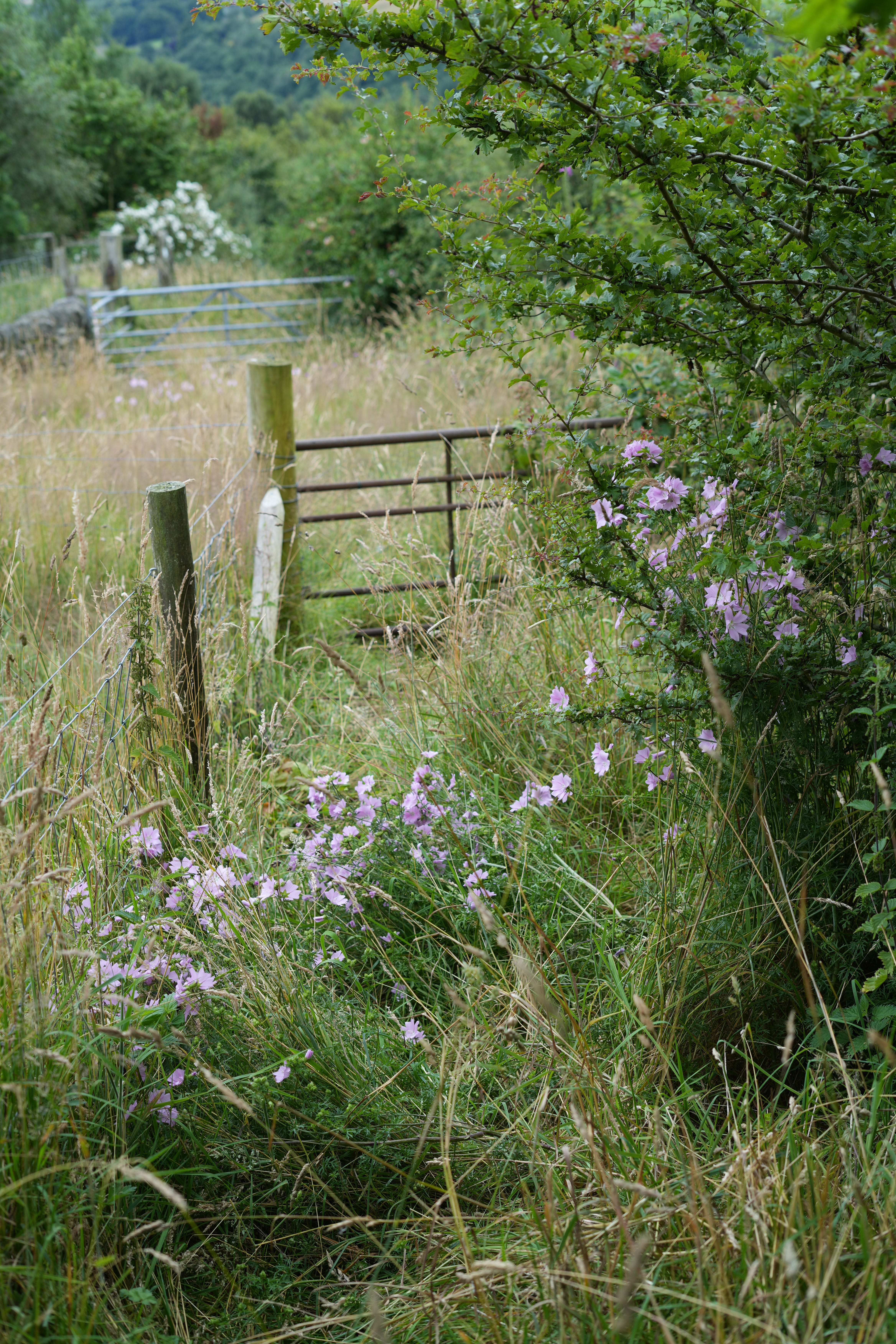
Right now I am enjoying its free spirit, growing where it wants among grasses and other wildflowers. Slowly I’ve been moving seedlings further up the garden to start growing it among our ornamental plants. It’s almost like a larger, stiffer stemmed geranium in look and effect. I would mix it with similar pale blues, yellows, whites and pinks.
The good news is that it’s a tough plant able to grow in highly competitive conditions, such as those in the above photo, and remains happy year after year. This bodes well for low maintenance lovers, though in a garden I imagine its seedlings will fair better and you might have to thin them out more than in wilder areas.
Are there any downsides to musk mallow?
None I can think of.
All in all, musk mallow has grown to be a favourite of mine and I’m hoping to have many more plants around our smallholding in future years. I might keep it from the meadow, to save that for true wild plants that largely evolved in the area, but in the ornamental areas it will brighten our day.

Wish we could share pictures in comments, but I love this plant and it looks great with our masses of crocosmia x crocosmiiflora, unlikely as that sounds. I believe it is native here as this land was not really gardened until us. Just wish it was as vigorous as the crocosmia - that would be some sight!
Not sure if it’s intentional, but that first line of this article has dredged up some childhood memories and will have me singing the Poddington Peas theme tune all day! Love your thoughtful pieces dropping into my inbox - I find them a really lovely way to stop and reflect on what’s happening outside in my own garden and beyond.