

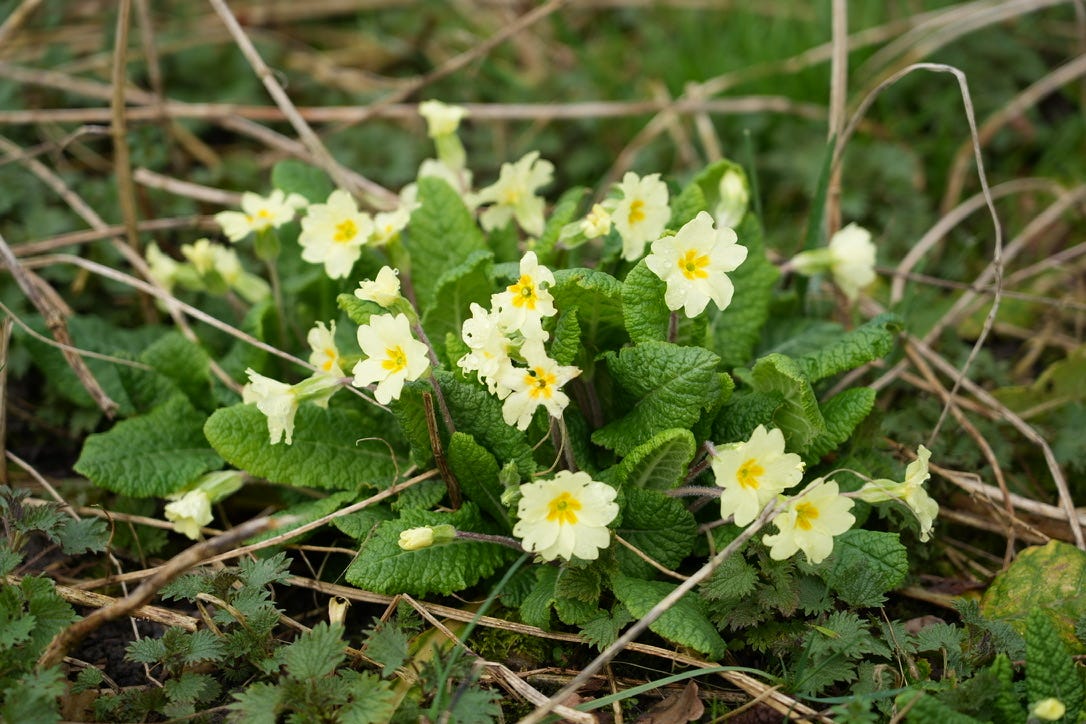
Primroses are known by the botanical name Primula vulgaris, vulgaris meaning ‘commonly seen growing all over the place’. They are indigenous to Europe, north Africa and the caucasus.
I’ve always loved primroses in the wild, where they tend to find the most perfect mossy spot on a verge or beneath a tree in some picturesque location. Flowers glowing among damp emerald greens. In fact, I suspect Primroses are fully aware of the aesthetics of their surroundings as I’ve only ever seen them in beautiful places. Especially around North Yorkshire for reasons known only to them
In gardens I’ve shied away from planting primroses because they look a bit blousier than my tendency toward plants with a sharp, contemporary look (to my eye). I confess, in gardens I thought they look a bit naff because I associate them with naff paintings of faded watercolour fairies.
My opinion however is changing, or perhaps what I want from gardens is changing. I love how primroses look in mossy spots in the wild, why not gardens? Last autumn I divided a clump into twenty or so little pieces, planting them all over the wilder part of our garden, where I’m concentrating on growing primarily wild plants.
Need to know information about Primroses
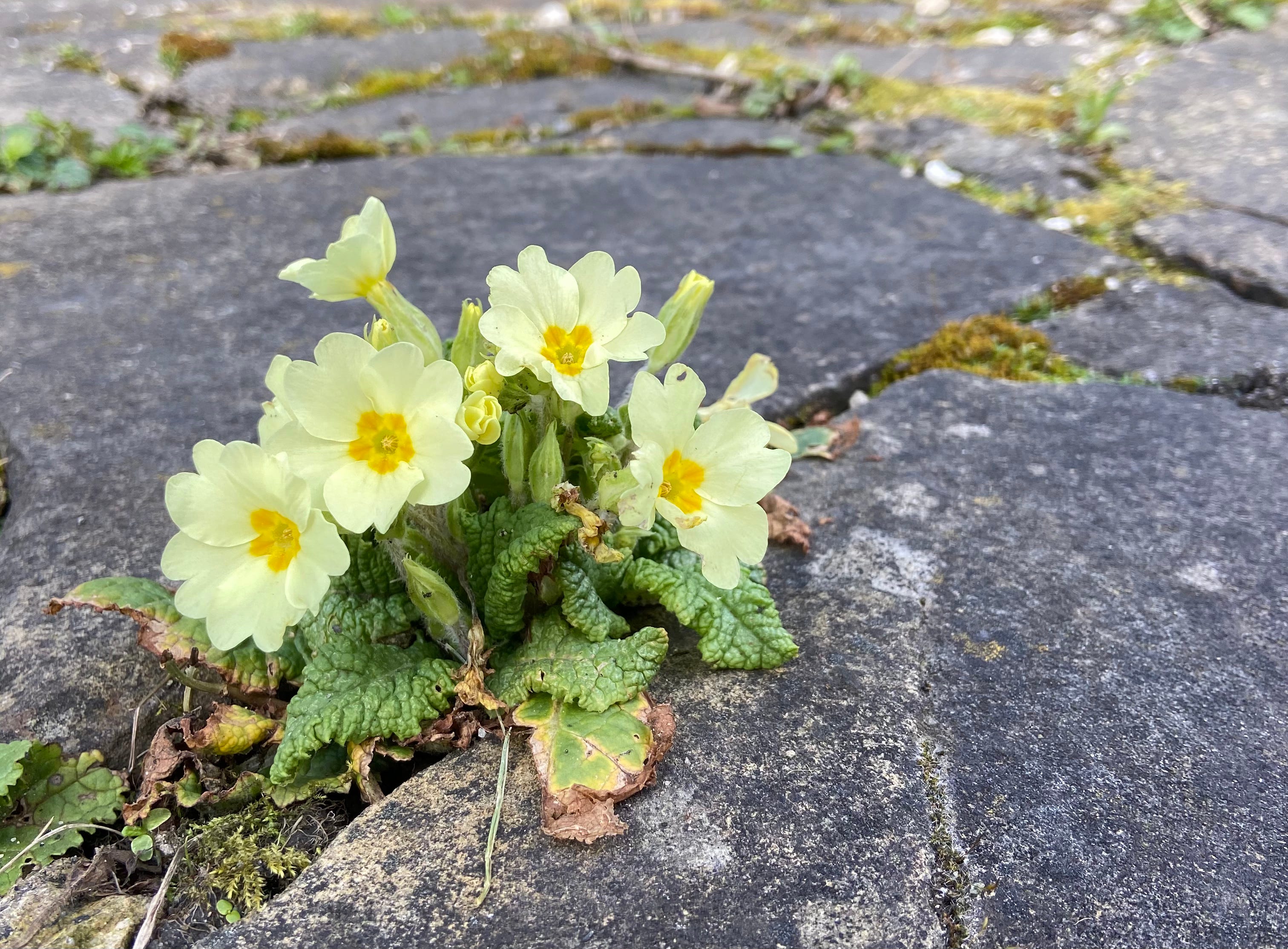
Primroses are small perennial plants that grow to about 20-30cm wide by 10-15cm height. Forming little mounds of leaves and flowers. Tough, they can withstand extremely cold temperatures with ease, and they will grow in shade as well as sun. However they do need damp soil, they don’t like to dry out. Making shadey spots their preference. They are remarkable wild plants, growing strongly no matter what. Once established, they will return forever more and are one of the first plants to brave the cold end of winter when their new leaves tentatively test the air, followed by some of the first flowers of the year, alongside or just after the snowdrops. Primroses flower from sometime around February for a few months until the start of summer.
Propagating primroses
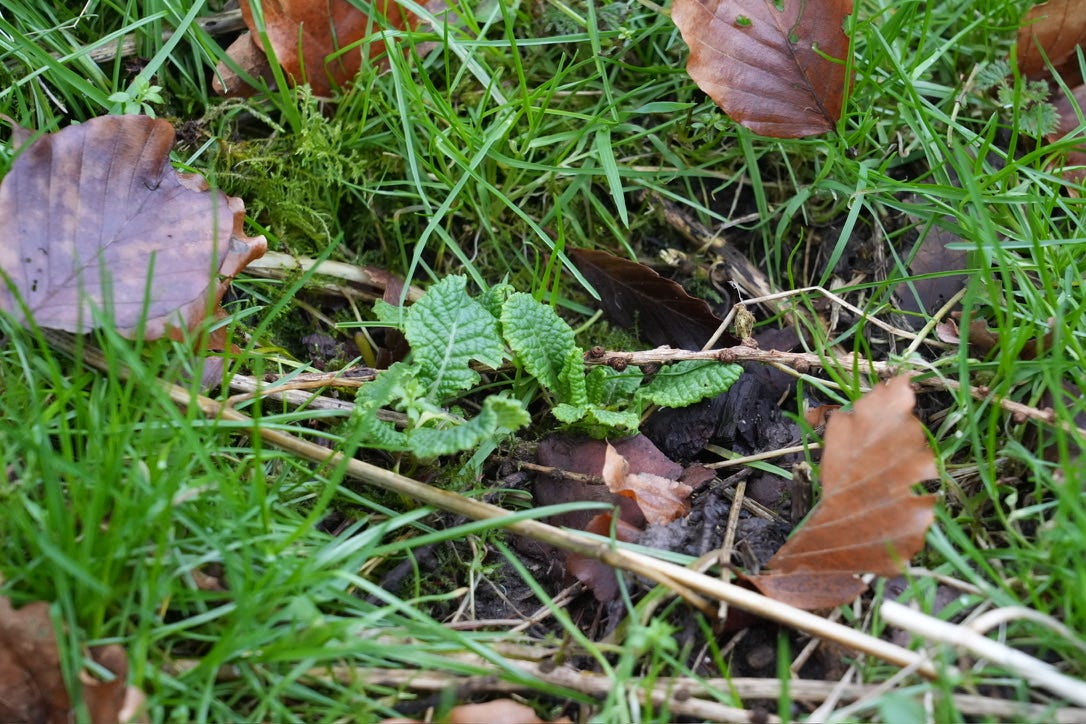
Technically primroses will produce seeds and self sow around the place. In practice, I believe they are quite slow to do this, their seedlings perhaps finding it tricky to get going. Which is why in the wild we see individual plants dotted around, rather than a thick impenetrable sea of pale yellow. (Update: thank you to Richard Carter for telling me primroses have an adaptation that means they produce different shaped flowers to prevent self pollination, something Darwin noticed. Some have short flowers and some long, leading to various differences in style and pollen. Making sure you have both types will aid pollination).
When you do see a lot of wild primroses you know you are in an ancient untouched place.
Give them a helping hand in your garden (not the wild) by dividing them. Dig out a clump carefully with a spade or fork, and then gently tease each growing point apart making sure they have a number of roots on each. When I divided a plant in our garden, the pieces fell away in my hand into lots of small separate plants. I then stuck these into the ground rather casually, making sure they were planted to the same depth as before.
Lo and behold, a few months later in February, they are all growing new leaves looking quite strongly established already. A very quick job that took only a few minutes. My hope is that they do start to self sow around themselves from now on because I enjoy the look of a garden that has largely planted itself.
Are primroses edible?
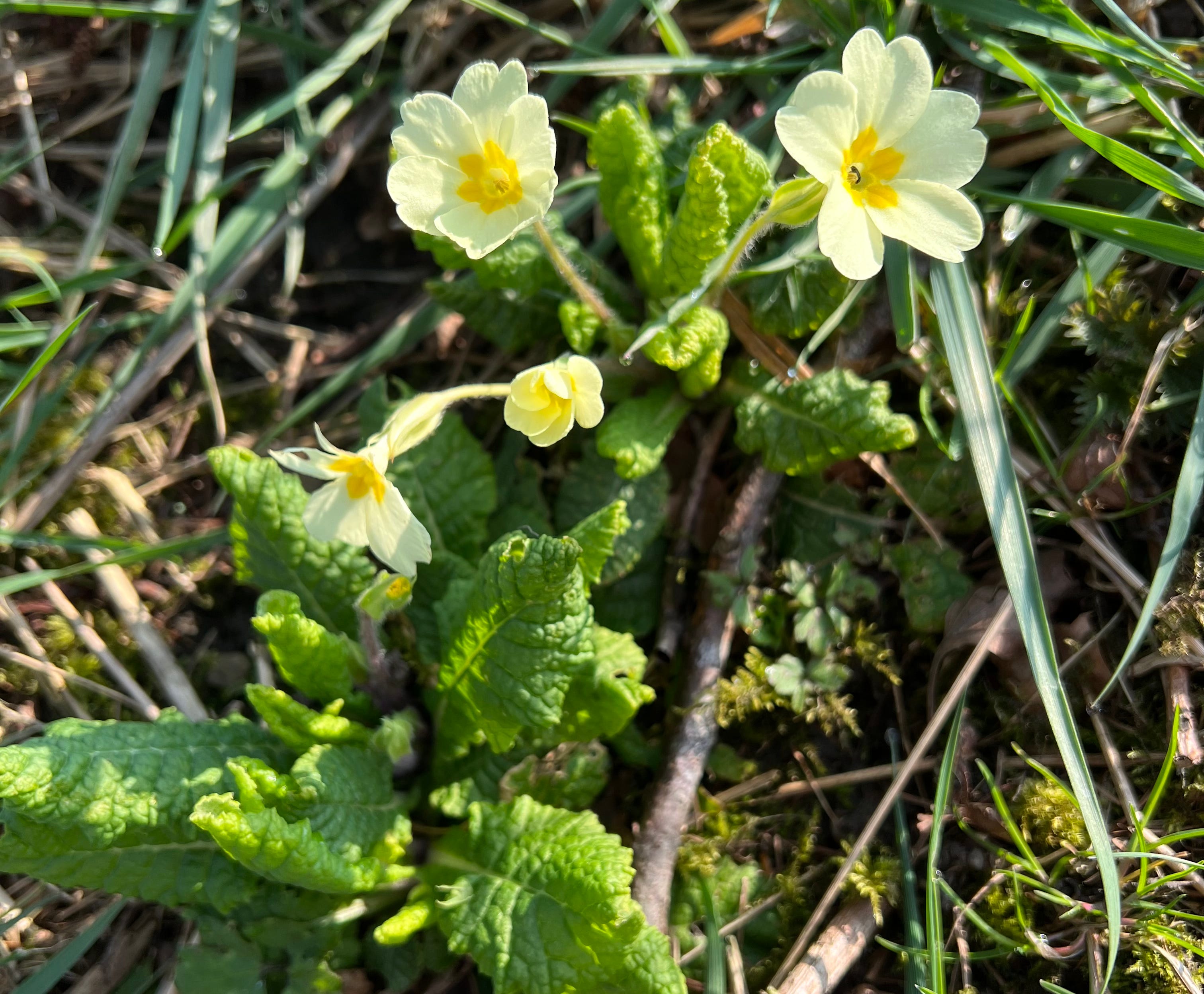
Yes primroses are edible. The leaves and flowers are worth a try. I like adding edible flowers to salads and this is one I would consider also adding on cold desserts, such as ice cream or cakes, alongside spring violets. The leaves I would only eat as a salad green, picking the youngest, freshest leaves to mix with other leaves.
How useful are primroses to wildlife?
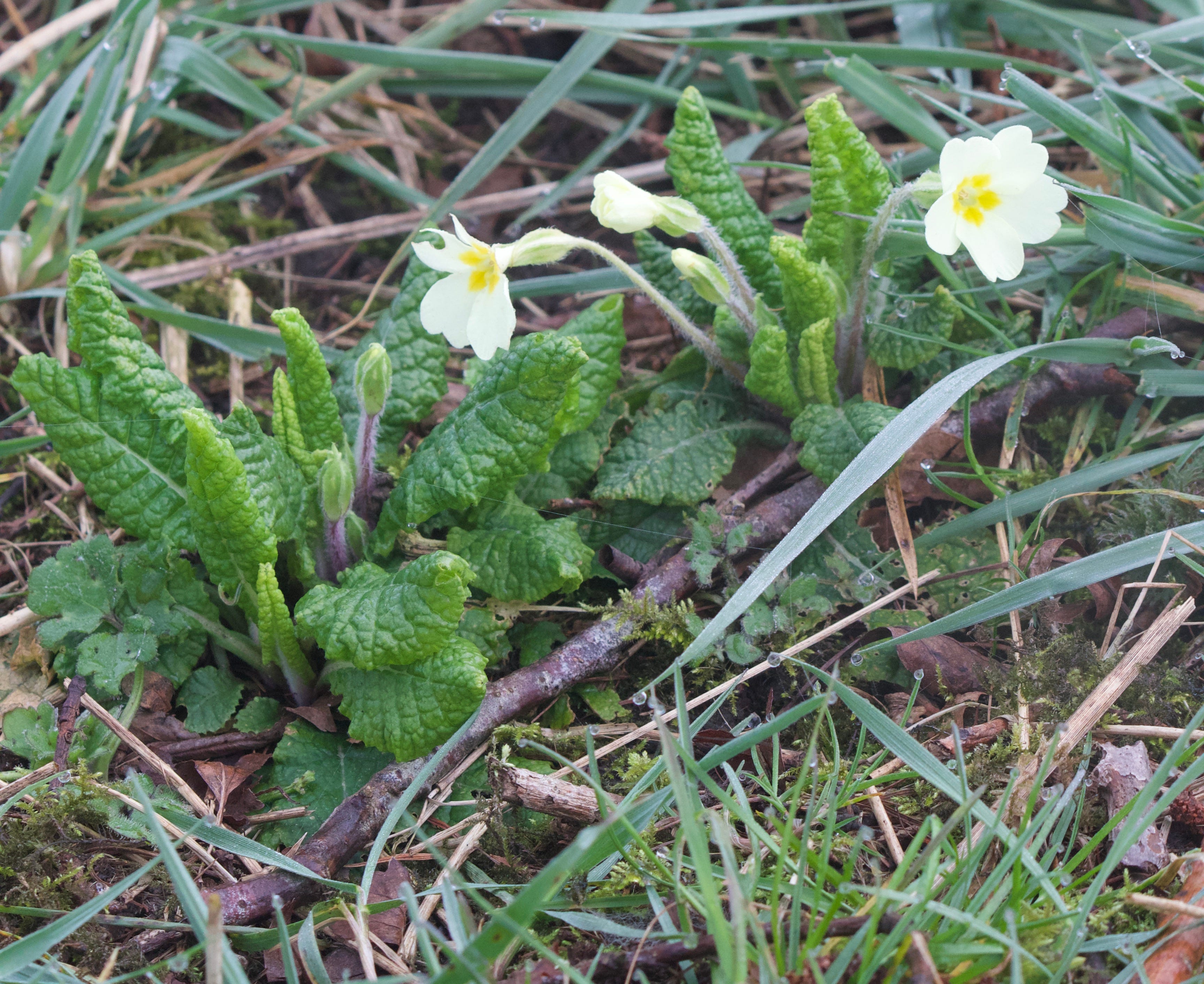
Primroses are pretty useful for wildlife. One of the earliest plants to grow and flower, they provide pollen and nectar for early pollinating insects with a long proboscis (tongue), such as the garden bumblebee and hungry emerging moths and butterflies. They are nibbled by slugs and snails which are of course food to so many other animals. At this point in the year, given few other flowers are around, their importance to wildlife is arguably quite high.
Using primroses in design
The reasons I’ve been coming round to using primroses in designs are: their colour, early flowering, robustness and wildlife support.
I love the fact that primrose yellow glows in dull light, of which there is a lot at this time of year. This is the main reason in our garden I divided the existing small number of plants and spread them all around, to increase the amount of pale yellow in spring alongside the daffodils and snowdrops. From a distance, adding many more spots of colour.
Because they are so robust, they are foolproof plants that just get on with what you want them to do: growing and flowering. They are also good at standing their ground, their little rosettes covering the soil and fighting against even bramble and nettles. Their ability to handle shade make them a great early flowering plant that can then be superseded by later flowering plants growing over and around them.
Plus I have a general desire to use more wild plants in designs these days and I want to go even further with my designs to recreate natural habitats over static traditional design.
I hope that was helpful, to explore the humble primrose in more detail. If you have any questions about primroses, please ask me in the comments below.

Visit the Wild Plant A - Z for more wild plant ideas and growing guides

I like to think of vulgaris as meaning "rude". So many rude plants, all over the place. It's very heartening. Love that these have made it off your naff list.
Taking issue with you Jack on the "naff paintings of faded watercolour fairies"! It was just such a painting of a primrose plant in a childhoood storybook (Enid Blyton, to make matters worse...) that sparked my interest in this plant, and plants in general, at the age of 3 or 4. The lesson from this is "you never know where naff may lead".