Weeds as a moisture retentive living groundcover
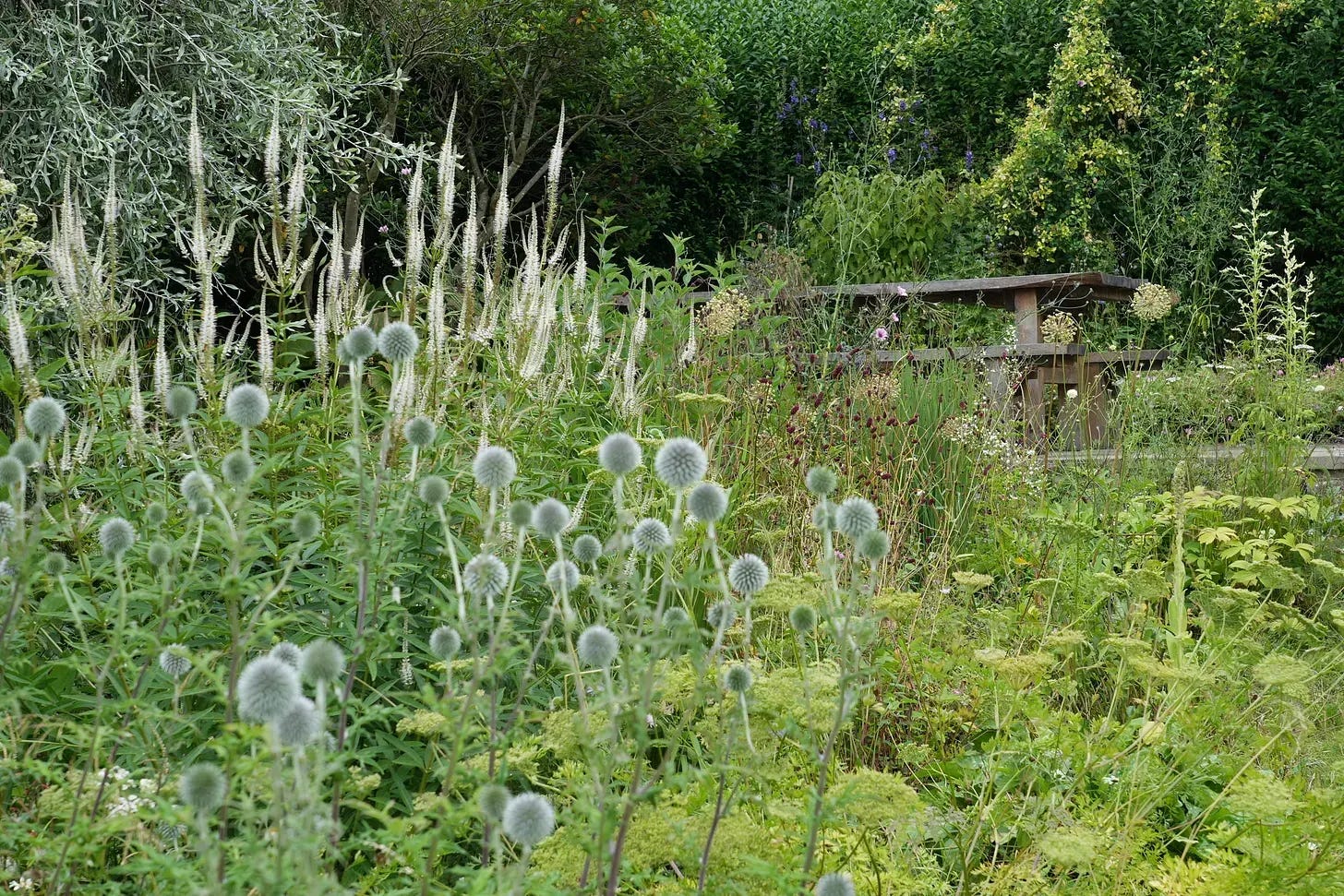
A few years ago I stopped weeding the above corner of our garden and then, when I saw the results, quickly stopped weeding the rest of the garden as well.
I do still rip out or chop back occasional stems of nettles, geranium, sticky weed and bramble where they start to swamp smaller plants. Otherwise, I don’t weed around plants or disturb the soil unless I am planting something new. Over time the main garden plants and wildflowers are balancing out (to confuse matters I think of wildflowers as garden plants, but for the sake of explanation I’ll separate them here!)
Benefits of not weeding around ornamental plants
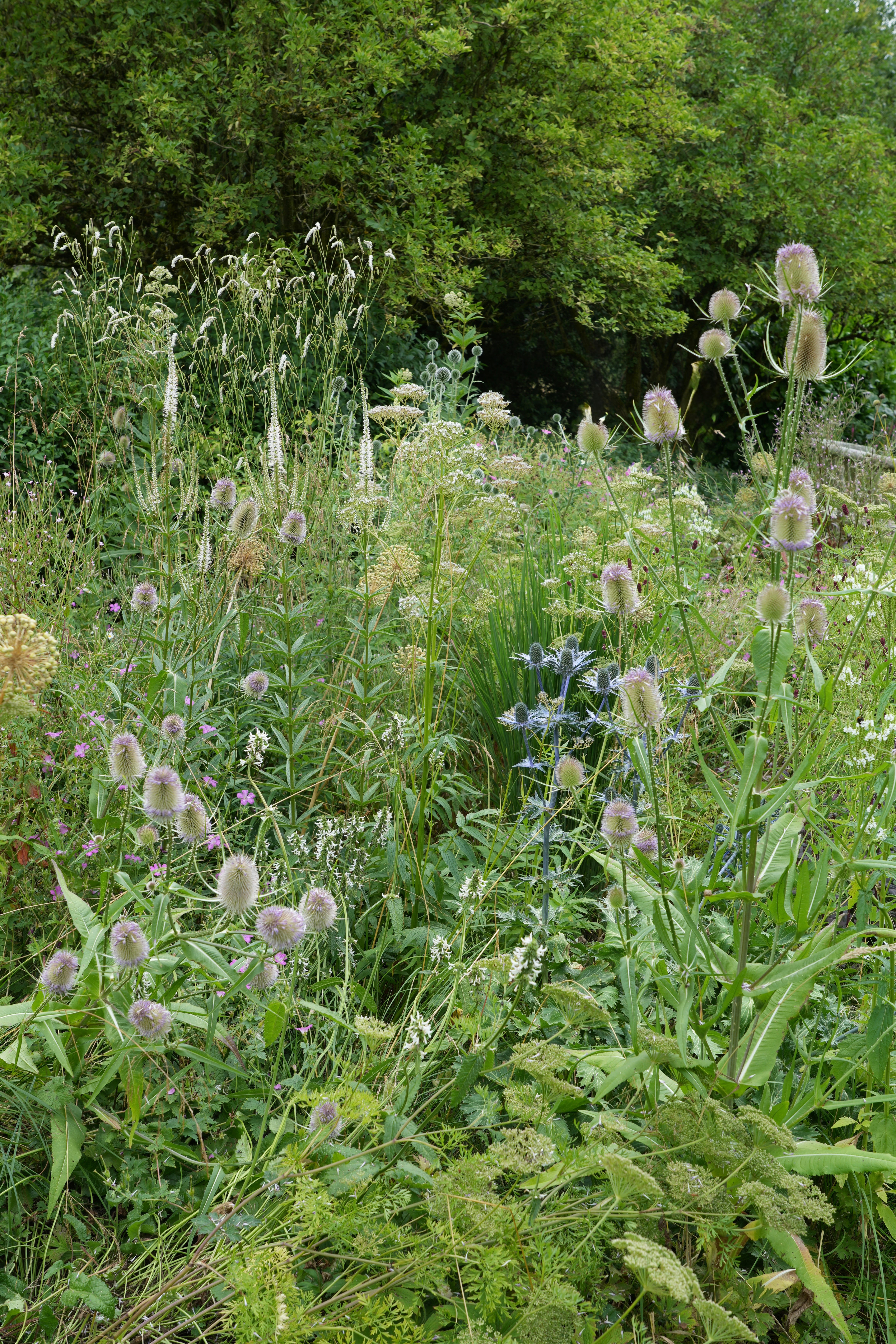
The benefits of leaving wildflowers that you don’t like around the plants that you do are:
Increased biodiversity - more plant species to feed a wider number of wildlife species above and below ground
Increased organic matter - leaves and roots of plants grow and die every year feeding the soil, removing the need to fertilise or mulch with compost
Moisture retention - a living, leafy groundcover of any plants actually helps lock in moisture and prevent evaporation from drying winds and sun
Less weeding - the weeds themselves are a groundcover that slow or prevent others from seeding
By weeding around plants and leaving ground exposed we take away or reduce these benefits - your main plants will of course contribute themselves but more is more.
A compost mulch adds nutrients in a different way and though it can lock in moisture, it is still more exposed to wind and sun. Inorganic mulches such as gravel and sand lock in moisture for a time but reduce organic matter - which is their intention in modern aggregate planting.
I prefer a living plant groundcover that produces its own nutritious mulch over time naturally as we see in woods, grassland, verges and other wild places. This simply recreates what happens in those wild habitats where everything grows together and the soil is as alive and healthy as it can be.
Not weeding around edible plants

In my upcoming book Grower Gatherer I spotlight a bunch of edible perennial plants that can be grown in the same or a similar way to ornamental perennials. This includes allowing wildflowers to grow around them. I’ve noticed that for some plants this can reduce their vigour as plants share nutrition but it’s a trade-off I’m willing to make and overall it helps with moisture retention.
Nowhere is this more apparent than on my allotment where one of my new perennial edible plantings has exposed bare soil next to it with deep fissures in the dried loam-clay soil. In the planting itself it is dry, stressing some plants in the heatwaves and lack of rain, but it is not anywhere as dry and does not have the cracks.
This is likely due to:
Shade and cover protecting the soil helping retain moisture
Root growth binding the soil
Increased subterrannean wildlife feeding on increased organic matter
Roots and fallen leaves contributing organic matter to the soil - though this is only a year old so the first two points are likely the main reasons so far
I’m excited to discuss this planting area more around the launch of my book. For annual crops I have always left weeds around them to a point: I remove plants that will be larger and outgrow the crop, and hoe if they are getting swamped. I find annual crops are more likely to struggle with a lot of competition, but I’m still experimenting!
Adapting for your region and conditions
Our garden is in West Yorkshire, UK (H4/zone 8b-9a) which has reasonably high annual rainfall of 1,100mm compared to say, London with 535mm (MetOffice). However, while we do usually have wetter summers than down south, our area still has drought and dry soil. Most of the rain is in autumn, winter and spring. To give you an idea, our water comes from an underground spring which almost dried up last summer and the area had a hosepipe ban.
In hotter drier areas of the UK and other parts of the temperate world, the same principles of a living plant groundcover remain the same. You simply have to adapt your plant choices for your garden’s conditions. I design gardens at the very south of the UK and I wouldn’t use all of the same plants as I grow in our garden. There is some crossover with the more drought tolerant.
As an example, in a recent food forest design in Kent, we are keeping a lot of the smaller weeds including dandelion, plantain and edible annual persicaria, Persicaria maculosa. While removing the only truly problematic species, field bindweed especially because it will smother smaller plants in the first year.
Do you leave ‘weeds’ and other wildflowers to grow around your ornamental and edible plants? What have you found? If you don’t yet is there an area you can give it a try?


I visited the wonderful Nant y Bedd garden in S Wales last year and the owners (whose name I’ve forgotten) talk about editing rather than weeding - I liked the idea!
I've been experimenting with leaving my weeds too Jack. I'm in the New Forest, Hampshire. We didn't have any rain for months last summer and this year is looking to be the same. I had noticed that in areas where I had weeded around plants, the plants started to wilt and look very stressed.