

Manage wildlife hedges for patchwork habitats
Help butterflies, moths and other insects with scrappier hedges
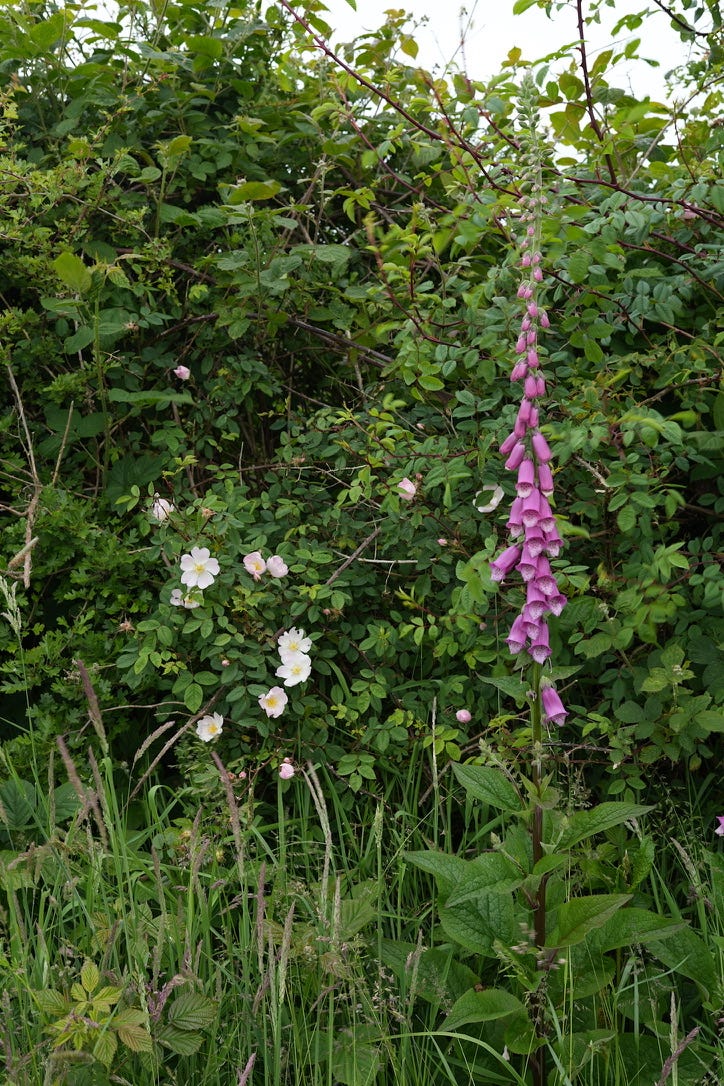
Hedges need cutting by definition to keep them as a hedge for living boundaries and to maintain that low, dense hedge habitat for wildlife. Rather than cutting them in straight lines, maintaining a mix of lengths with some uncut patches can help wildlife even more. I believe it also has a beautiful wild aesthetic.
Butterfly Conservation discovered in their research that leaving the young new season stems of blackthorn uncut through winter, eggs of the UK’s endangered brown hairstreak butterfly (Thecla betulae) were also saved. The butterflies lay their eggs on the young new stems where new leaves will emerge providing food for the tiny caterpillars in spring. By trimming all of a blackthorn hedge back each year, it also cut off many of that year’s butterfly eggs, reducing the population. The charity worked with farmers and landowners to leave some areas of hedge longer or uncut, saving many eggs and resulting in an increase in brown hairstreak butterfly numbers.
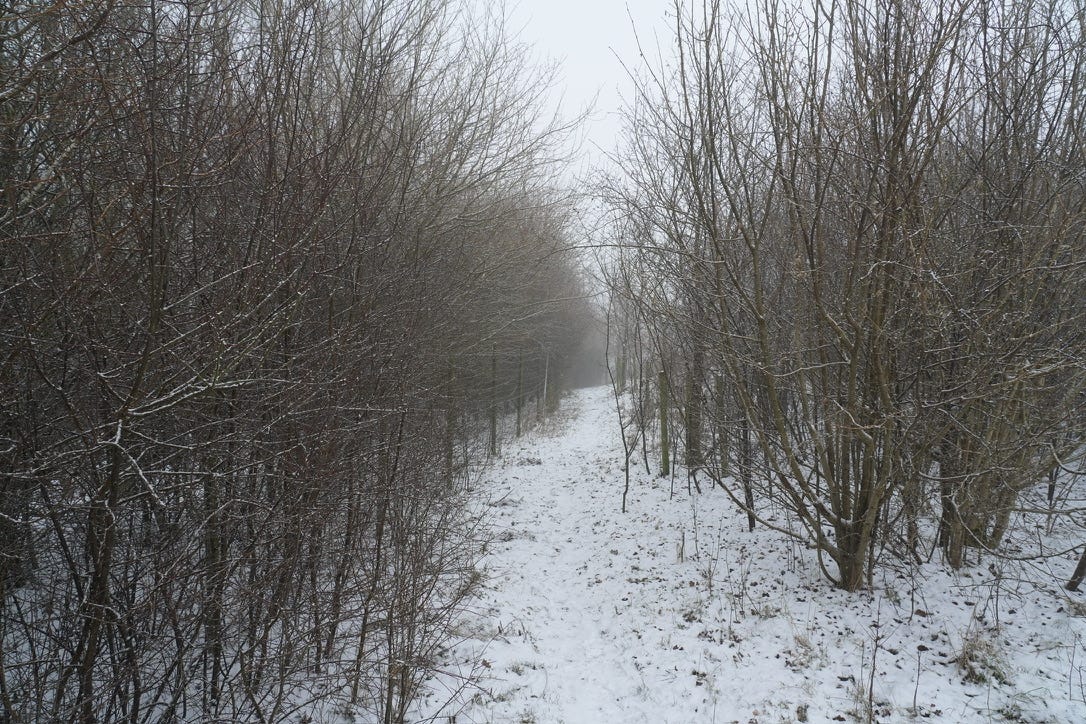
The brown hairstreak butterfly has sparse populations around the southern half of the UK currently. While the new research is about one species, I would hypothesise that there are many other species of insect that lay eggs or live on young stems and would benefit from the same recommendations.
Ecologist Richard Broughton advised me a ‘cut and stagger’ method of managing hedges for wildlife is long in practice. This recommends staggering cutting of hedges to every 2 - 3 years rather than annually for land owners at scale.
This works well for farmers with large scale equipment. However can pose challenges in the maintenance especially for smaller scale landowners and gardeners. For instance, leaving sections for that time will produce much taller stems that are woodier, harder and much more difficult to cut. Close to roads, paths or other access routes it isn’t always an option to not cut. Leaving sections to grow older and longer will reduce density of the hedge in those segments, which can negatively impact nesting birds unless there are other hedges nearby.
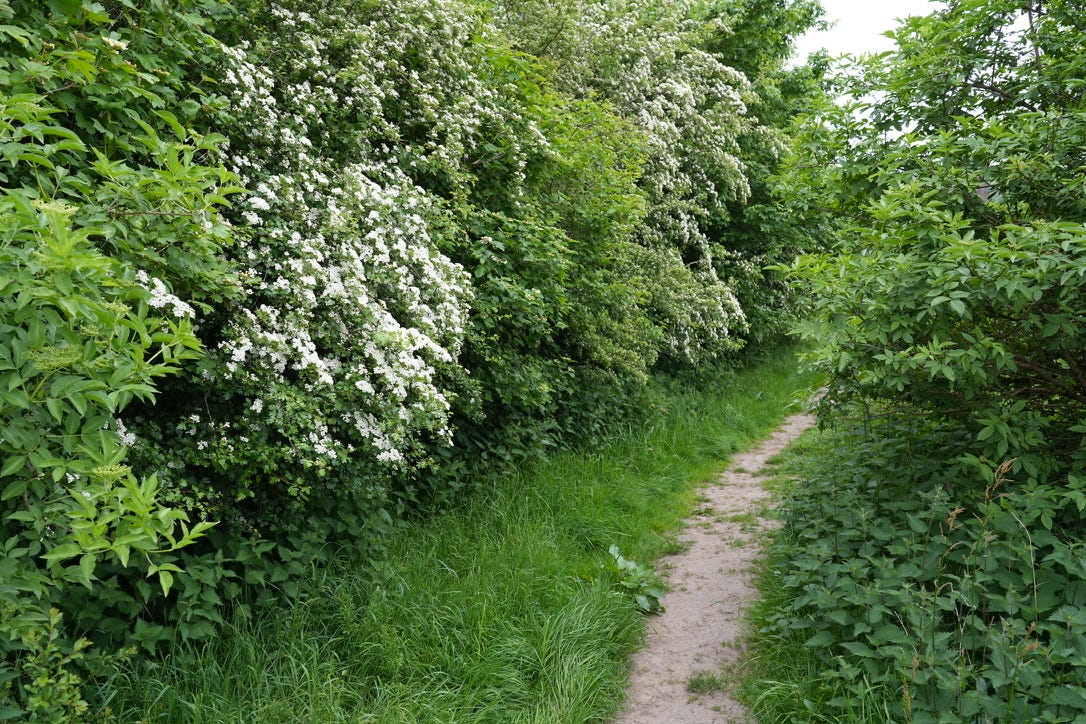
My personal advice to gardeners and landowners wanting to grow hedges for wildlife with these recommendations while keeping maintenance manageable and without impeding access is:
Plant a mix of native species: our hedges contain...
Elderflower
Hawthorn
Blackthorn
Crabapple
Field maple
Hazel
Guelder Rose
Dog rose
Honeysuckle
Forget straight lines: I love a scrappy cloud pruned, higgledy piggledy hedge. It looks interesting, varied and fluffy. It’s much easier to cut like this as you just trim into it and don’t have to worry about lines. Farmers with tractors of course will find it easier to cut in a straight line, and can lift blades ever few metres or so to leave sections.
Aim for a patchwork or mosaic: of young and old stems all along the hedge to cover the needs of different insects. With this approach it is easy to leave some patches uncut while cutting others for better access to berries and flowers. I would try to keep this manageable by repeating areas of uncut sections every few metres. By having patches, it’s easier to get in and cut these in future years with a saw so you don’t blunt hedge trimmers. It also gives insects multiple sections of habitat.
Place uncut sections out of the way: it’s easier to have the longer patches on top or on the side that’s out of the way, i.e. the other side to a road or path. Remember that you will need good access to get in and cut these bigger, woodier sections in the future. If planting a new hedge, you can account for longer stems by giving the hedge more space.
Maintain density for birds: cutting back areas of hedge is also essential for maintaining density of stems to protect nesting birds. Another reason why I feel a patchwork of different cuts along a hedge is important.
Change some positions of habitat type: try to mix up where you cut on the hedge every other year or so to maintain density longterm for the above reason.
Allow some plants to grow into trees: we are lucky to have some of the above species growing into lovely medium sized trees every 10 - 20 metres or so as part of the hedge. They grow over the hedge allowing light in lower down so it still grows densely.
Fungi, lichen and moss: one of the benefits I’ve noticed of our native mixed hedge is that over the years, cutting it increases the amount of dead wood on the plants. This is useful for some fungi. It also becomes home to moss and lichen.
Protect fruit and nuts: on the patches you do trim, I find it’s easy enough to do so while keeping haws, berries and nuts on the hedge because the new stems tend to grow slightly beyond the point they are produced. We keep our hedge to size by cutting areas in autumn while maintaining food and also lots of patches left uncut and longer.
If you’re worried that this approach will look messy, do not fear! We have managed our hundreds of metres of garden/farm hedge like this for the last five years and I love it:
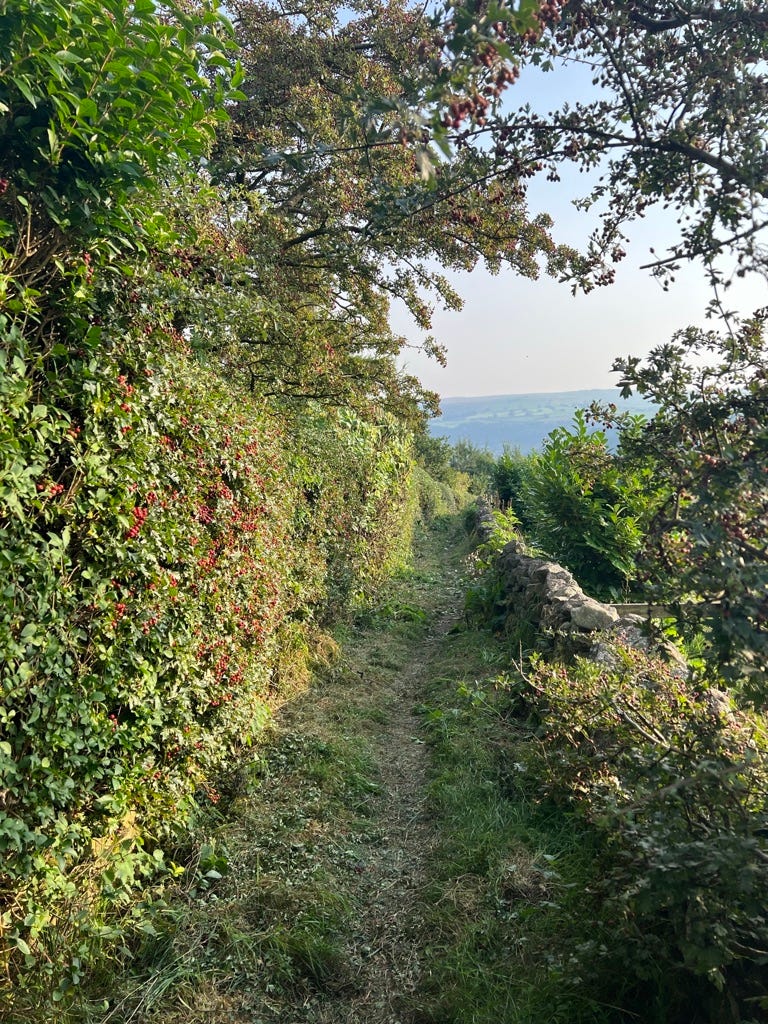
I love the curving look in our setting with the rolling Pennine Hills beyond. But this also works in smaller or urban gardens, bringing a touch of the wild where it’s needed most.
I hope that helps with some ideas for managing wildlife hedges in your own garden or farm.

p.s. limited edition signed prints of my new snow painting triptych are available on my shop.
I planted blackberries last summer & I envision blackberry brambles one day for birds & insects!
Just here to say thank you for the very inspiring and useful newsletters. Definitely in combination with your pictures to show what you mean/experimented with. Thanks a million!