March gardening: signs of spring
Time for gardeners to get busy sowing, growing and harvesting
Snowdrops and crocus are starting to finish and daffodils are well on their way to having their moment. Early sprouting broccoli is almost ready for harvest and the first leaves of crops to forage have emerged. Spring is here and for the gardener, it’s time to get busy.
Ready, steady, wait… then sow!
When March arrives it’s time for every gardener to get organised about sowing seeds. Not everything needs to be sown right away, in fact many plants are best reserved for another month or two. But some seeds do need to be sown by around mid-March.
Starting now also helps you spread out the workload by sowing a little at a time. I generally sow a few things every few days throughout spring, rather than in one big session, though you can do that too. Think of the spring March to May months as your core sowing period with the rest of summer and autumn for occasional top ups, especially to keep veggies coming.
During March I start with lettuce and other hardy salad crops, such as beetroot, radish and turnip. If the night temperatures are consistently above 5C you can sow outside, though at the start of this month it’s probably safer to sow seeds in trays of peat free compost under the cover of a polytunnel, greenhouse, coldframe or on a windowsill.
Perennial edibles such as wild rocket, globe artichoke, asparagus and thyme can all be sown now. As can annual flowers including nasturtium, cosmos and chamomile, and perennial flowers including astrantia, penstemon and cephalaria. I recommend sowing all of these undercover to avoid spring frost, even if they are hardy, and because some seeds need warmth to germinate. Wildflowers are less fussy and can be sown in trays undercover or outside, such as field scabious, ragged robin and musk mallow.
You can start sowing brassicas now, though I tend to wait until April or even May for most of them. Spring cabbage is worth sowing early. Brassicas are hardy and can be sown without heat. The reason I wait until April for Brussel sprouts, sprouting broccoli and kale is because they grow quickly in warmer weather and then have a long growing season all summer anyway, cropping in winter or the following spring. You don’t gain much from sowing early.
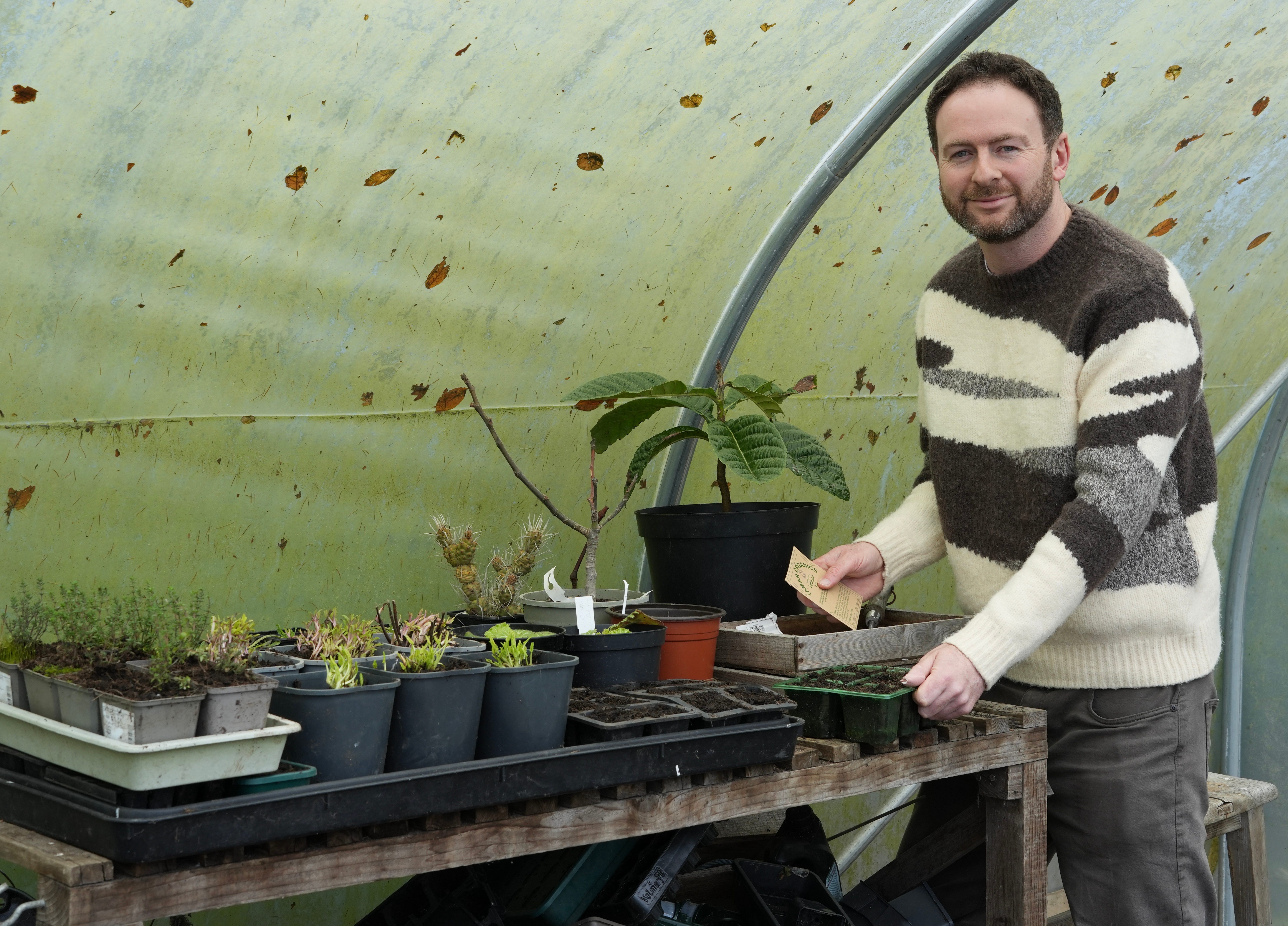
In our polytunnel, because I don’t plant tomatoes, aubergines and chillies into its soil until May, I’m using the sheltered space for an early crop of radish, beetroot, peas, broadbeans and turnips. I sowed these into the ground of the polytunnel in recent weeks. They will crop in our polytunnel before the tomatoes need to be planted.
Speaking of tomatoes, I’ve found the sweet spot for sowing these is the last week of March or early April. This is because tomato plants grow so quickly when young, if light levels aren’t strong or long enough, they can stretch and become etiolated. Therefore, I’ve found it much better to sow tomatoes later when days are longer. The tomatoes then grow strongly and overtake any weaker earlier sowings anyway.
A heat mat or heated propagator can help speed up germination. I generally remove seedlings from this as soon as I see their leaves to avoid leggy growth.
Be mindful of damping off, which is a soil borne disease caused by a number of different pathogens that can kill young seedlings. It usually happens in trays of seedlings when the compost is too wet and/or cold. Lack of air circulation contributes, especially if seedlings are overcrowded or grown indoors without air flow.
To avoid damping off, sow seedlings a little later in the month when temperatures are warmer, avoid overcrowding and encourage airflow with a fan or open window. If you struggle, wait until April and sow outdoors in a sheltered spot. Raising seedlings up on tables rather than cold floors helps - this also reduces slugs, snails and mice eating things.
Potatoes I plant in late-March. Rather than dig trenches, these days I tend to use a bulb planter or trowel to plant potatoes in rows with about 10cm of soil above them. I plant a small number of new potatoes and some red skinned roasters - the red skin cultivars are more resistant to underground slugs.
Don’t sow French beans, runner beans yet, nor the cucurbits, squash, pumpkin, courgette, cucumber, gherkin. Wait until late-April or May for these because they need more warmth and are not frost tolerant. A common mistake is to sow these in March and they die on cold spring days.
Grow new plants from division and cutting
Now is the time to divide plants that can be. Dig up and slice the crown and roots into two or more pieces using a spade or teasing apart with a garden fork. Rhubarb, day lily, hosta, astrantia, persicaria, geranium, pulmonaria, and many more perennials can be divided.
Early spring is prime time because it’s still wet, it’s warming up and the plants are beginning active growth. This means less chance of rot and more chance of success. Divide too late in spring and their root systems can be too established and it doesn’t give enough time to form new roots to make them drought resistant in summer.
Dahlia cuttings can also be taken now by nipping off a shoot with a piece of tuber using a sharp knife. Pot into peat free compost on a warm windowsill or heat mat covered with a transparent lid to maintain humidity. They will soon root.
I would hold off on other cuttings until brighter weather, unless you know the plants are very hardy and easy to root, such as kale.
It’s also a good time to buy new plants and either plant them out or grow them on a bit in bigger pots of peat free compost. I buy most plants small and pot some of these up to grow into bigger plants for a few months before planting out.
Crops to harvest

If you planned ahead last year you will have a nice crop of chard, early sprouting broccoli and kale growing on your plot. If you don’t have these crops this year, it’s well worth planning for next spring. Sow them at some point in March or April.
From early March, as the weather improves, the first leaves of forageable crops appear too. Rhubarb stems grow, wild garlic leaves are just nudging above soil, hairy bittercress is already flowering and sorrel has lots of young leaves.
Wildlife to spot
Wildlife is so busy in March - hop outside to listen to the dawn chorus - that I’ll save it for another newsletter but one thing you will spot now is frog and toad spawn. When this happens, you know spring has arrived!
Do what you enjoy

While there are other tasks to think about in the garden in March, such as boring tidying, I have always prioritised growing more plants over such things. This is because plants do most of the work for us and the more we grow, the more we can stuff into our gardens to hide and distract from any ‘mess’. Prioritising tidying and weeding over growing is, in my view, a mistake.
Don’t ever feel guilty for not doing something in your garden when you see me post. I would much rather everyone chills out, has a cup of tea and only do stuff when you feel like it. Never worry about gardening. I post because I enjoy writing about it, it’s always a suggestion, never an order!
Remember, gardening is a flexible beast and while I do things one way, you may prefer another, especially with sowing dates. I always recommend trying stuff out, if it doesn’t work, you learn, if it does, you learn.
Further reading - my new column!
10 of the best fruit and vegetables to plant now for a hassle-free harvest (The Guardian)
Less, it turns out, is still more - my first Final Say column (Gardens Illustrated)
Have fun growing everyone!


