

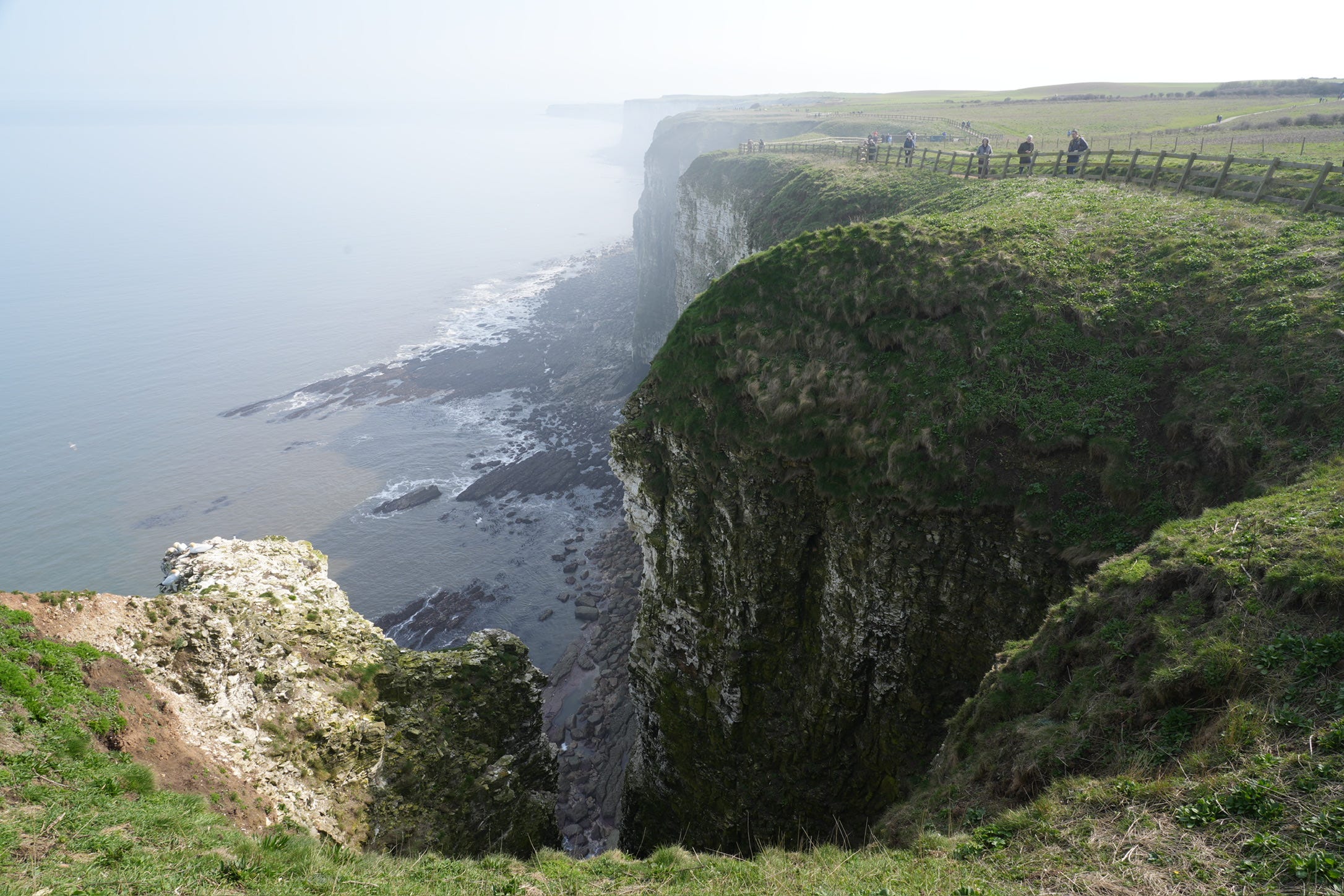
In spring it’s possible to catch the migration of thousands of wildlife photographers arriving at RSPB Bempton Cliffs. Lumbered with approximately 90%* of all long lens cameras in the UK (*just a guess). The grey cliffs of Yorkshire also happen to see the nesting of many important sea and land birds.
Setting out on the long drive from Hebden Bridge to the coast, an ethereal haze softens the bright yellow sun and turns the distant hills and trees a milky blue. The coast is my goal and it doesn’t matter how long it takes to get there. I need a break from routine to shake my head out of stress and into a better mindset.
As I step through the RSPB welcome centre, I still haven’t seen the sea despite driving toward it for miles. Here the cliffs are so high and today the distant horizon too hidden. I skirt the grassland first and a kindly fellow photographer points to a goldcrest which I watch fly from bush to bush but am not fast enough to photograph.
Strolling toward the main event, the sea finally comes into view and I breathe out deeply. The top of the cliffs are lined with day tripping wildlife lovers walking along the miles of reserve. When I finally reach the edge I meet a breathtaking scene. A 100m drop straight down with birds soaring or resting with occasional echoing calls.
Razorbill
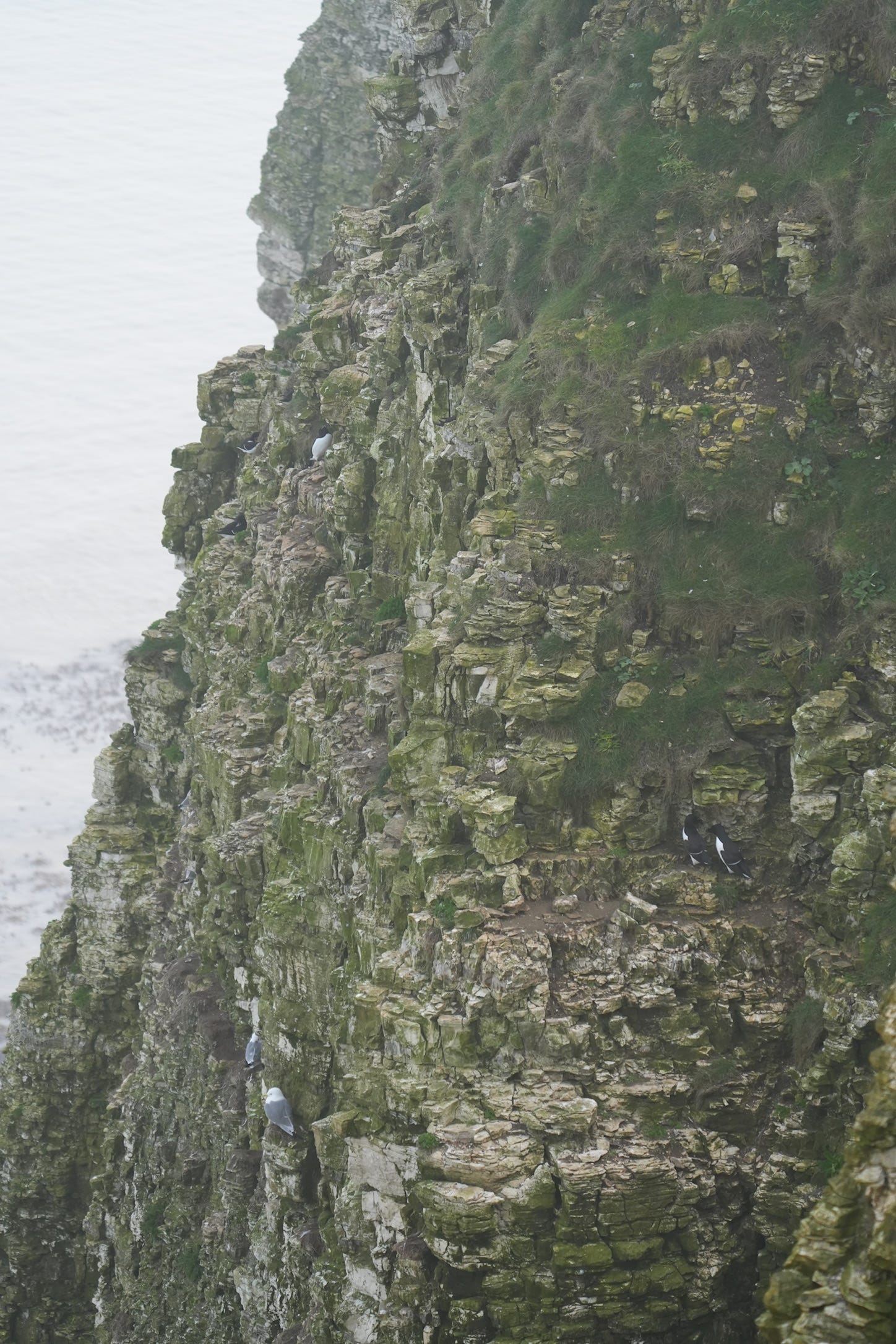
First to catch my eye are what look like a pair or pengiuns but are in fact razorbills (Alca torda). They preen each other lovingly and dance with affection.
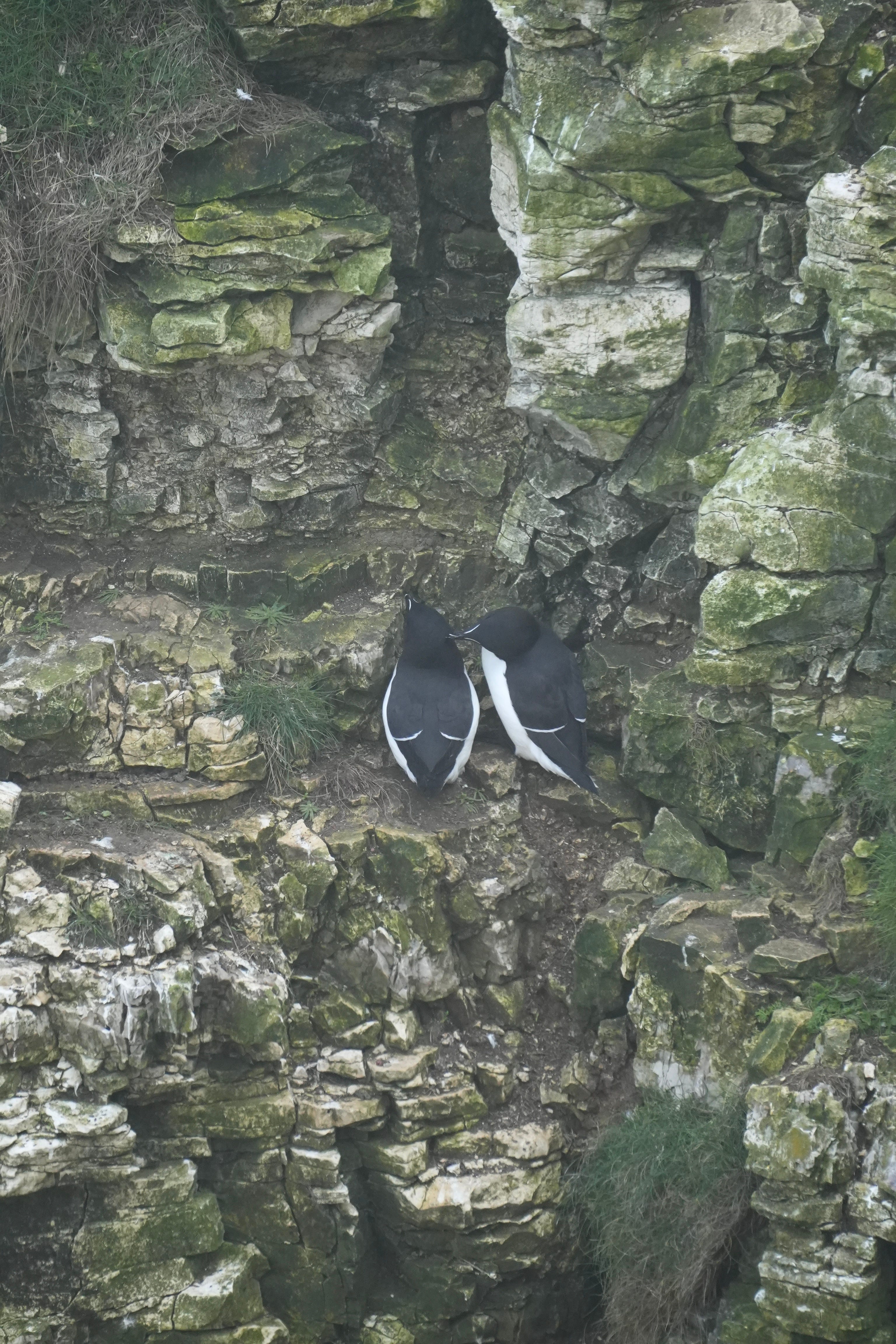
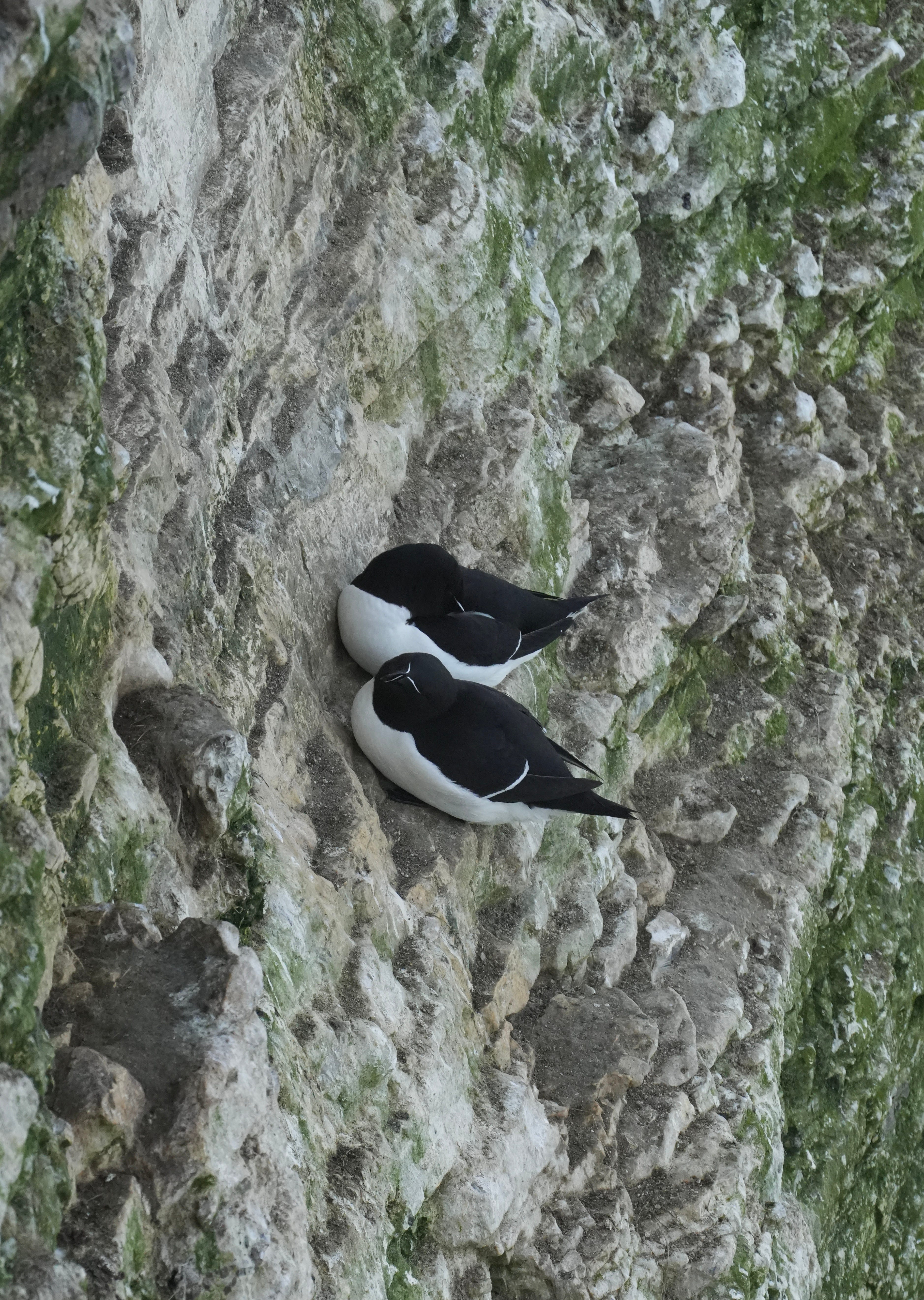
Another pair sleep nearby. Looking up on occasion to the humans watching them. Their black and white markings impossibly clean and crisp.
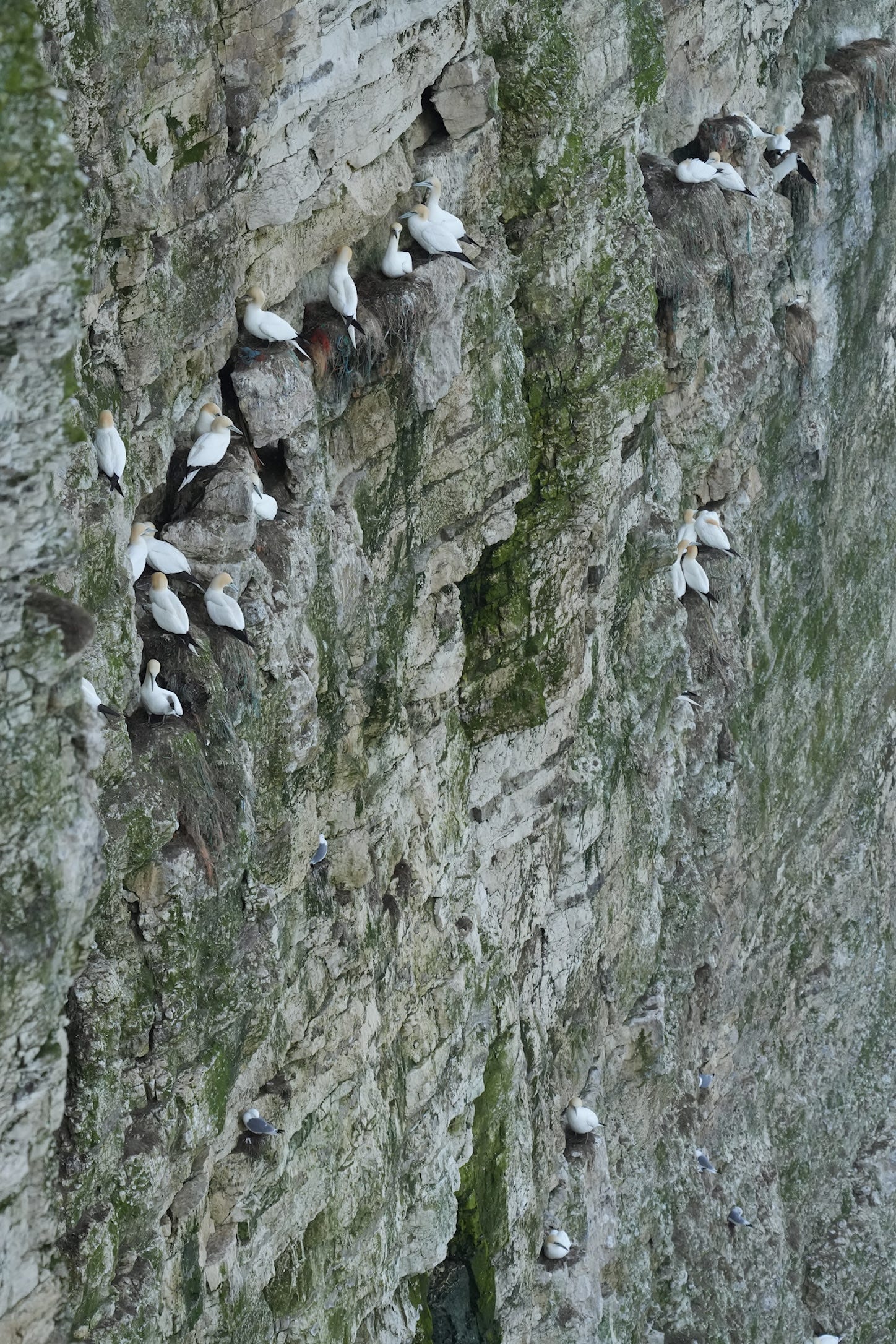
Gannet
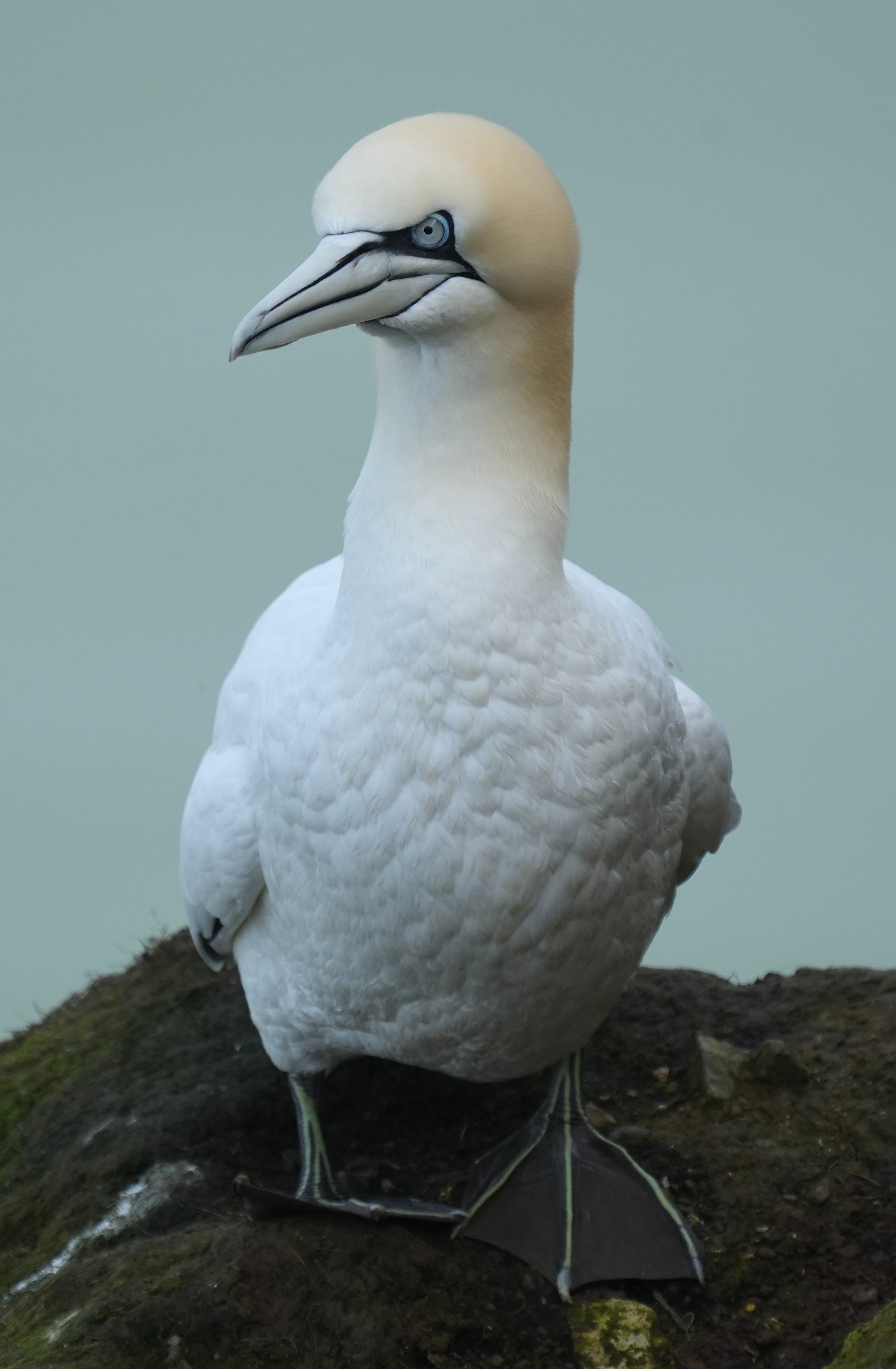
One gannet fairly close to the path obliging poses for my camera (Morus bassanus). I’m struck by how large they are and a noticeboard of life size images puts these huge birds into scale. I imagine its near metre wingspan if it were next to me.
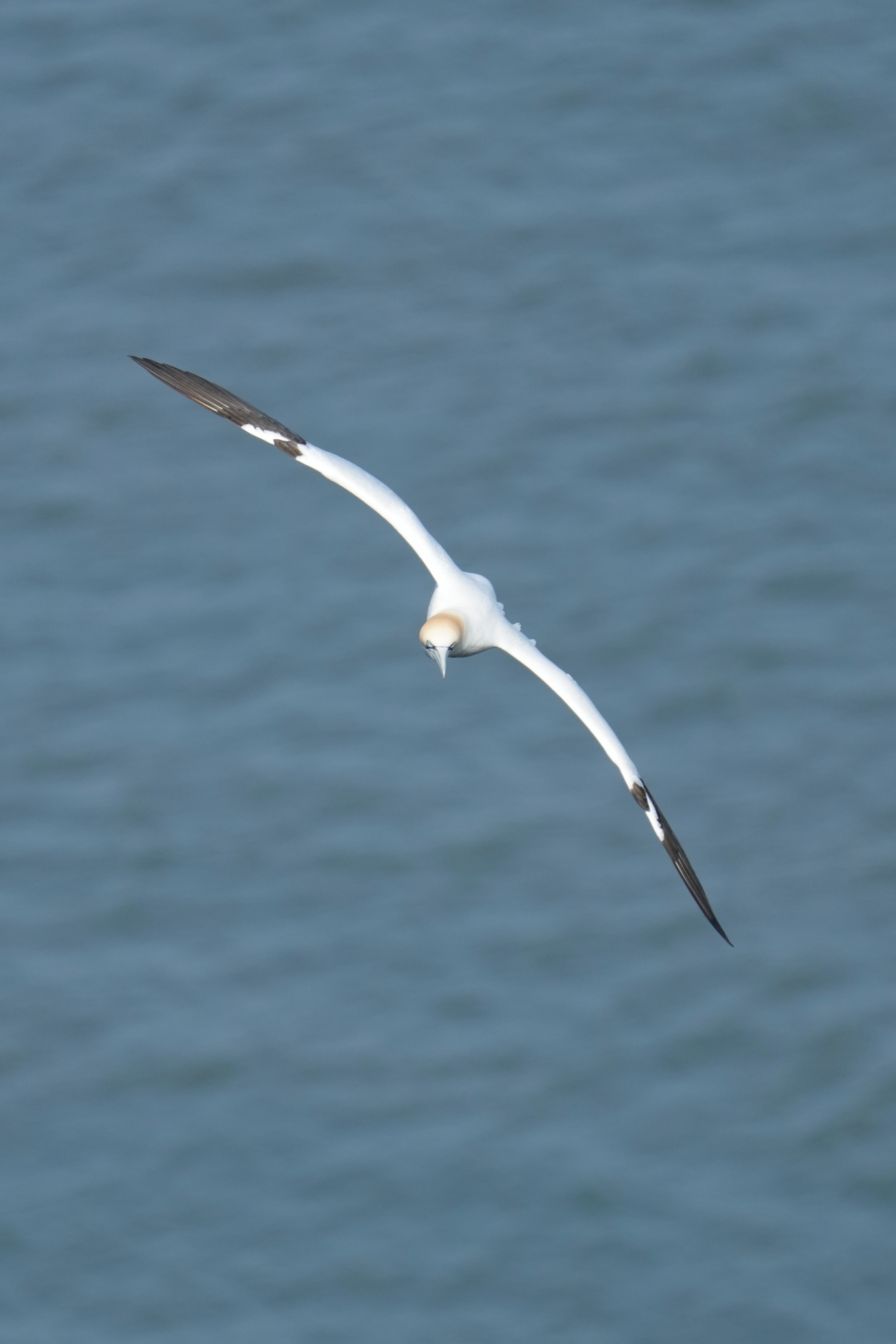
With striking pale blue eyes and bulbous head, some were out fishing and others collecting plant material for nests.
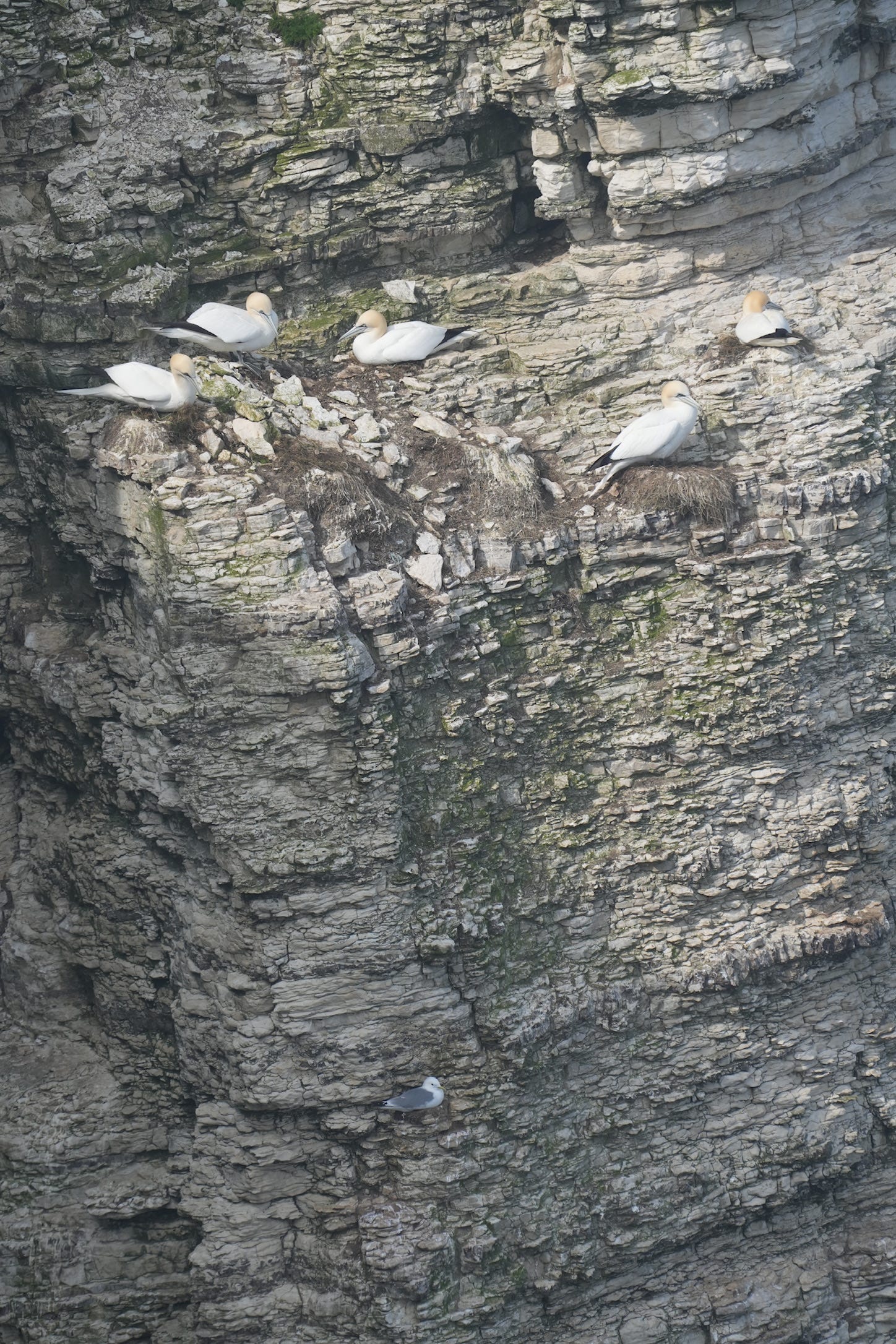
It’s a wonder how the birds perch and sleep so high on these towering cliffs.
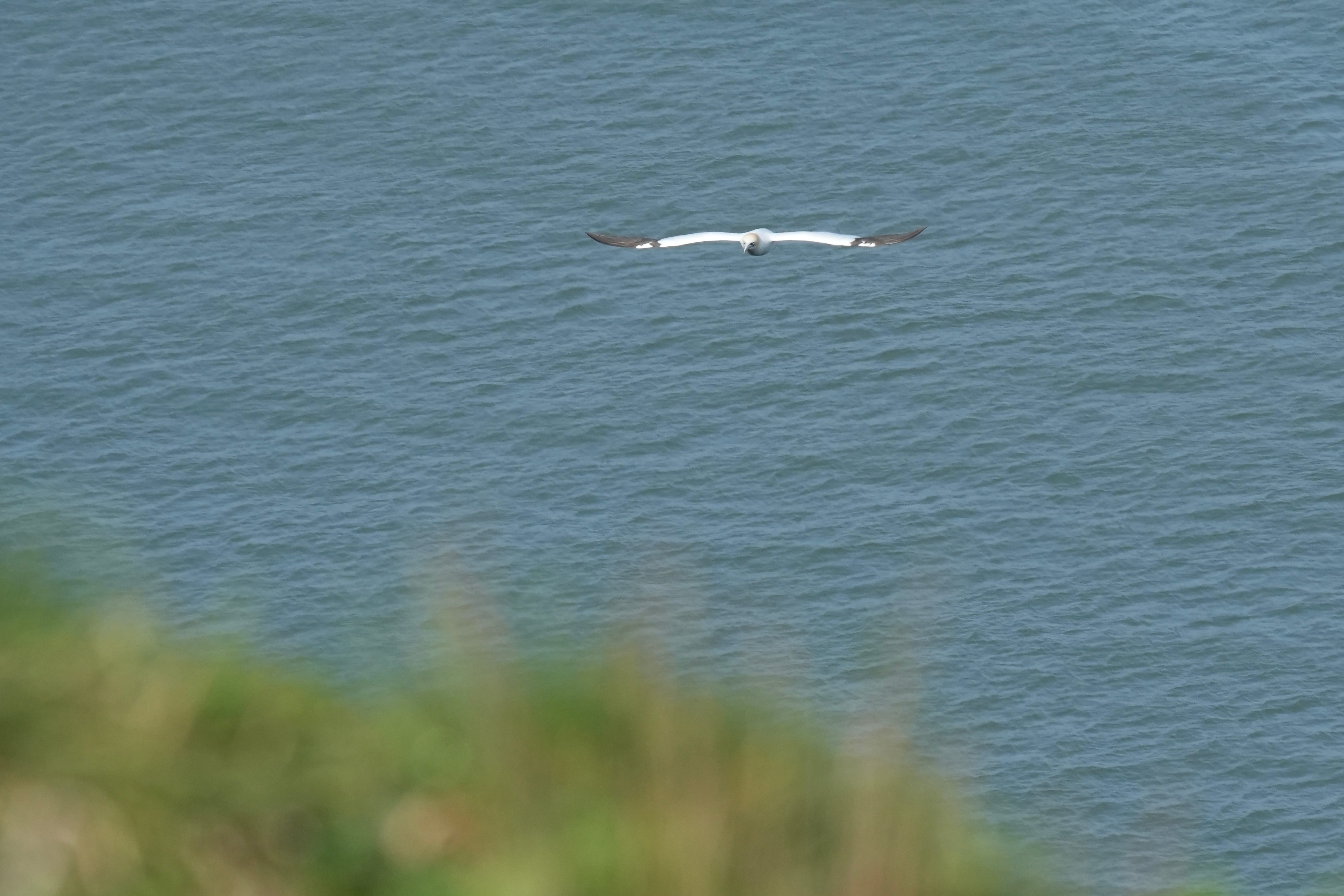
Nests of the birds line strata of the rock faces. For thousands of years they will have done this, making use of the rock feature itself formed over billions of years. How entwined everything on Earth is.
Kittiwake
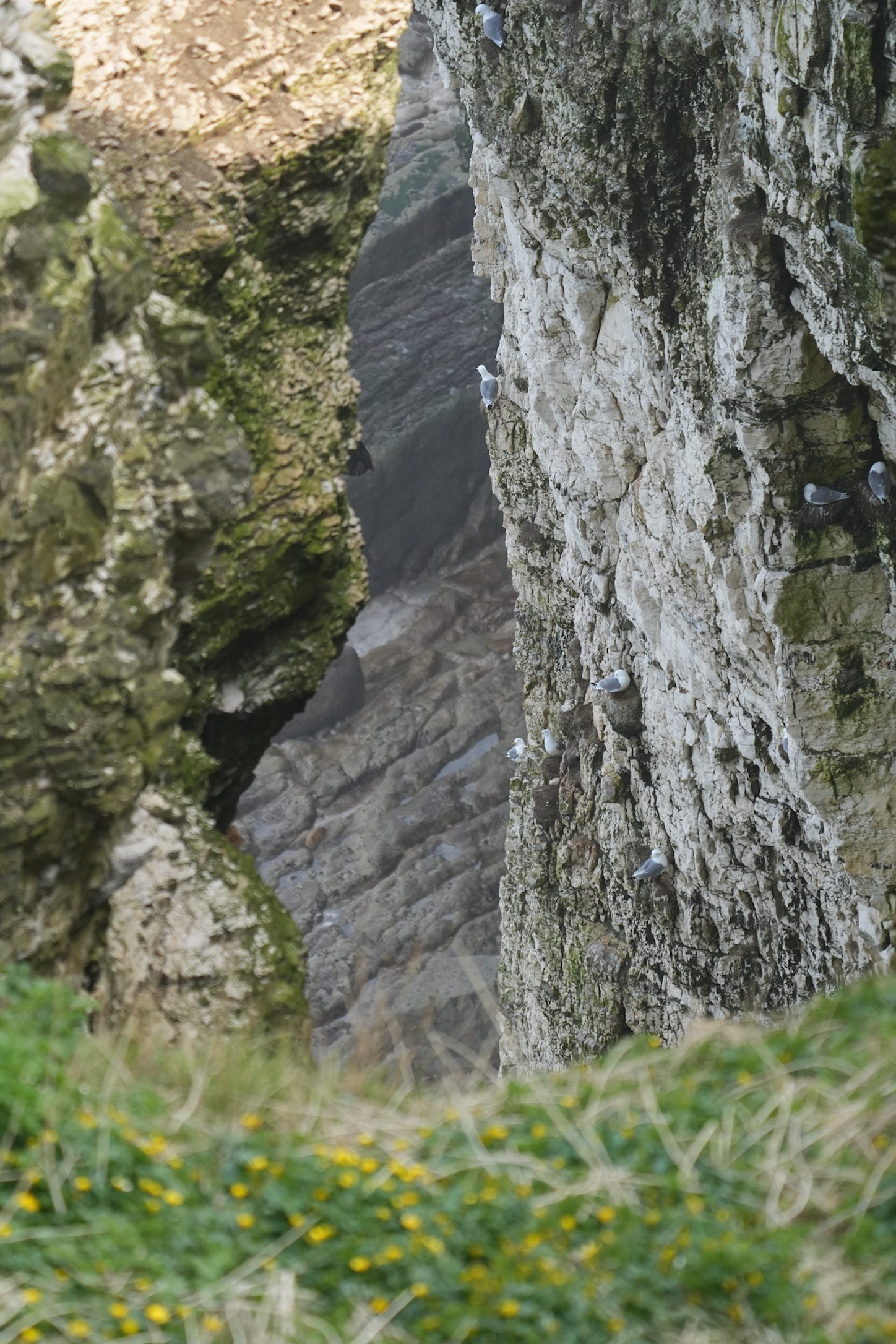
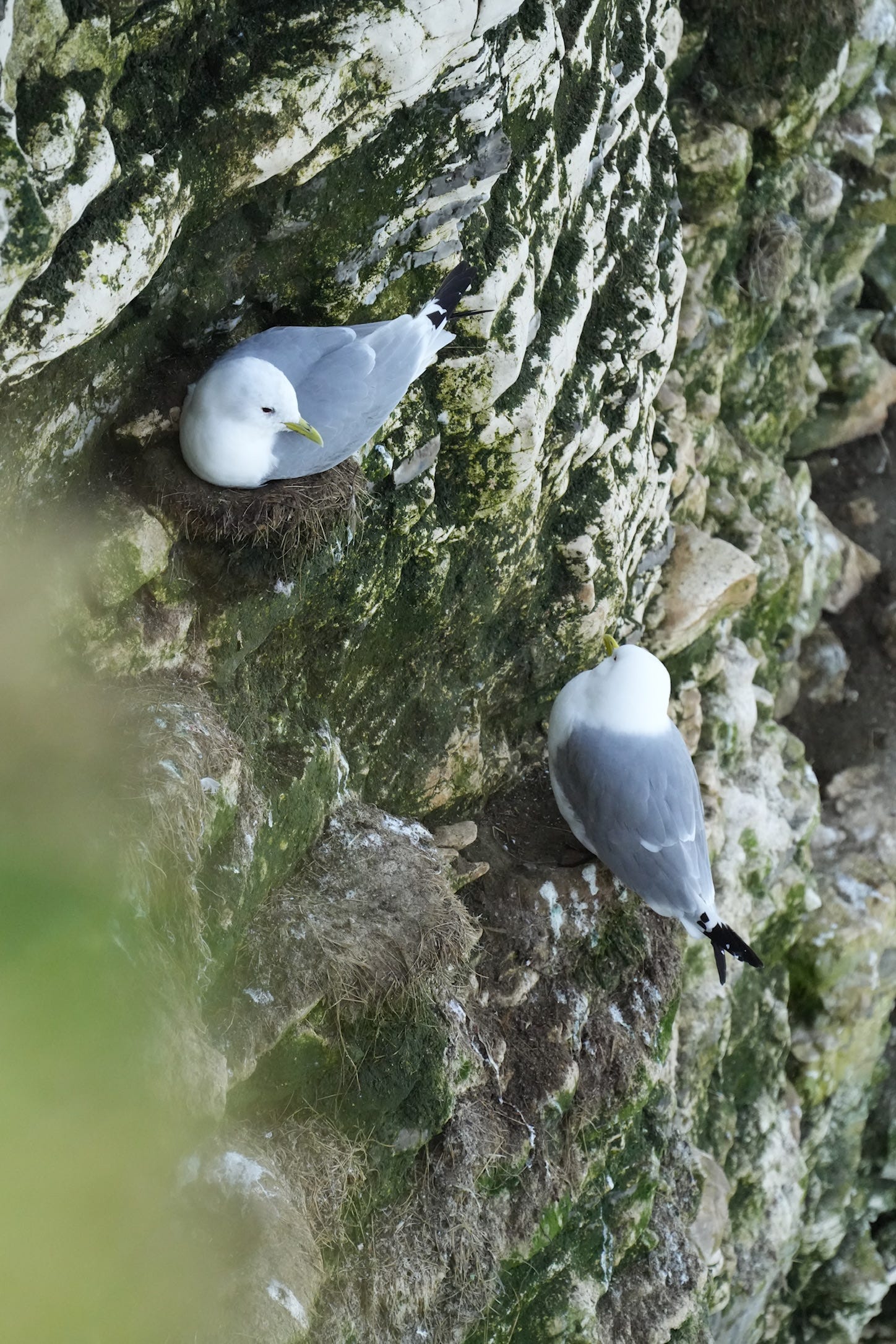
Friendly looking gull family member, the kittiwake (Rissa tridactyla) seemed sleepy. I love the name, kittiwake.
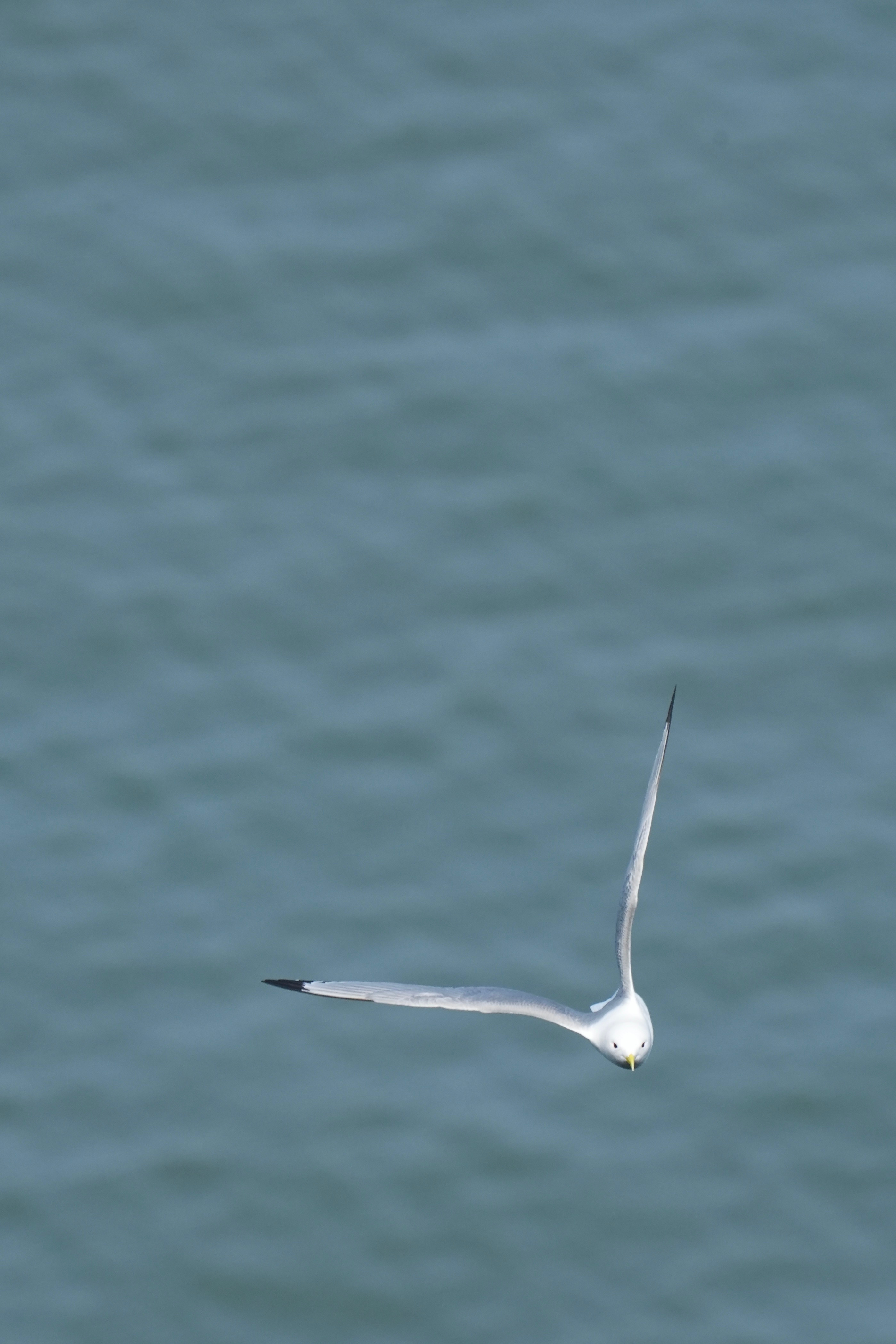
Not to be unfair to regular seagulls we’re familiar with - they can’t help their faces look mean - but the kittiwake look so gentle. And they certainly seem quieter and less raucous.
Common linnet
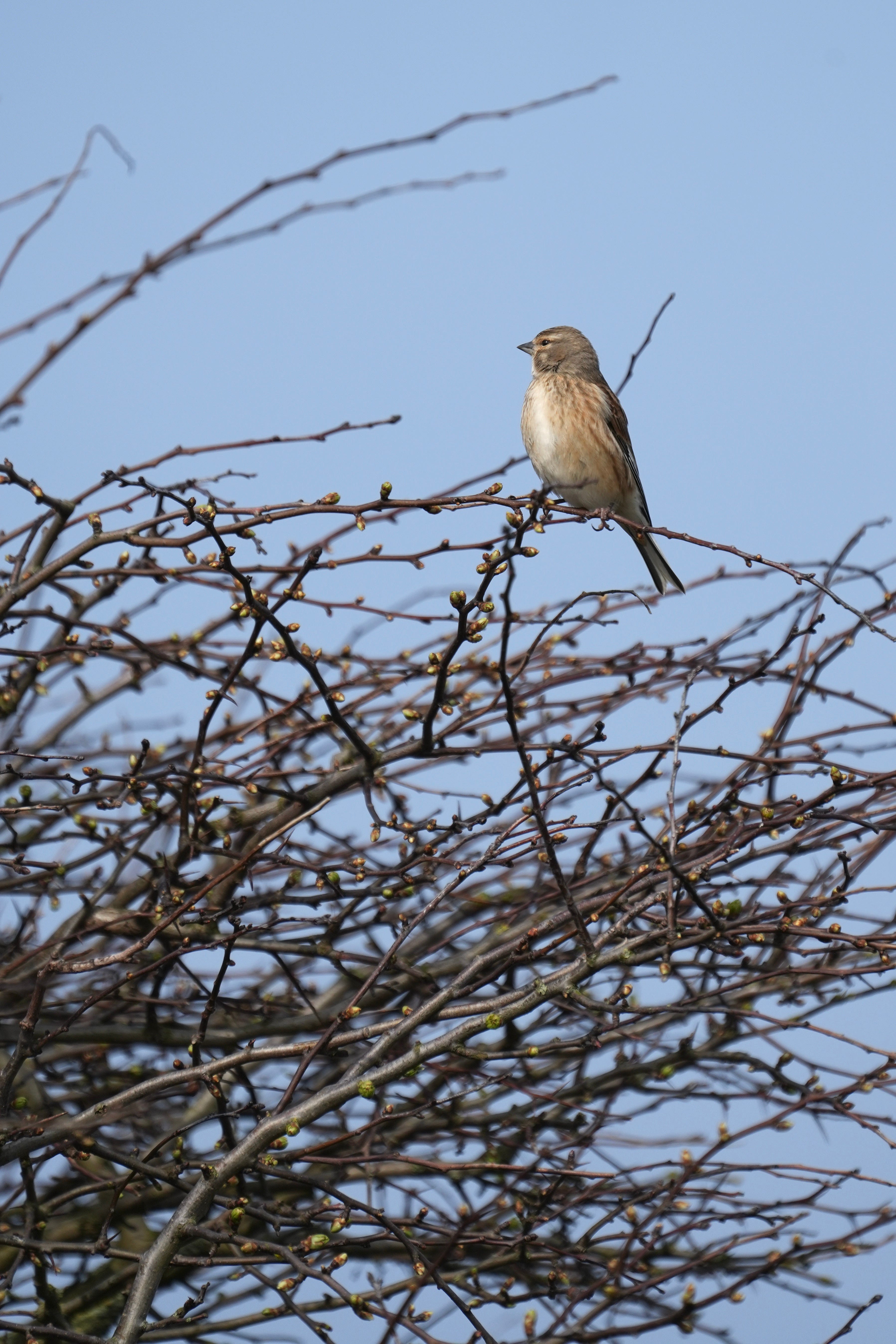
Around the reserve were many more species, including the endangered linnet (Linaria cannabina) nesting in the many areas of scrub. This is a female, the males are brightly coloured.
In someways, while I adore puffins - one of my favourite birds - part of me is glad they weren’t nesting yet. I would almost certainly have paid the gannets and kittiwake less attention. And what an oversight that would have been.
I decide to head off, full of wonder from my close encounter with these birds in this otherworldy spot. I’ll save the owls, puffins and other species for another visit soon.
Join and support the RSPB to help conserve reserves like this.

Lovely photos!
Delightful, thank you.
Speaking of gannets- so upset to read of the senseless cull of young gannets in the Hebrides. As if they didn't have enough problems to cope with already. Totally unacceptable.