

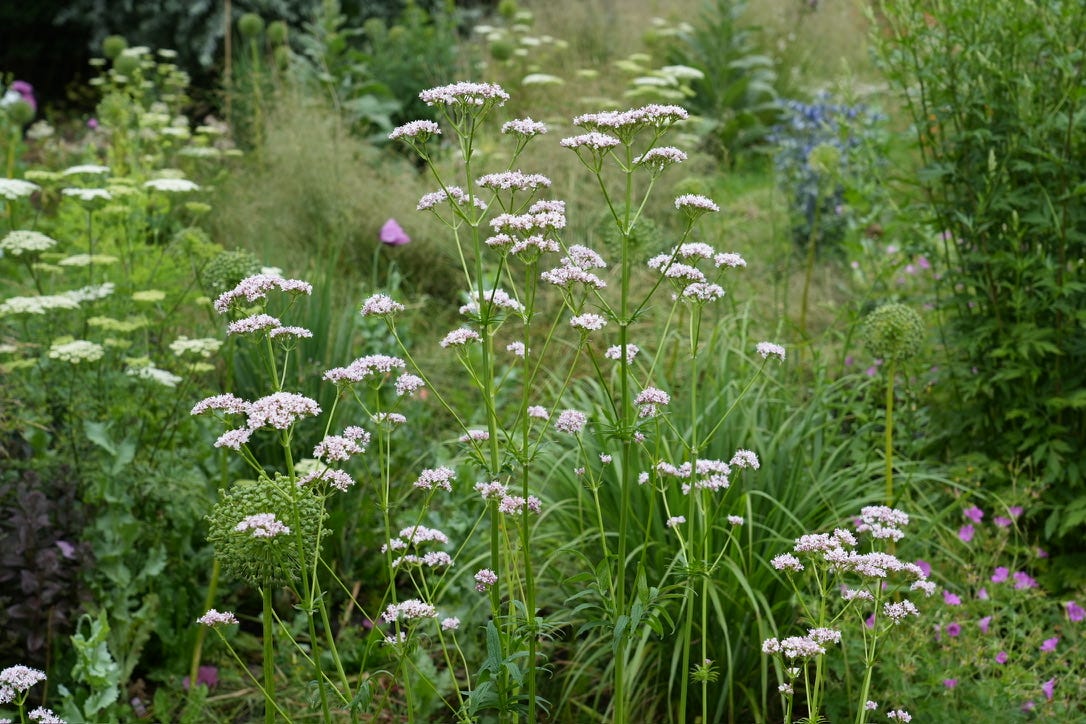
One of my favourite wildflowers is Valeriana officinalis, the true wild valerian, not to be mistaken for Red Valerian, Centranthus ruber.
When we first moved to Yorkshire I scoured the surrounding area seeking out all of the wildflowers that grow locally. This simple exercise, looking at local plants, tells us everything we need to know about plants for our gardens. It is our living plant catalogue. A catalogue that happens to be free, with a little patience and gardening knowledge.
I found a patch of valerian plants in flower next to a river and waited. A couple of months later they had begun to produce fluffy seeds and I gathered a tiny pinch placing them into a little paper packet - not many, to leave most for the wild.
Back home, I sowed the seeds into pots of peat-free compost and watched as those tiny seeds sprouted and grew into fine young plants. At which point, in the following spring, I planted them out in different spots in our garden where their offspring flower today, a number of years later.
Need to know information about Valeriana officinalis
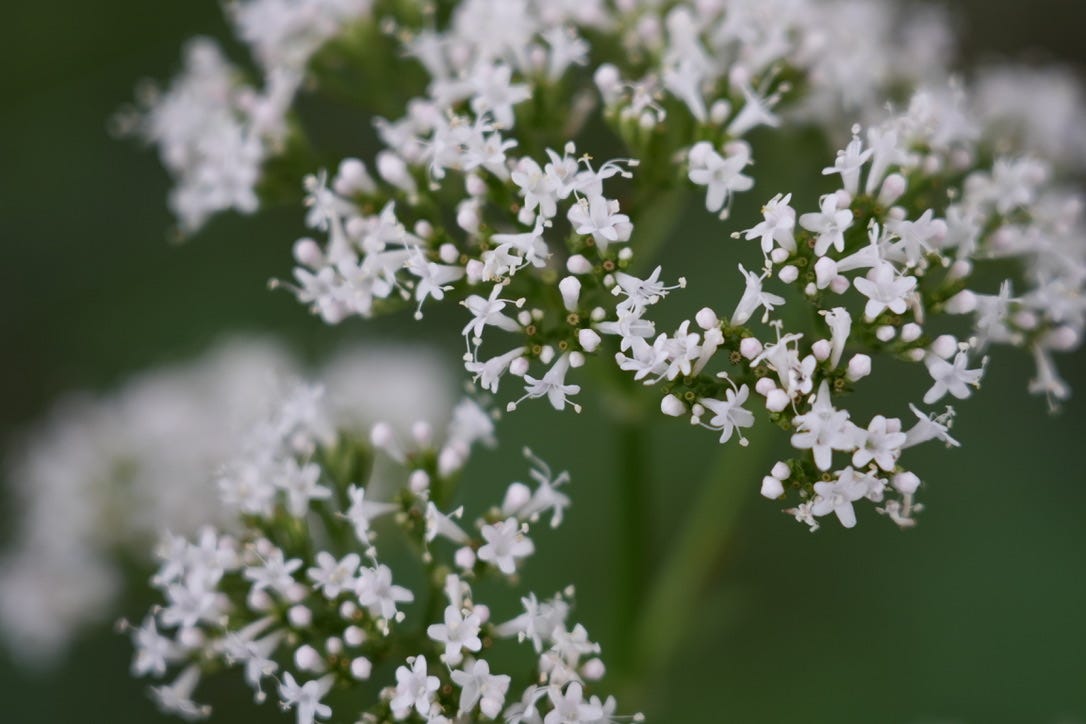
The shape of the inflorescence is interesting and a bit of a mouthful, it’s called a corymbose cyme. To explain this, the word cyme describes the flowering sequence in a cluster of flowers where the oldest central flower opens first with side shoots following. In valerian’s case, there are multiple cymes (or stems) in each flower head. You might be able to just see a few spent flowers on different stems across the flowerhead in the above photo. Corymbose describes the overall shape, where stems are of different length to create a flat top, or in this case, slight dome.
Valeriana officinalis originates from all across Europe down to Iran, making it a widespread hardy perennial wildflower of a temperate climate. In terms of growing conditions it is adaptable but the essentials seem to be a good amount of sun, moisture retentive soil that does not dry out but is also not waterlogged and reasonable soil fertility. I tend to see it looking its best in the wild and in our garden with a little shade, those spots that receive direct sun for a lot of the day, but not all.
Valerian tolerates heavy clay soils and is usually seen in damp woodland edges, ditches or along rivers. I find it struggles in areas where the soil dries out too much in summer, so in drier areas be prepared that it might not work - but give it a grow, as you never know.
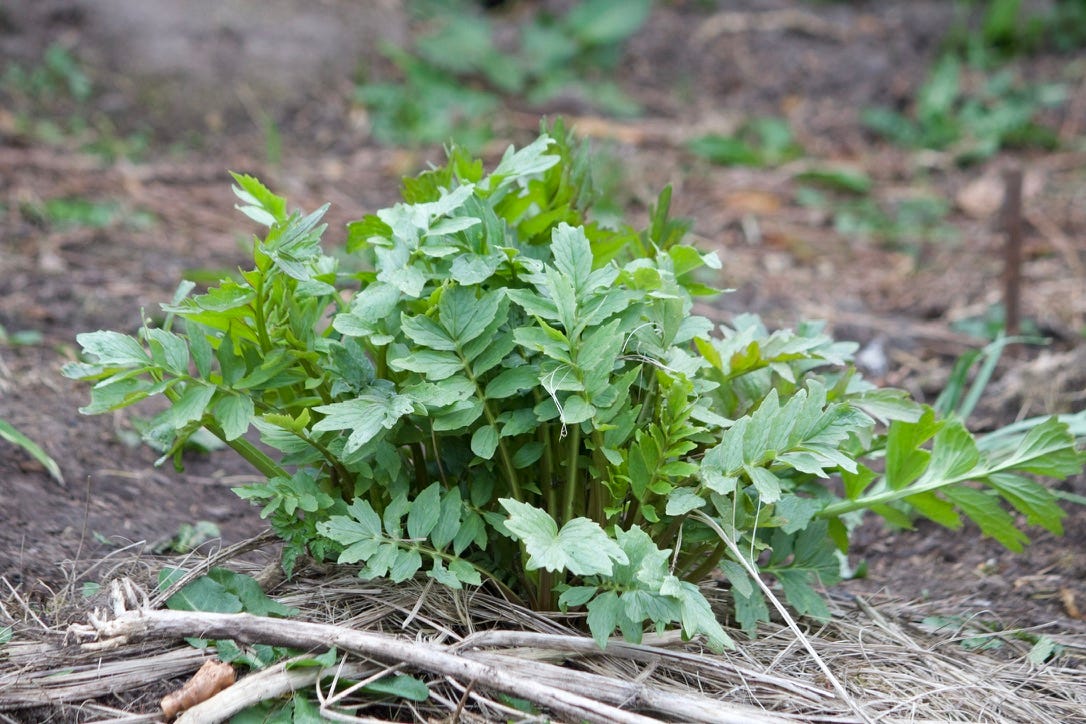
Wild valerian grows to about 1.5m tall with gorgeous ferny leaves in a lush green. The stems are also a lovely fresh green colour and very smooth. Overall this creates a beautiful, tall and airy plant that combines well with almost anything.
The other main thing you need to know about Valeriana officinalis is that it has the most incredible sweet scent. One of the best fragrances in gardens and reason enough to grow it.
Is wild valerian good for wildlife?
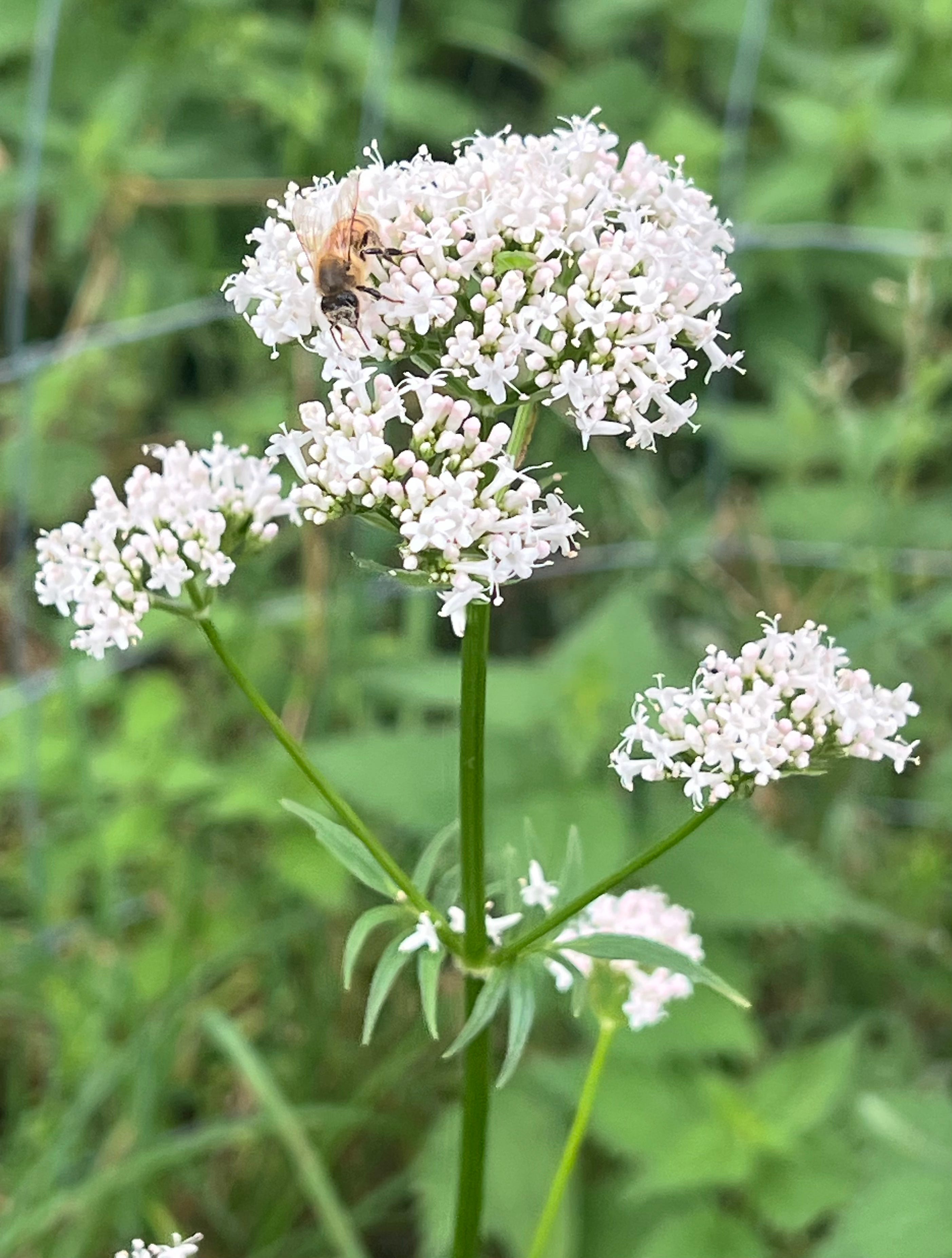
Valerian’s primary role is for pollen and nectar in mid to late summer rather than as a larval food plant. It’s a generalist plant used by a wide number of species from within the butterflies, moths, beetles, hoverflies, flies, bees and wasps. One of those flowers where you can see dozens of species of insect in a single hour. I’ve noticed it is particularly loved by smaller solitary bees and wasps. As well as moths at night.
Using Valeriana officinalis in garden design
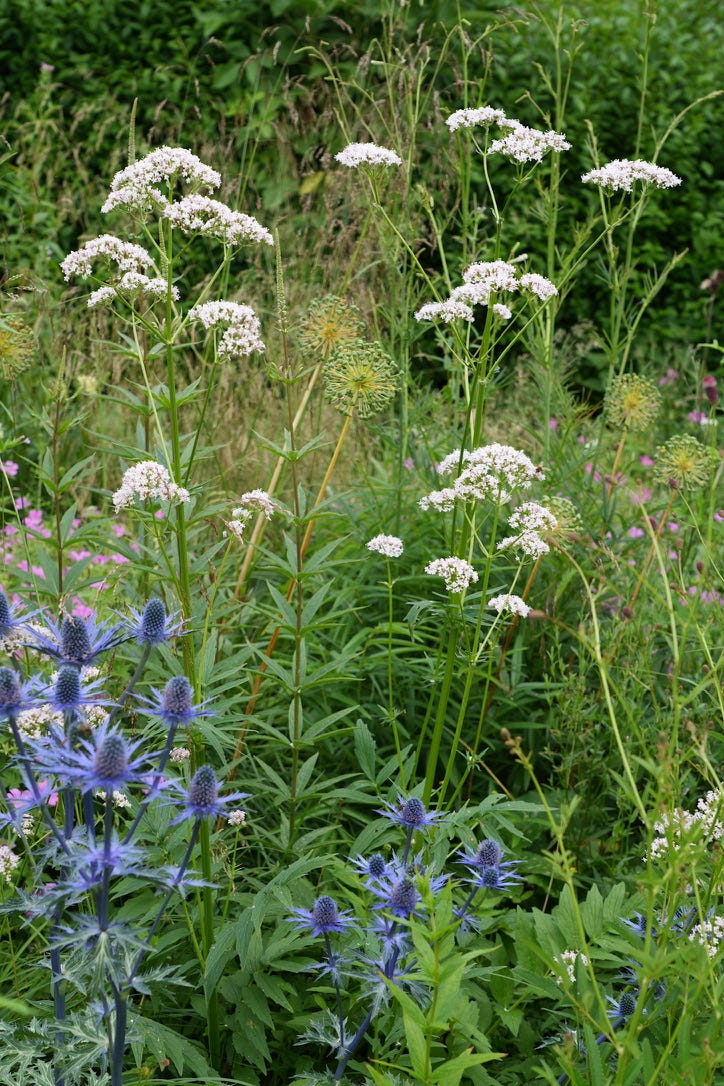
In gardens valerian is a fantastic addition to part-shade or hectic borders. As a vigorous wild plant it can cope with the hustle and bustle of an active plant community.
From a plant design perspective it is an almost perfect vertical accent plant that flowers from midsummer for a month or two. I find the white to pale pink flowers refreshing in gardens. The colour of the flowers tends to lean toward white in more shade, while the pink tinge comes with more sun.
It combines well with any fluffy, fountain or airy plants, such as sanguisorba, geranium, ox-eye daisy and all ornamental grasses. It also looks really good in foliage plantings, such as with ferns and the larger flowering heuchera.
Plant it among shorter perennials such as astrantia and its flower stems will rise above these for visual interest at different heights.
How to propagate Valerian officinalis?
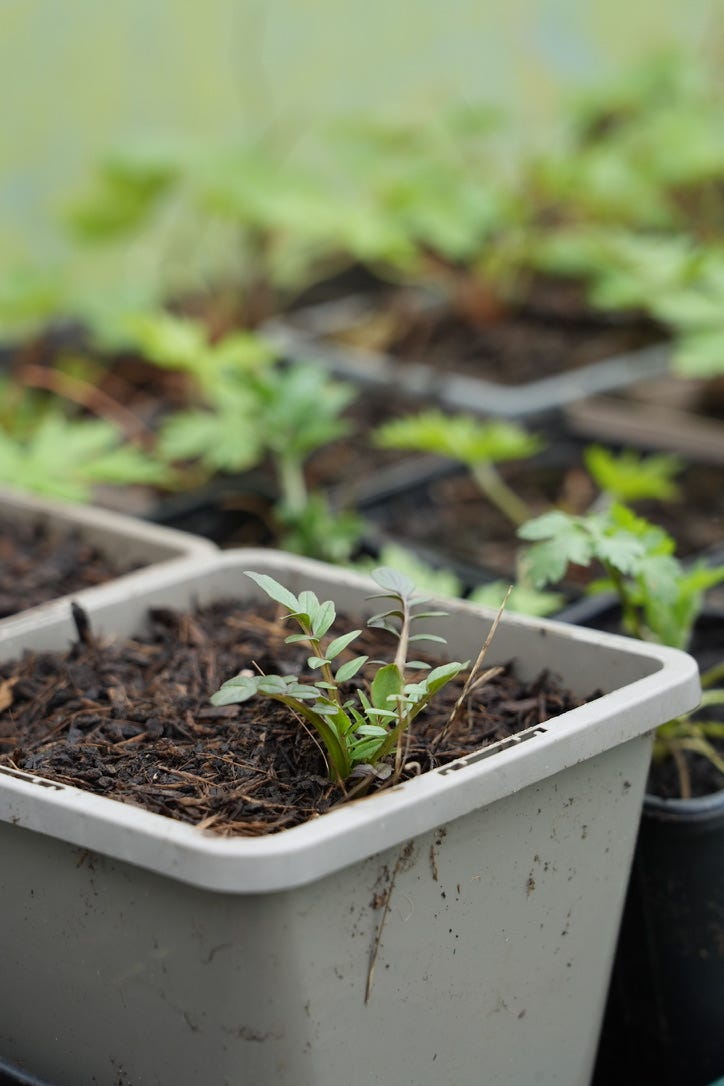
It’s easy to grow valerian from its minuscule seeds, which can be sown on the surface of damp peat-free compost or direct in the soil - though I find wildflowers easier to establish from plants. Just as easy is dividing the plant as it clumps up and spreads slightly by underground rhizome. Dig out a new shoot with some roots and pot up or plant somewhere else. These always take happily for me.
People often warn me that wild valerian can be a bit of spreader but I think that is in more traditionally managed gardens where borders are weeded to leave bare soil. In our garden I would actually like it to spread more! It is slowly spreading by seed and rhizome into new spots in our main garden, whereas in our more shaded wilder areas it struggles to compete, though it is slowly establishing.
Is wild valerian edible?
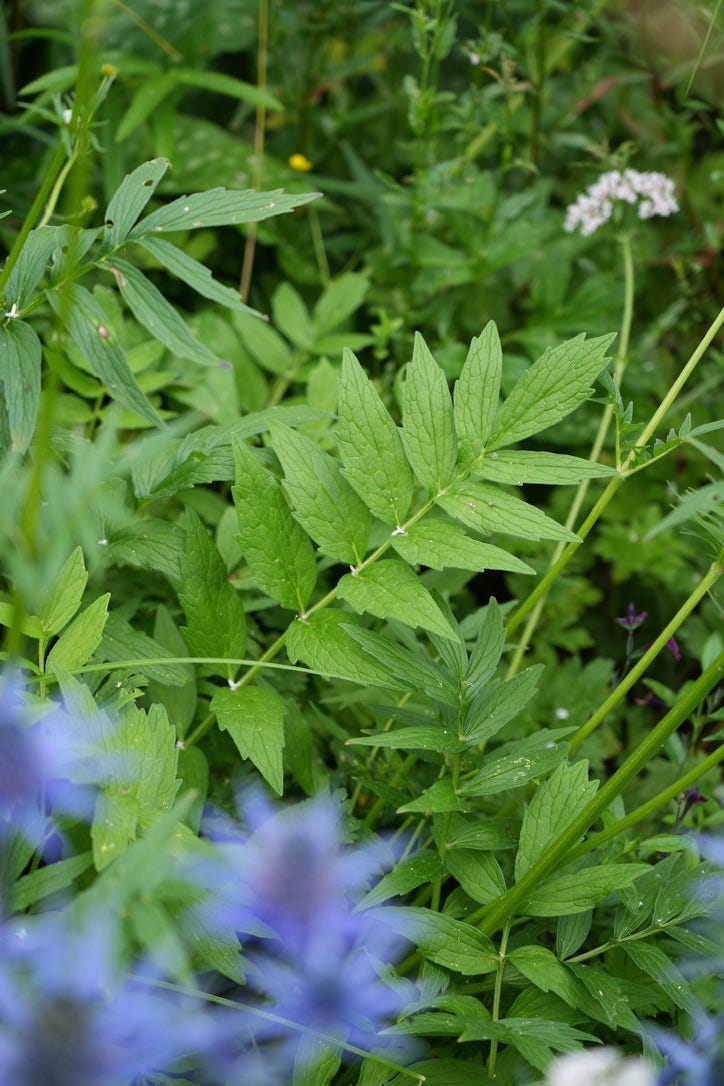
Yes Valeriana officinalis is edible but I wouldn’t use it for food. The leaves don’t taste very nice though when young can be eaten, and the flowers can be added as a garnish. The roots are edible but again, I wouldn’t ever use them myself.
Wild valerian’s main use - again, not to be confused with red valerian, Centranthus ruber - is for in herbal remedies. Famously used in natural sleeping tablets, teas and tinctures. If you’re interested in exploring that, please research more first, though essentially you dry the roots, chop finely and then use about a teaspoon to make a tea to have before bed.
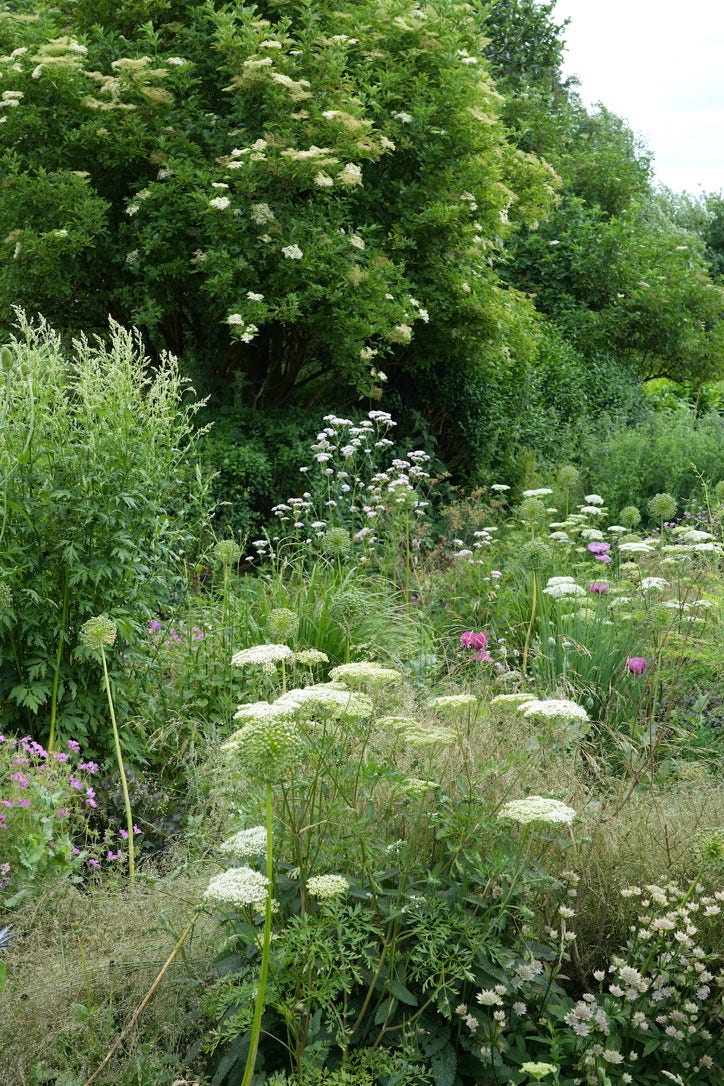
I love wild valerian, in my eyes it’s a perfect plant that we can all grow for free or find in independent nurseries. I’m hoping it spreads all around our garden in time, though I have noticed it can have some off years where the plants appear in spring and then don’t grow any more or flower. I wonder why? When they do flower, wild valerian is fabulous. For others they seem reliable each year.
I’m interested in your experience, how does it grow where you live? Do you grow wild valerian in your garden and if so, what are the conditions? Or have you seen it growing somewhere in the wild?

Discover wildlfowers in the Wild Way wild plant directory…
Wild Plant A-Z

Wildflowers and other wild plants without woody stems that either grow and dieback in winter or are evergreen. Herbaceous wildflowers are colourful resilient plants. Wildflower database »
The other very useful thing about it is that it has hollow stems, very useful if you’re making solitary bee hotels.
It grows on the edges of ditches here in NE Aberdeenshire and there is a lot of it in a particularly wet area of some heathland next to our property. It doesn’t occur amongst the heather as much, it is more concentrated around an area of reedmace. Fitting with your article, it prefers this damper soil compared to the drier land where the heather is. I love it and now I know that it is easy to grow from seed I will collect a small amount this year. Only this morning, walking our dogs along the track next to the area of valerian, I started to pick up the lovely scent, and I love that delicate shade of pink.