

What is wild style design?
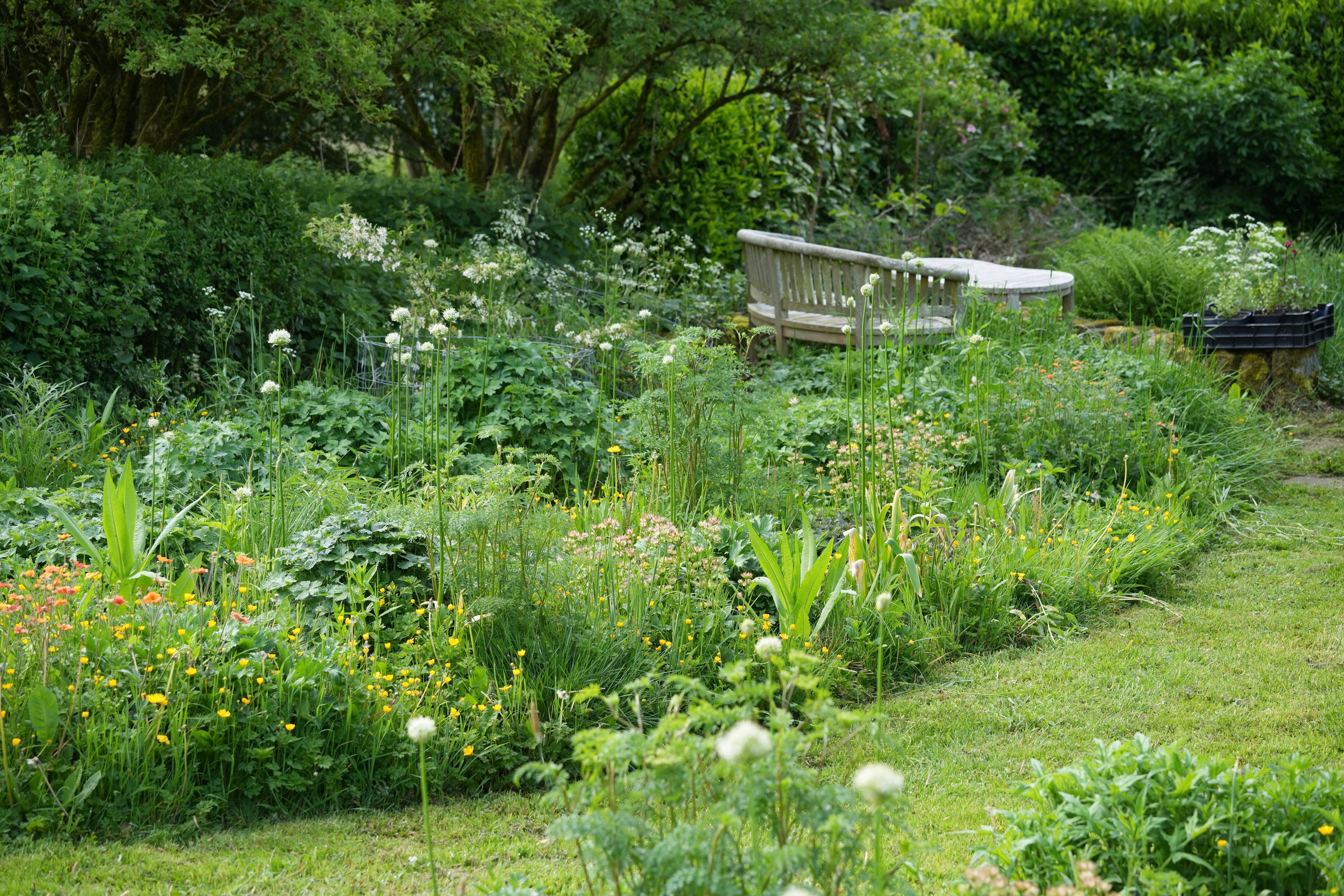
I write a lot about the benefits of wild design, primarily for biodiversity and climate resilience but what about aesthetics?
The word ‘design’ can make some scoff, it’s easy to think design is all about shallow looks that don’t matter compared to more important things, like helping wildlife. As with most things in life, it is never either or, we can have purpose in gardens and an aesthetic that we enjoy. Design is about more than looks, it is far from shallow. To me the core of design is problem solving, creating a space that fits all requirements. Usability, productivity, wildlife friendly and yes, beautiful.
After ten years of designing gardens across the UK in an increasingly wild style of design I know it is possible to create gardens with purpose and beauty. In fact, the two things go hand in hand.
I’ve learnt a huge amount about the psychology of what people perceive as beauty in gardens and how it affects them emotionally. Perceived beauty in gardens matters because it sparks something in us that makes us happy, excited and able to relax. It helps break us away from our daily worries.
To me, wild style design is about emotion. When I design a garden for someone else and in our own garden at home, what I am trying to do is create the emotions we feel when our breath is taken away by a beautiful scene in the wild.
For that to work, the planting can’t simply be an artificial recreation of what we think the wild looks like. It has to be an active plant community and ecosystem with a life of its own. I don’t want naturalistic, I want real natural. The garden has to be alive and free and that to me is the defining element of wild design.
As gardeners we are part of the garden ecosystem and part of what we do as humans is play with plants. Which means we can steer the plant communities to our preferences in terms of looks - the colours we like, the structures and effect. Some plantings may contain only native wildflowers, others cultivars too. Yet it is free to grow and change around our plans, the garden and gardener work in tandem.
In terms of looks, it is entirely possible to have a fully formal garden with topiary and rigid structure that is wildlife friendly. It’s not true that I don’t enjoy gardens like this that other people create, I am just not the best person to create that. However, this is not wild style of design. To return to the core point for me, wild design is about drawing on the emotions we feel in nature.
This means that yes, wild design gardens are looser, more chaotic. Plants are allowed to mingle and flop into one another. Yes, weeds may grow between cultivars we planted. These unplanned events give the garden life. There is so much going on around the plants and this creates habitat for so much wildlife. The garden is alive in ways a more pristine or manicured garden cannot be.
For us, I believe this freeness has a psychological effect that can relax us. If the garden is free and untamed, we draw upon that.
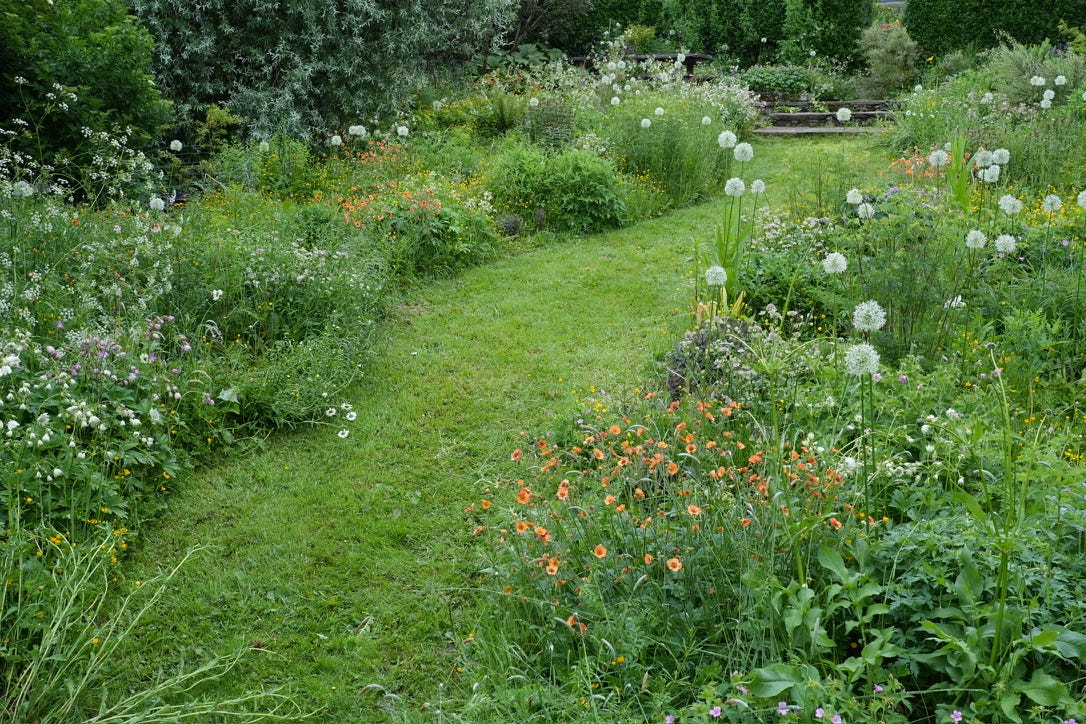
I don’t deny however that there is a part of us as humans that needs a kind of order. I like this quirk of humanity, the part that feels relieved after we’ve returned order to a messy room following a good tidy up. I feel it when I mow the path through our chaotic garden.
To deny this part of our psychology in wild gardens is a mistake that turns many people off the style. A garden without an obvious path to walk or an open area to sit will send the mess alarm in our brain into overdrive. I totally understand this and the fact some people don’t like wild design at first. We’ve been so conditioned against it, it has even taken me this long to feel confident to say, this is my style, this is my art.
I often call our garden a nest and I think there is more to that casual term than I first thought. Throughout history we evolved in wild nature and would have made comfortable clearings to live. There’s something about that part of us I feel is more important than we realise or understand.
A wild style design garden is wild but it needs humanity. Humanity makes a garden as much as the rest of nature. As we are part of nature, we are part of the garden. Is the gardener the garden?
In our spaces we can choose to blur the boundaries between the wild areas of planting and tidy areas for us as much or as little as we like. One person may have no path or seating area, others may like a clearly defined planting area next to a patio. In our garden I do both with areas blending the planting and space for us.
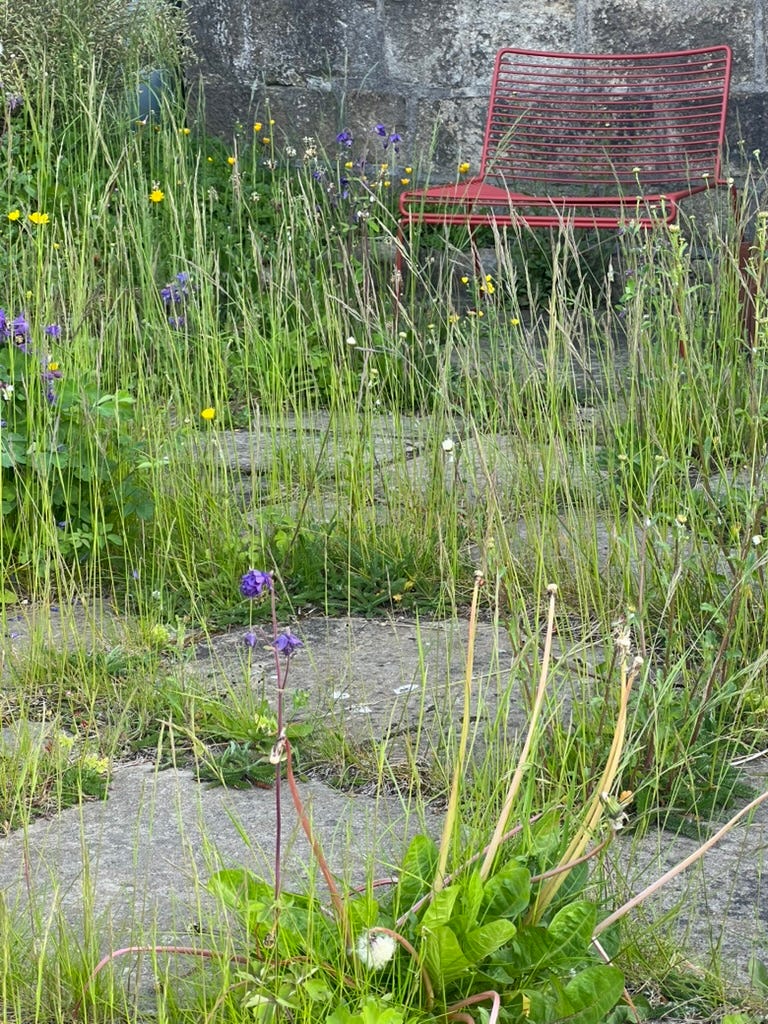
So what is the wild aesthetic? I believe the wild aesthetic is authentic, it embraces plants growing how they want to grow. Perceived imperfection to some is social conditioning against true perfection of nature. Wild design loves nibbled leaves, it loves dead and broken stems, it embraces flopping and the subsequent regrowth, it embraces the unplanned. It embraces life, as much life as we can conjure with plants. And it has enough of an element of humanity to balance nature’s beautiful chaos with space and structure for us to relax and feel comfortable in our nest.
Wild style gardens draw on the plant structure we see in nature, when plants spread in a random way that gives it a loose structure to our mind. Repetition of plants, an anchoring shrub or the edge of a path helps our mind to understand what is a complex scene.
At many times through my design career I’ve felt a societal pressure to give our garden more structure, that perhaps I really should weed out the buttercups. It never happens, I cannot do it, I love the freeness of our plant communities too much. I love waiting to see what will happen. The reason I love it so much is because I haven’t intervened at times when I could have and the garden has a life of its own. Though I do intervene, I don’t want to give the impression I do nothing, I help by pulling out a nettle or bramble that might crowd out five other important smaller plants. I plant wildflowers and cultivars for colour I like and for specific wildlife purposes. Overall though, the garden is leading the way as much if not more than I am.

Keep learning
Upgrade to a paid Wild Way subscription for £26/year

How to study moths in your garden

One of the hopes with my book A Greener Life was to change opinions on unfairly maligned wildlife including moths and hoverfly. These two groups of insect are completely harmless to humans, they don’t sting or bite. In fact, they are very gentle and cute creatures.
What is plant community design and does it work?

Our garden is a loose plant community that changes every year. As the gardener I of course steer it in one direction by adding or dividing plants, but the plants are my gardening partners. Foxgloves, teasel, tufted hair grass, oxeye daisies and many other plants self sow where they want and I often leave them to surprise me. I didn’t plant any of them in the above photo.
I love what you write about, and am really interested in learning more. Is there a course you know of that is sympathetic to the kinds of planting and design you talk about?
Though for me it's a matter of availability (and sometimes laziness), I call my patch wild design! I do pull weeds from some beds, but other than that, they're more than welcome.