

Hopes for our garden in 2026
From wildflowers to edible crops our garden continues to pioneer regenerative gardening ideas for wildlife and us

This week I want to give you a brief run down on the dreams and plans I have for our exposed Yorkshire garden this year. They may not all happen in 2026 but I know a gentle nudge toward them is the first step.
Winter-Spring Seasonal Plant Workshop
29 January 6 - 8pm online zoom session

Join me for the first of our new quarterly online workshops exploring plants of the season. In this first session I'll recap what I'll be sowing and growing in February to set myself up for a good spring. We'll make it interactive with lots of time for you to ask questions. These sessions are included in the paid subscription for just £26/year. (Details sent to paid subscribers nearer the time.)
1) Much more colour
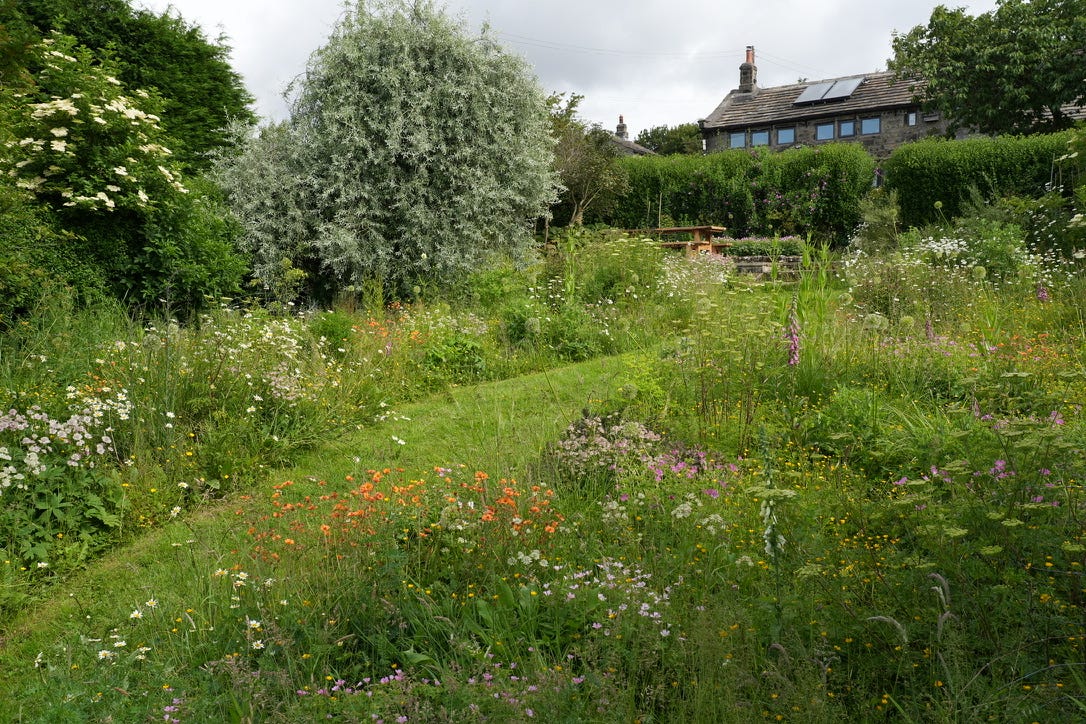
I love how our main garden has come together since 2021 but last year it was lacking colour and therefore lacking excitement and joy, particularly in midsummer when we want it the most. This year I am focussed on propagating colourful flowers to increase the wow factor in midsummer.
This starts with propagating plants we already have that grow well here, such as Bistorta amplexicaulis ‘September Spires’, Linaria purpurea, Althaea cannabina, various asters and many wildflowers I’ve been dotting around.
I’m also adding trusted perennials I know will add colour. Such as Salvia nemorosa ‘Caradonna’ and Salvia microphylla ‘Cerro Potosi’ which I’ve grown for donkeys years. I do grow new plants that are perhaps more interesting, but often common plants are popular for good reason.
With these guaranteed colour flower-houses I’m hoping our garden will be an even brighter place - and even better for pollinators!
2) No gravel, sand or other aggregate
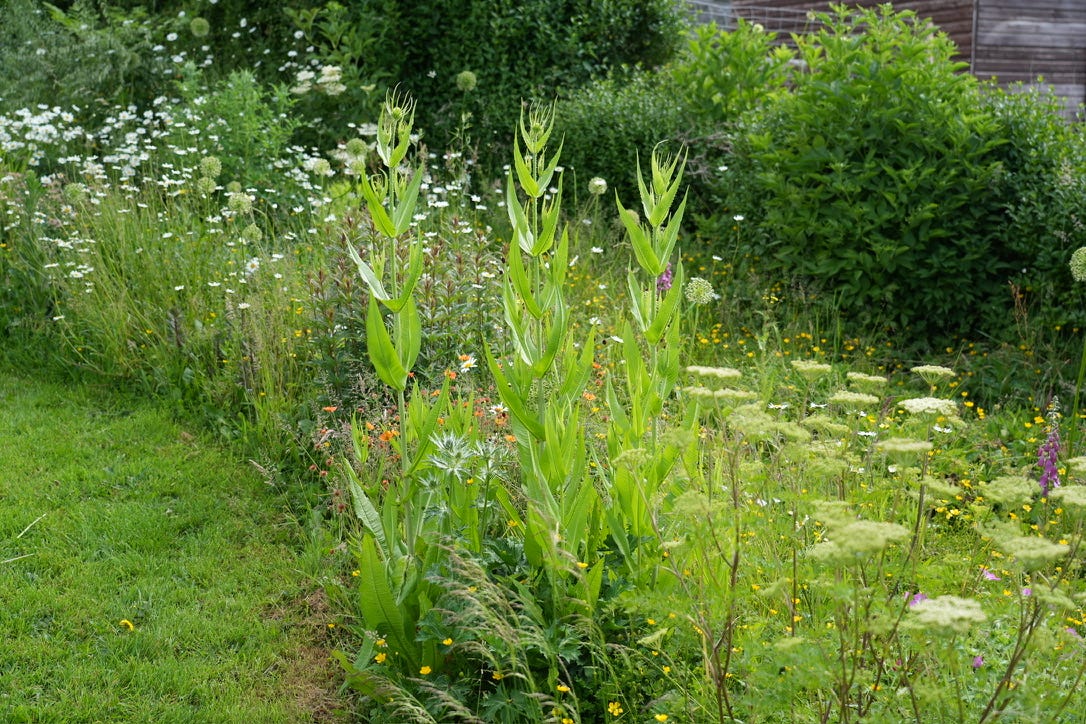
Our main garden uses nothing but the existing undisturbed soil as its substrate, however I do still want low maintenance, climate resilient plants that support loads of wildlife.
In our garden you will find an ongoing experiment and case study of a climate change resilient wildlife garden that doesn’t change its natural soil life and composition. Instead what you will learn from our garden on the Wild Way is how to grow drought resistant and wet tolerant plants in regular soils. I won’t be digging, reshaping or adding gravels or sand.
As a reminder, I have nothing against small gravel or sand gardens as novelties - and especially not as a path or seating material - but I do have a concerns with their use being declared as a solution for climate change and wildlife because I’m not sure this is correct. They aren’t needed, and in fact, they have a harmful impact on both climate and wildlife in their creation as well as long term. They’re also a waste of money for most people who don’t need these materials.
3) Increased focus on wildflowers
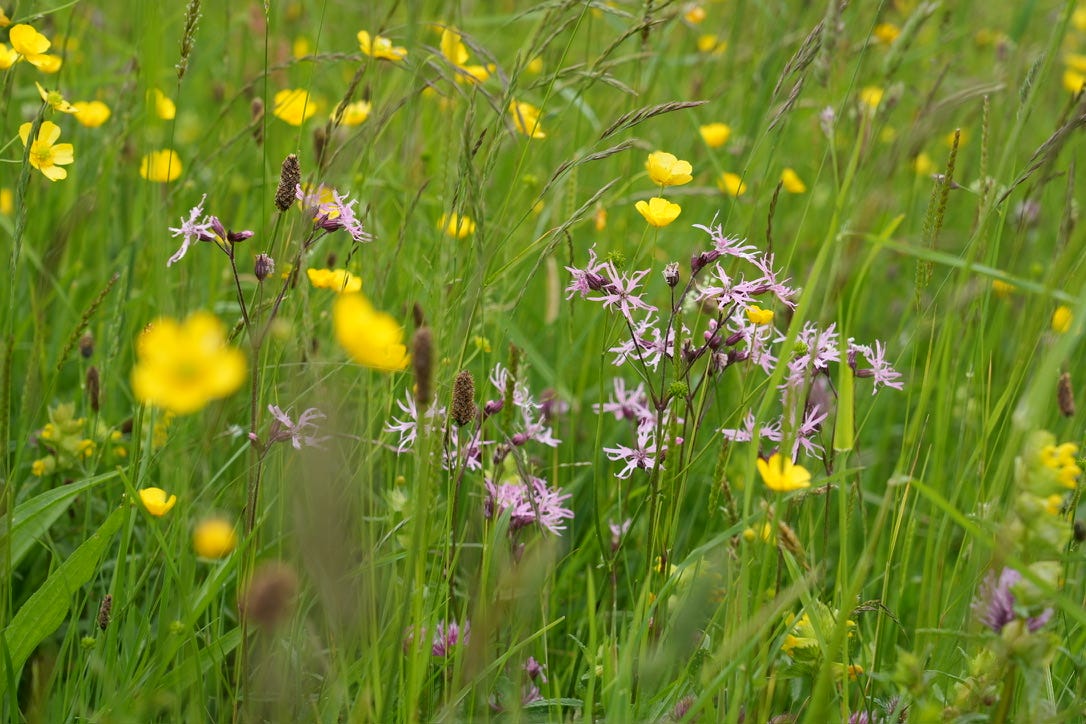
It’s probably hard to imagine me placing even more emphasis on wildflowers, but this year I am intent on giving certain wildflowers a helping hand to establish larger colonies.
This will involve protecting some from rabbits and deer to ensure they flower and set seed. In addition to letting them self sow naturally, I will collect the seeds to propagate some plugs and plant out.
I find in a competitive grassland self-sowing can be very slow with few seedlings germinating or taking. If there are only one or two of a particularly species, there aren’t enough seeds to see fast expansion of numbers. However, as young plants with roots and leaves, once planted out they do grow and compete strongly.
It’s just the initial germination stage when they are most vulnerable to competition. I plan to do this for some wildflowers until there are enough that they’re fending for themselves. See the below article for more advice...

4) Expanding edible plant communities
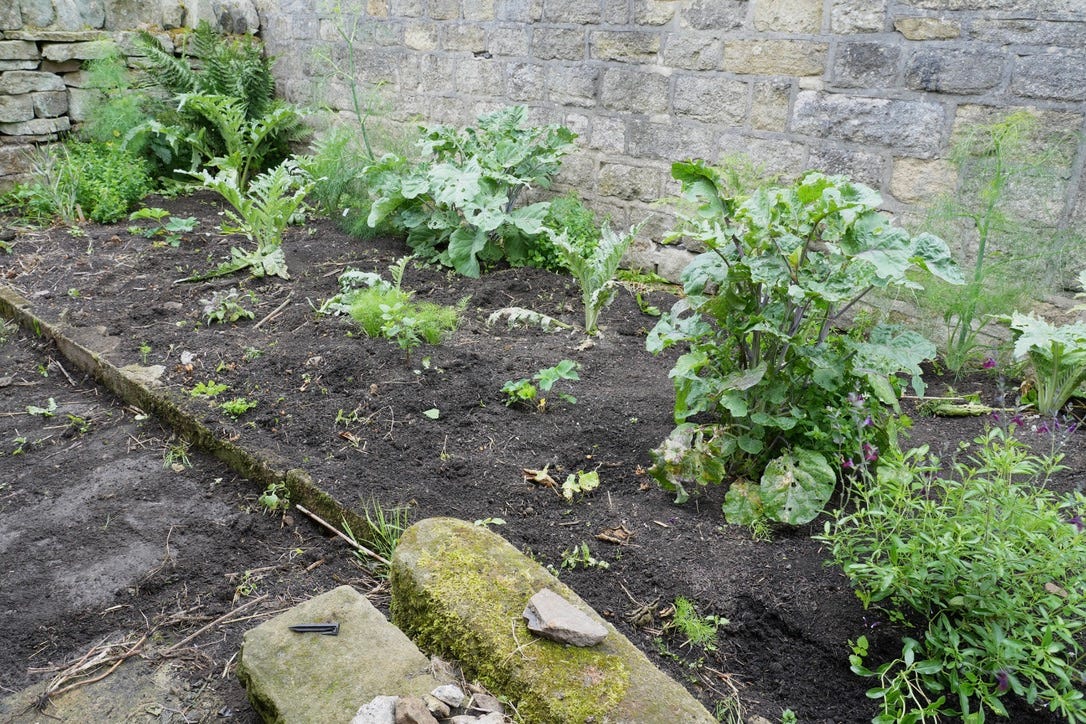
Across our farm we were lucky to inherit a large number of food producing trees and shrubs, many of them grown using forest gardening principles. Some intentionally, some by accident. Over the last five years I’ve observed, tended and eaten from these. Adding to and adjusting some edible planting areas (read my regenerative food growing articles here).
Last year I began introducing new edible plant communities and adding new plants around existing food crops to turn them into full blown edible plant communities. This year the work will continue as I enhance existing areas and expand others.
I like edible plant communities because they come back each year for little to no effort offering us food to eat for free. I’ll share more from these in the coming seasons, in the meantime here’s a brief overview.
5) Breaking boundaries
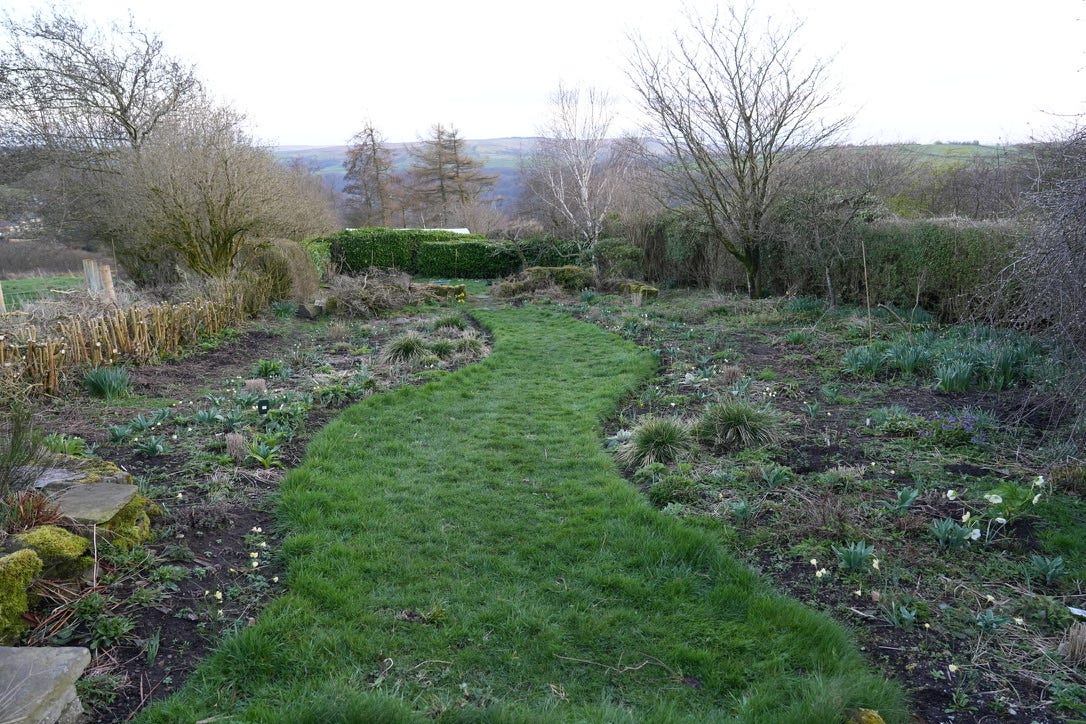
To the left of our garden, facing downhill, is our meadow and while I want to keep these two areas separate, I do want to see the meadow from the garden. I love the meadow more than anything.
Our main garden sits in the top corner of our small farm near the house. It’s about 250 square metres, the size of the average garden in the UK or a full size allotment (if you live in a city with small gardens, like me, you may be gobsmacked that’s the average but it is!)
The garden is rectangular in shape surrounded by hedges that cut it off from the landscape, which doesn’t feel right.
I don’t want to remove much hedge because they provide amazing habitat and food for much wildlife, as well as shelter from wind. However I do want the garden to feel at one with the adjoining meadow and landscape beyond. As such, I’m thinking about removing some privet hedge entirely in places to open small windows to the meadow.
The downside to this is it makes the garden more accessible to roe deer. But as much as I want to limit them eating our plants, I do actually want them in the garden! It’s their home too. I just need to protect any new plants until they establish well enough to put up with the odd nibbles.
In previous years I’ve actually reduced this part of the hedge down in height (shown above) but it still acts as a visual barrier to the landscape. It doesn’t feel right. The vast majority of the hedging, especially the native mixed sides, will stay as they are.
6) Low cost and budget friendly
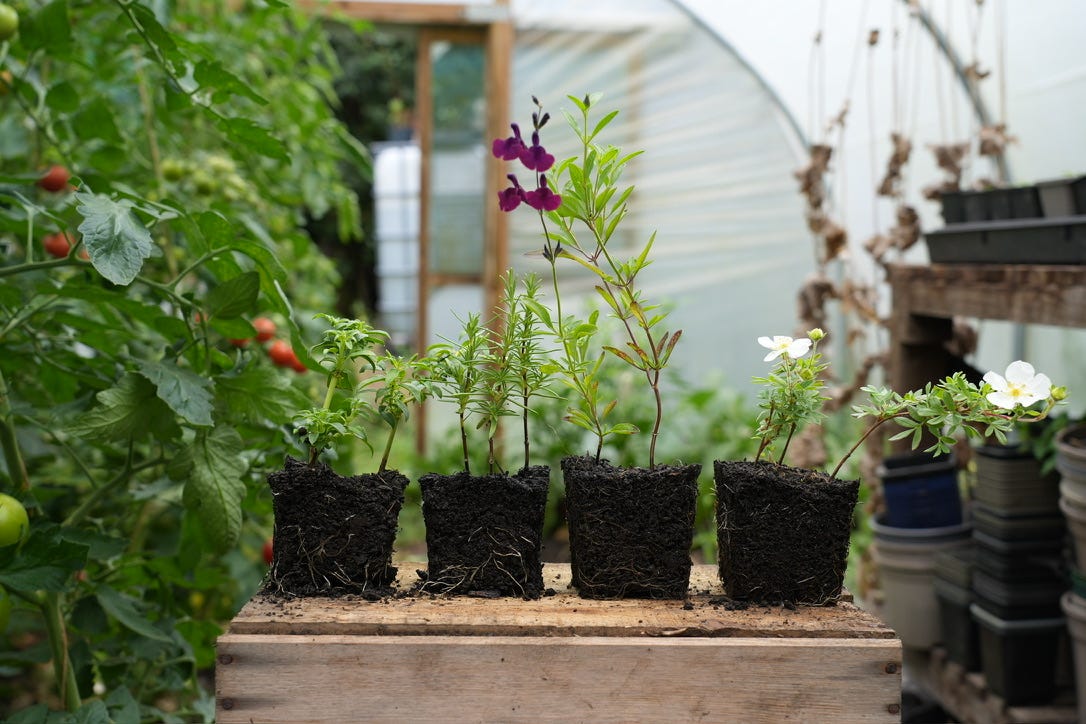
Gardening really doesn’t have to be expensive, in fact it can be free. I remain committed on the Wild Way to focus on low-cost gardening. To do this, we focus on the core gardening skills of sowing, cuttings, dividing and self sowing to let the plants do most of the work for us. It takes a little more time and some patience, but ultimately I believe this is much more fun and great for our wellbeing. Not to mention our wallets!
7) Habitat building and care
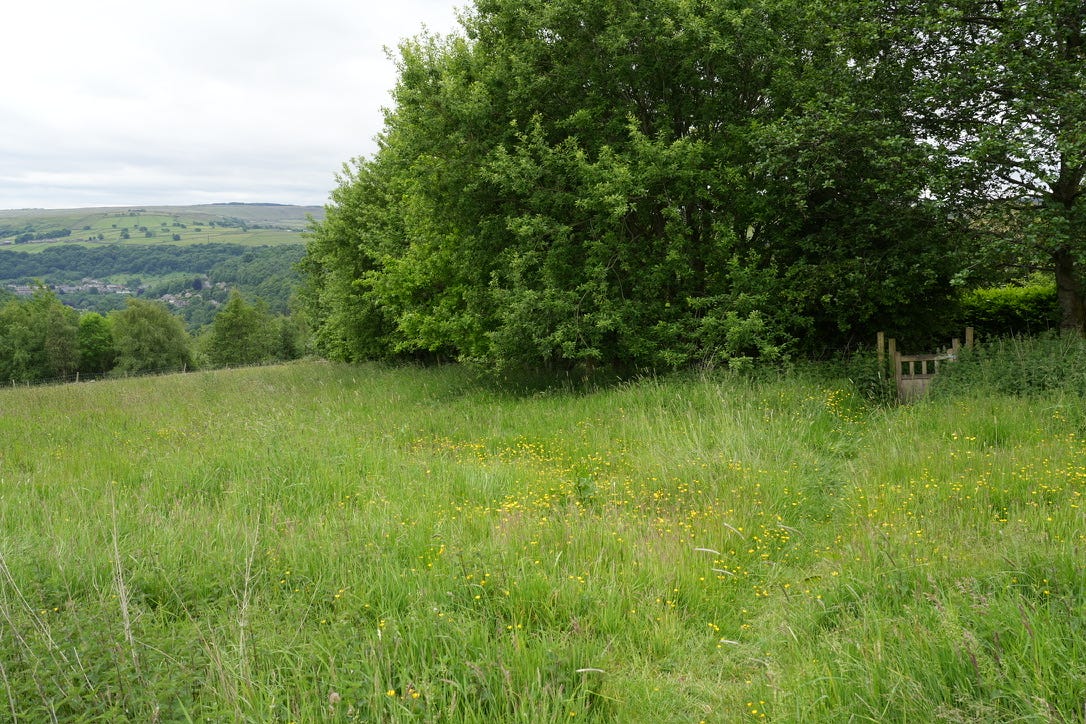
As you’ll have gathered, the main aim of all of this, beyond me having fun gardening, is to provide a healthy and happy home for wildlife. The aim is to increase biodiversity with a focus on different habitats and a lightness of touch from what I do. Increasingly I love the froth and unruliness of nature left to its own devices. By steering some areas we can make them productive for us with food and colour while each step enhances a habitat for the wildlife that also call this home.

p.s. keep an eye out for fuss-free organic and peat-free tomato trials in the January and February issues of Gardeners’ World magazine
p.p.s I’m going to reduce the number of newsletter down a bit this year to lessen the load on your inboxes! I will still write as many articles, but link to some rather than send an email every time. And you can read them anytime on WildWay.info.
One of the best things about gardening - especially the Wild Way style - is that the winter never feels long. On the contrary the first primroses are already coming into flower and I'm already panicking that it's half way through January and I've no plans made for the year ahead ☺️. One thing I intend to try this year is to grow bush tomatoes in the ground amongst the grasses in our front garden, where it gets lots of direct sun in the summer months (but none at all over the winter). Looking forward to the live Zoom also!
Thanks, Jack.An interesting read and I’m excited about the live zoom! The edible plant communities sounds interesting. I’ll have a more in-depth look at that. I have 2 artichokes I bought with me from my last house.They’re in a pot and have never produced a choke. I need to plant them out, but finding the right space in our north facing garden might be tough (it’s not overlooked at all so we do get sun most of the summer, but very little in winter).
Will look forward to continuing to see how your garden shapes up. I think your conditions will be quite similar to ours in the north of Scotland.