

Knautia arvensis | field scabious
Airy late-summer beauty loved by wildlife in meadows and borders
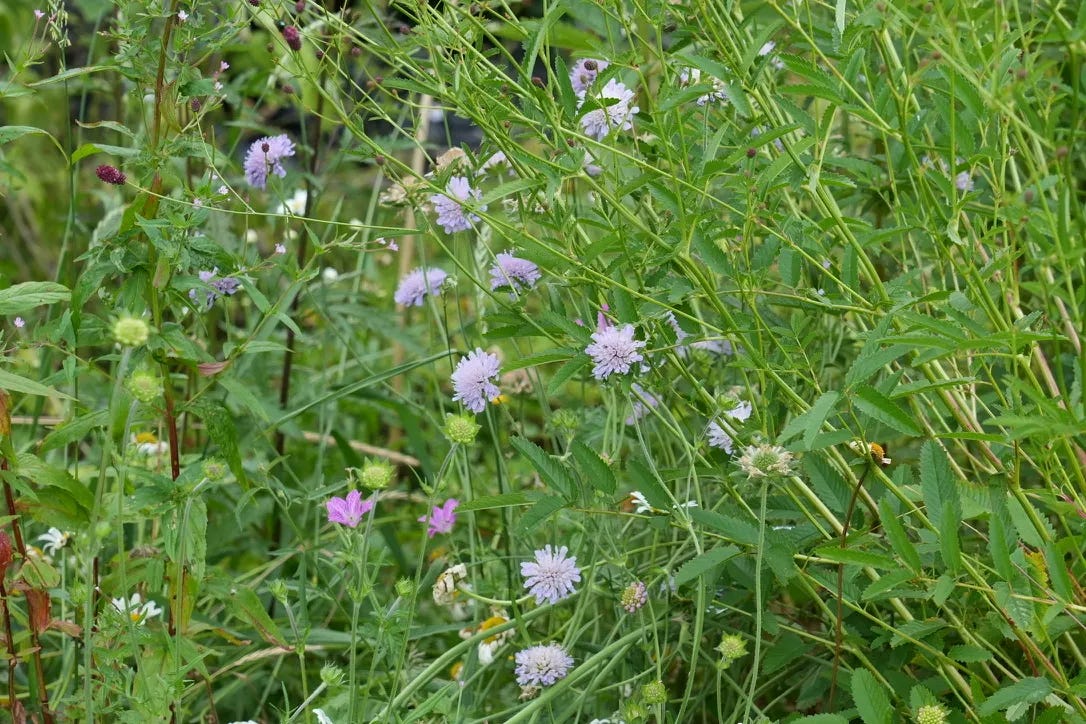
Field scabious is one of my absolute favourite flowers. It’s one of those plants with beautiful soft foliage and dusty pale blue-lilac-pink flowers. Starting as a low tuft of leaves in spring and early-summer before firing up long airy flower stems after midsummer. An invaluable flower for the second half of the season.
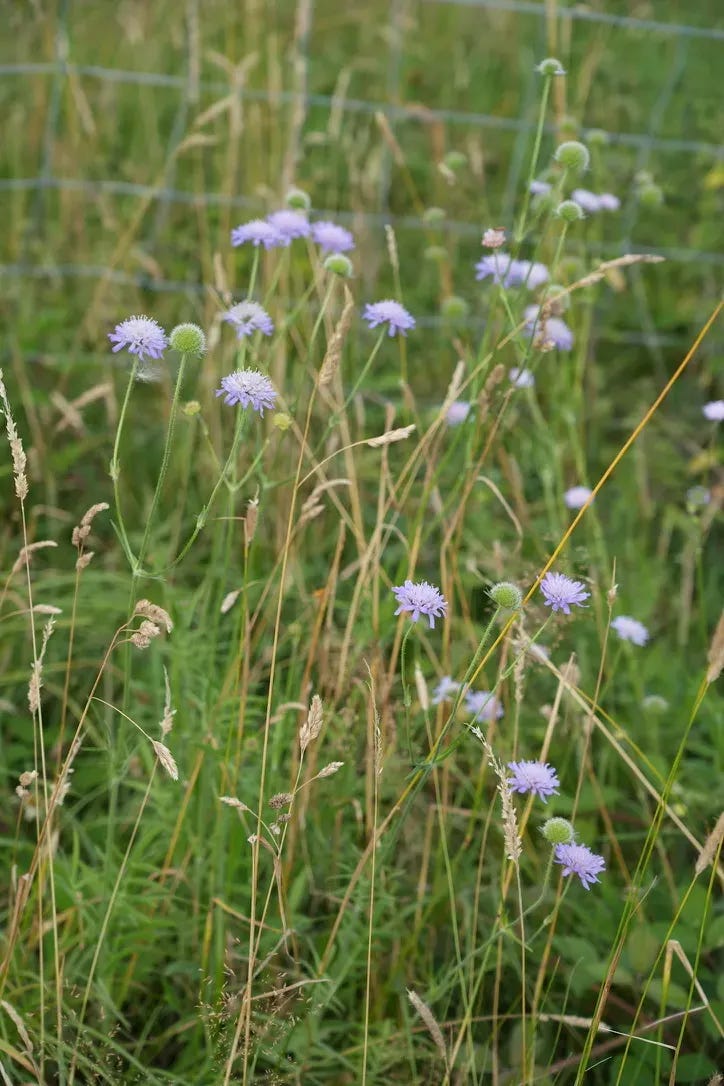
It’s always been a favourite of mine, there by my side on inner city Clapham Common or off adventuring around the UK while researching Wild about Weeds back in the day. I didn’t include it in Wild about Weeds because it was always classified in books as a wildflower and never a weed. It had crossed over to ornamental.
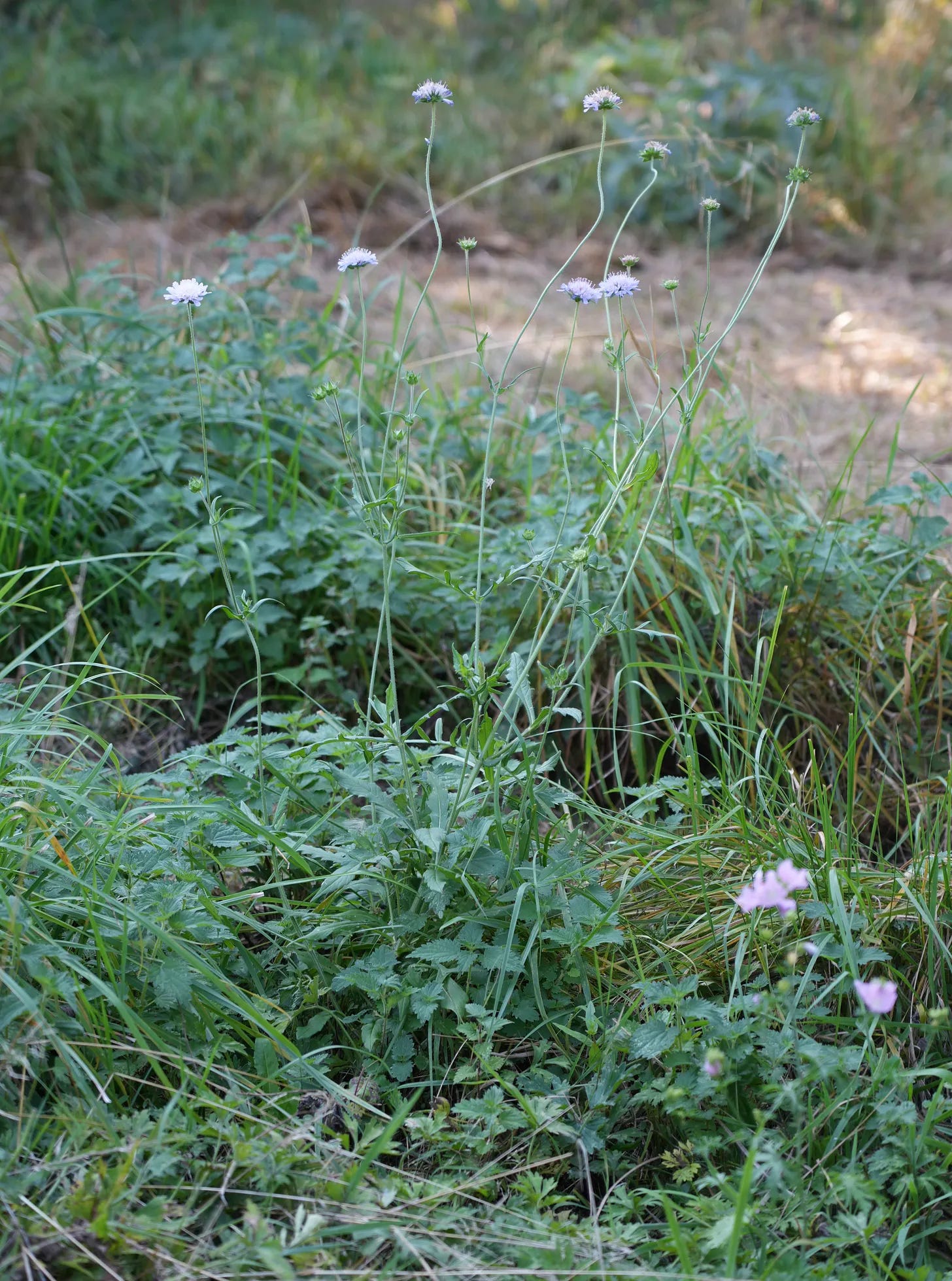
Originating from western Europe all the way across to eastern Russia, Knautia arvensis is a well travelled and adaptable wildflower. Drought tolerant once fully established, though perhaps less so than the truly drought tolerant plants. The clue is in its preferred habitats leaning toward dry but with good organic matter and nutrition. It has deep branching (sympodial) taproots that search for water and anchor it to the ground. While it may dieback in drought, it will recover.
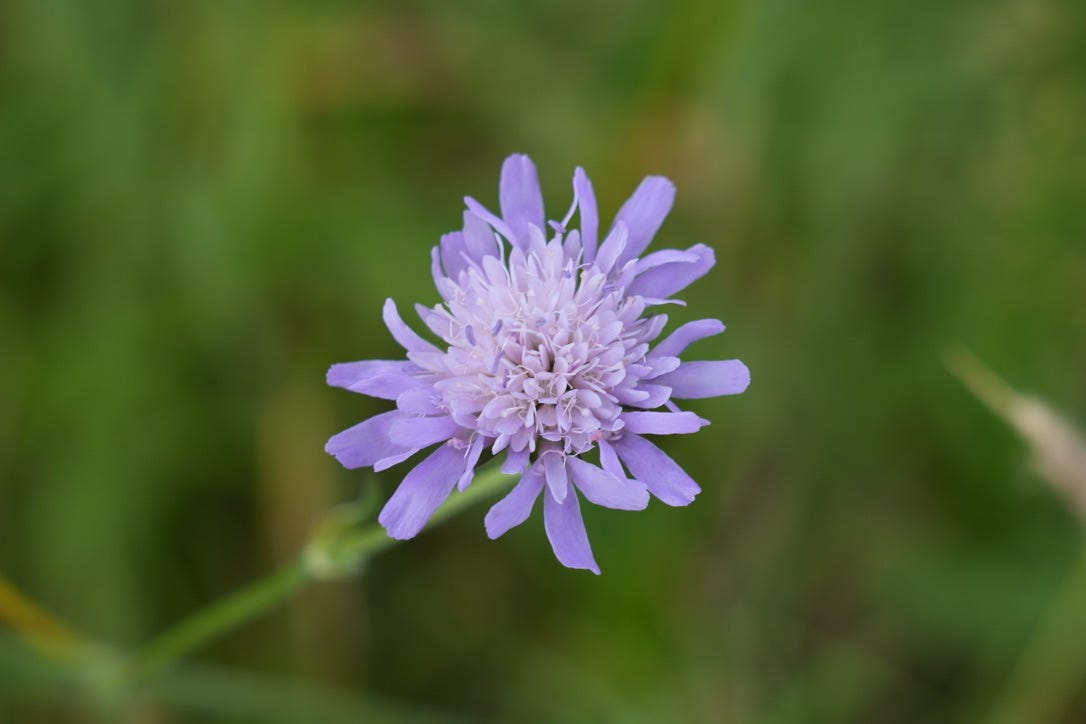
The name of the flower shape is a capitulum, with multiple small flowers held densely in the inflorescence. Marginal florets have enlarged radiating lobes helping to attract insects.
With shades of pale blue, pink and purple, the flowers appear to change colour depending on the light and distance from which you look at them. The outer marginal florets being darker with more pigment, fading to lighter shades in the centre. This ombre gives field scabious an otherworldly quality in my eyes.
Field scabious is declining in natural habitats but increasing in gardens and cultivated meadow restoration.
How to propagate Knautia arvensis?
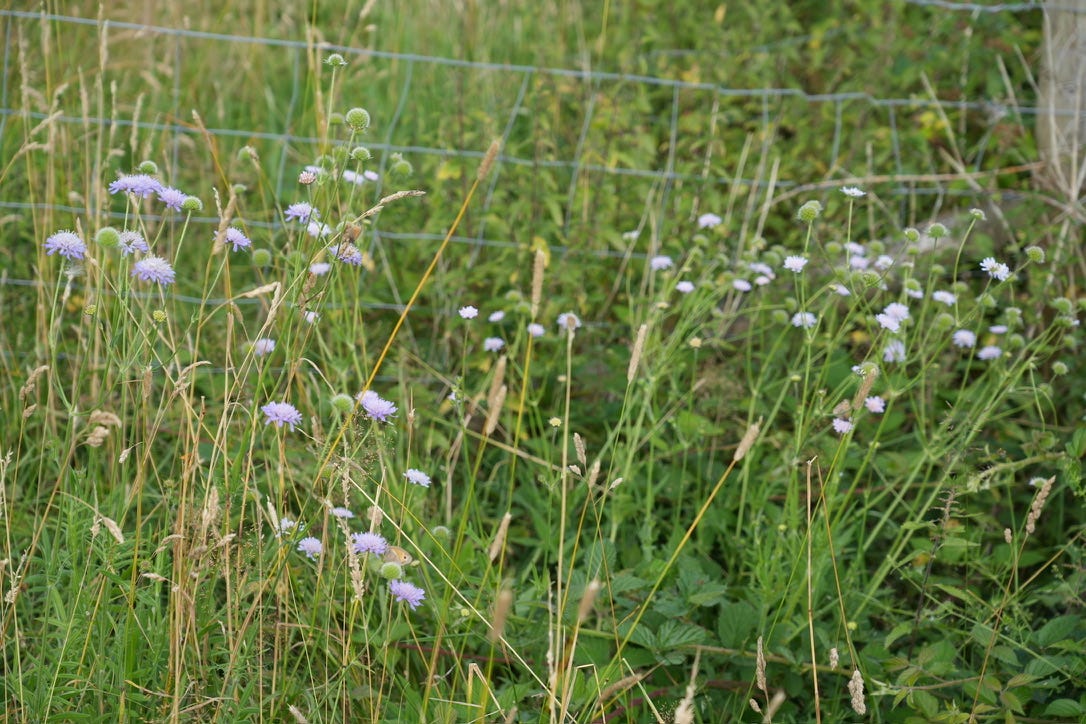
Knautia arvensis is easily grown from seed that sets throughout the season - you can harvest when dry, brown and comes away easily. Sow either immediately or save until spring. It may take a couple of years for the young plants to flower.
Alternatively, I have had near guaranteed success dividing clumps in autumn or spring. Dig up a plant or part of one, and separate the loose tap roots. Replant directly into new areas of ground or pots of compost. They will root and, once established, grow away strongly.
Using field scabious in garden design
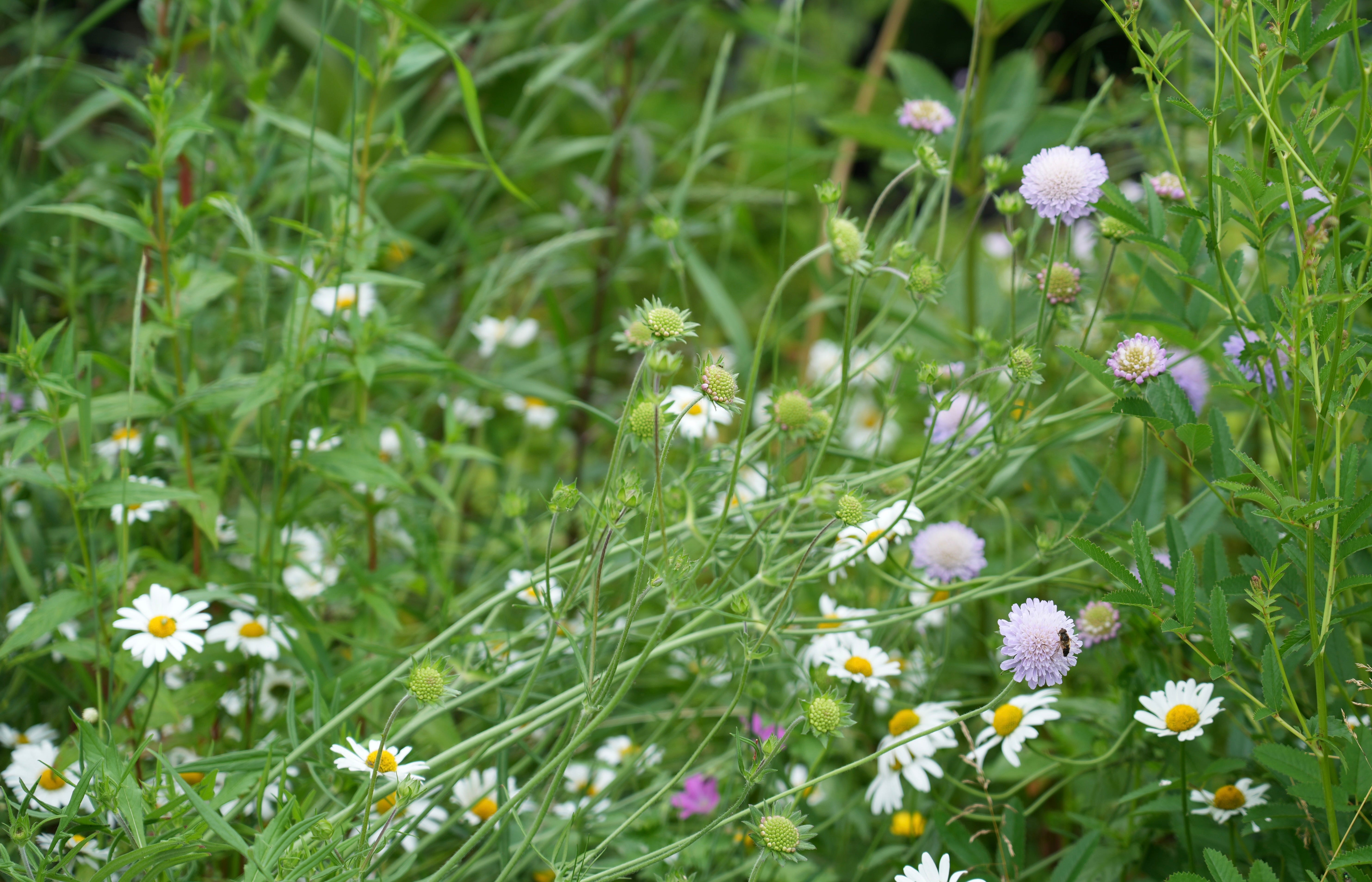
Field scabious is so easy to use in garden design. It seems to combine with anything, especially dark purples and any shade of pink. Also looking good with yellow or white flowers. I dot it through our ornamental border and in various meadow areas and have used it in many garden designs.
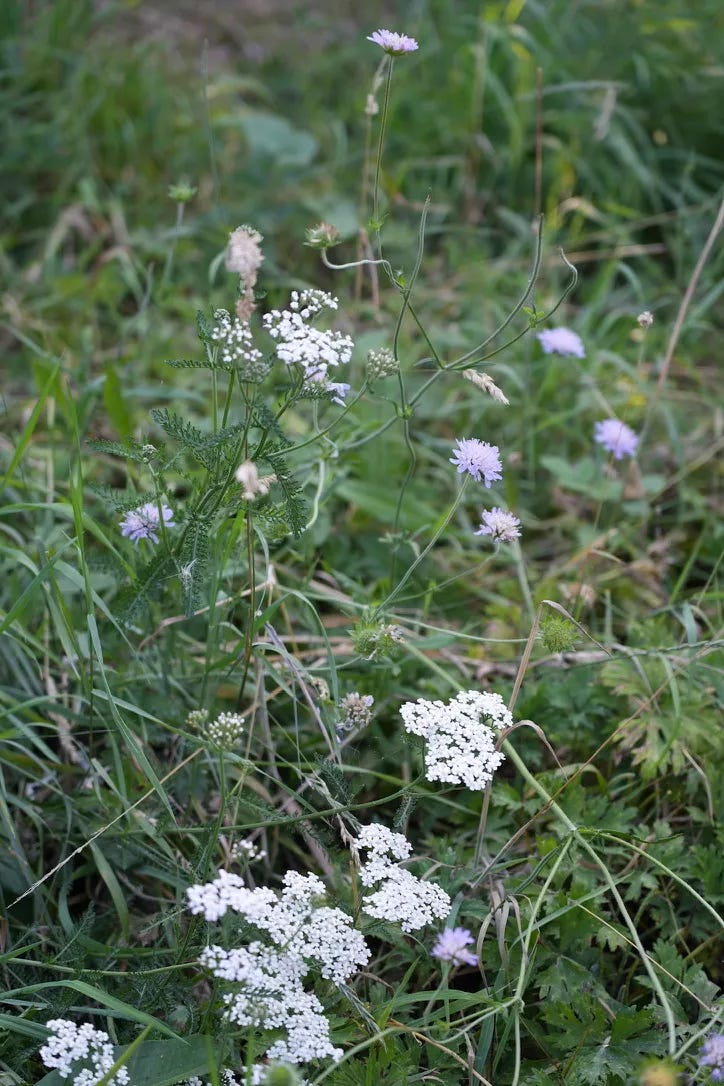
It combines well with Achillea millefolium and is at home in a mini or full meadow grassland in full sun. I’ve had good success planting divisions of these plants into existing high competition grassland and they’ve taken off well.
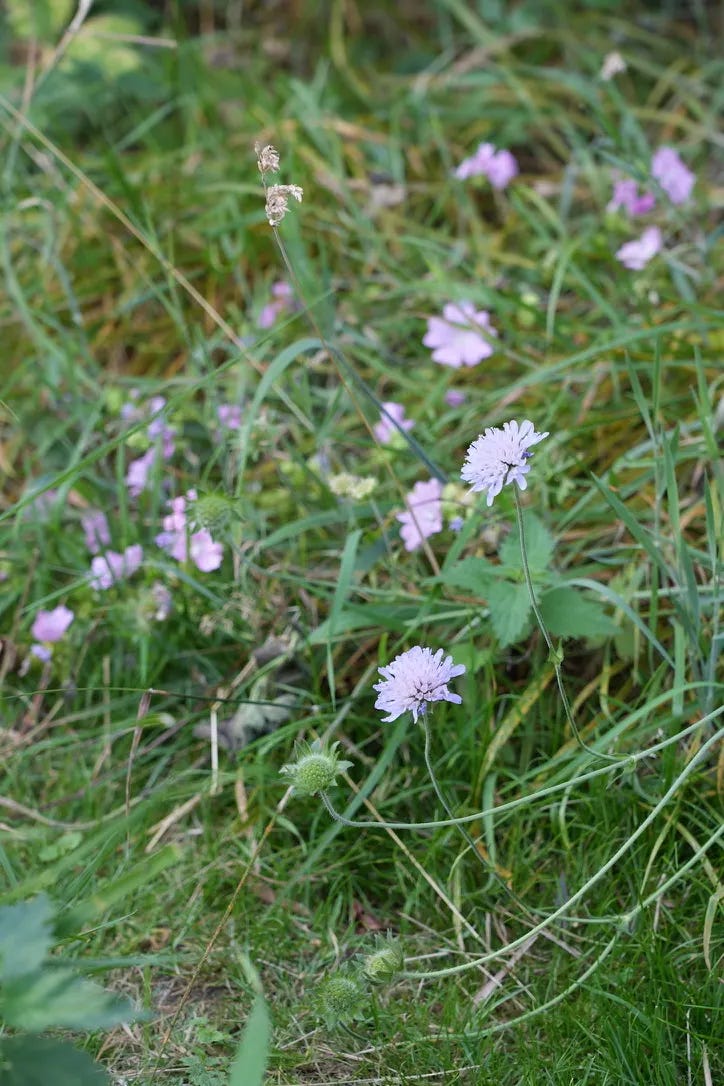
I especially like field scabious with achillea and the pale pink of musk mallow. In the area by our polytunnel I am planning next year to focus on these three plants here to see how it looks. My guess it will look soft and truly magical.
Is field scabious good for wildlife?
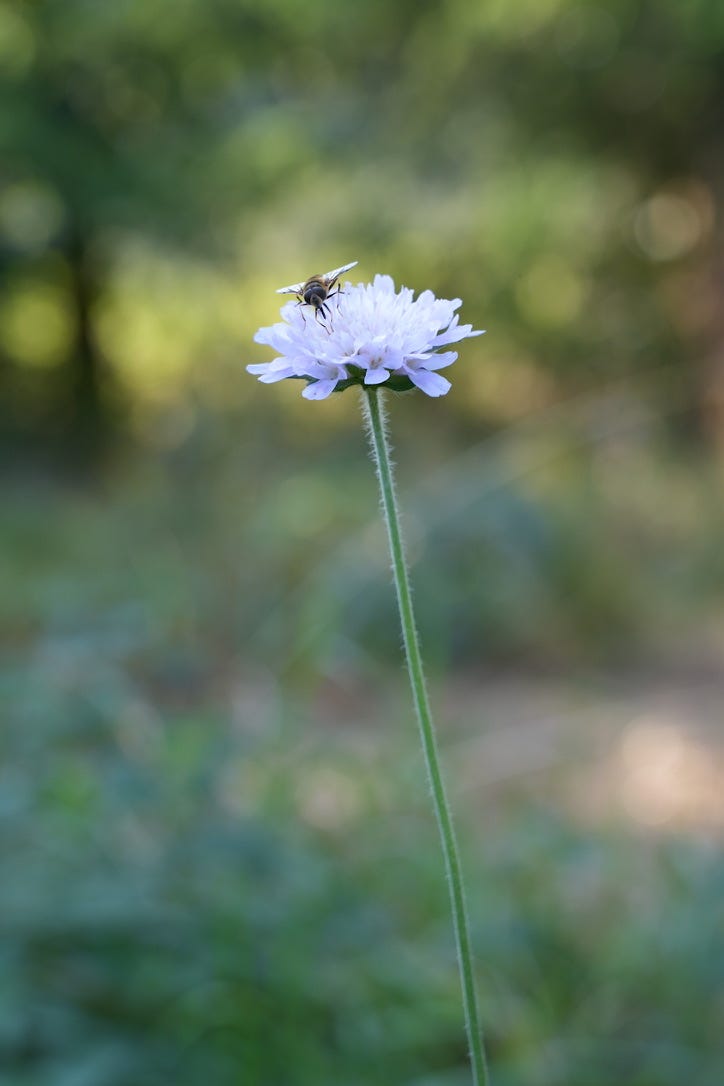
Knautia arvensis is an excellent wildlife plant. Used by generalists in the families of hoverflies, flies, beetles, bees and wasps. I’ve also watched the flowers visited by various day and night flying moths. It’s a key generalist wildlife supporting wildflower.
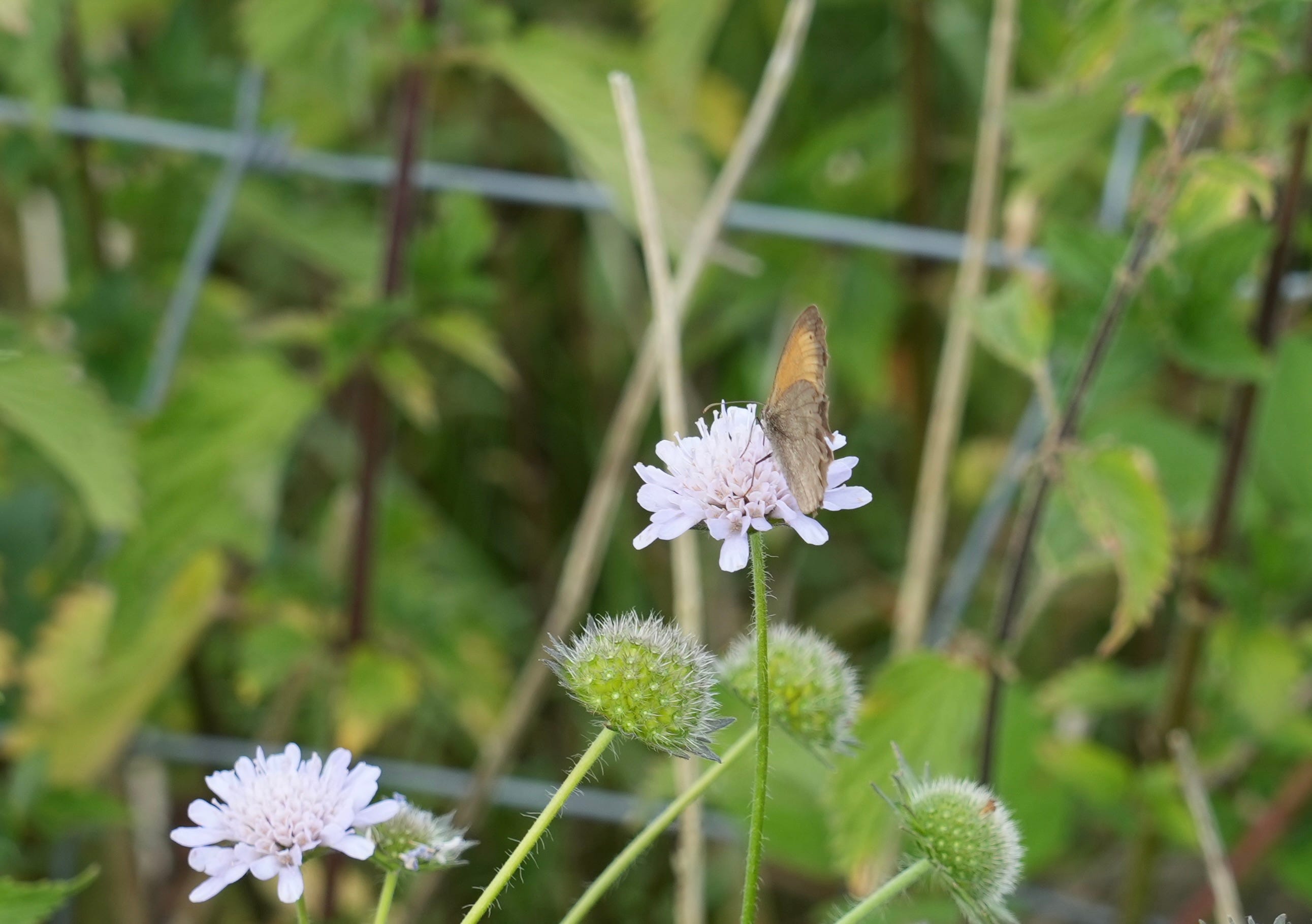
Those tall capitulum flowerheads are landing pads for most butterflies; I’ve seen skippers, peacocks, large whites, admiral, meadow brown and pretty much all other butterflies. Alongside daytime flying burnet moths, and many others.
According to BES Journals, the red list endangered bee Andrena hattorfiana feeds exclusively on the pollen of field scabious and only a few other species of plant, adding to its importance.
According to Butterfly Conservation, Marsh fritillary butterfly (Euphydryas aurinia) and the twin-spot plume moth (Stenoptilia bipunctidactyla) use its leaves as a caterpillar food plant.
Is Knautia arvensis edible?
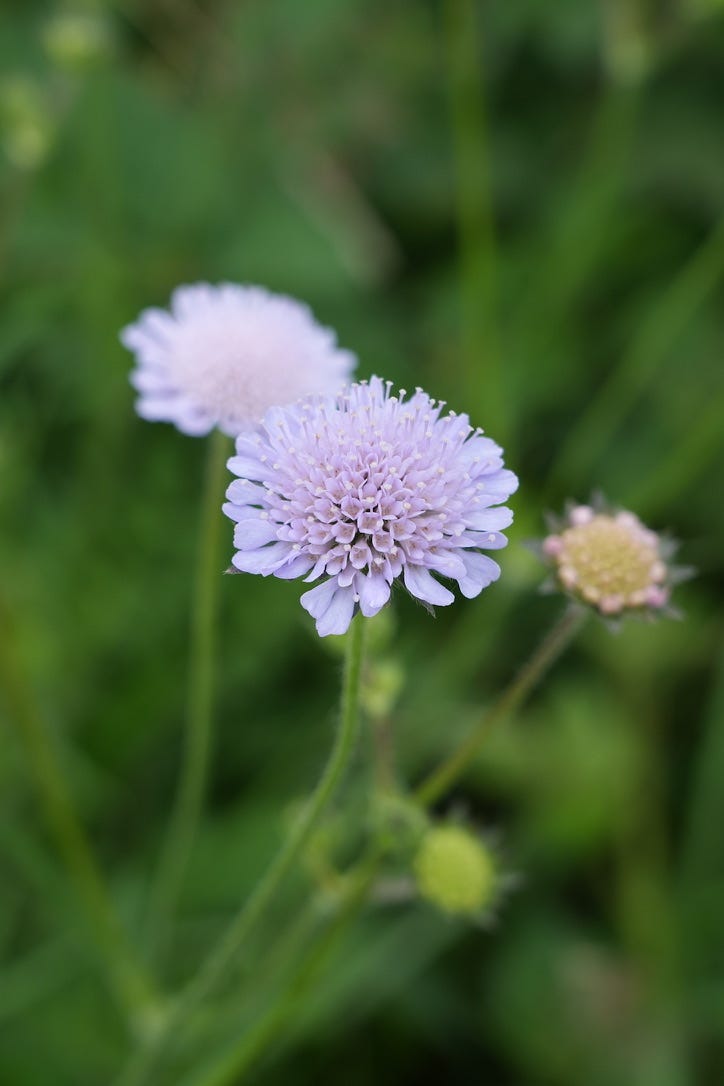
No, Knautia arvensis is not considered edible to humans.
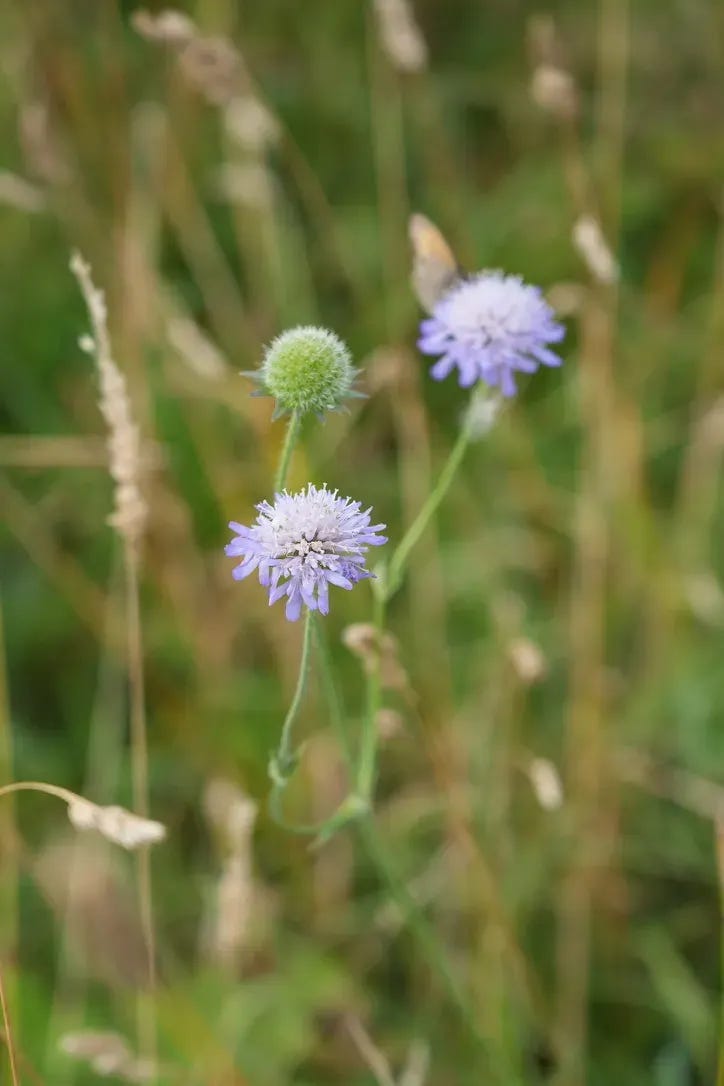
If you were to categorise wildflowers into truly garden worthy plants - the ones everyone should consider as definite garden border contenders - field scabious is up there. It grows well among our ornamental plants, mingling with other tall stems or rising above shorter plants. And of course, you can grow it for free from seed!
While it doesn’t have the strongest drought resilience - it can’t cope with no water at all for months on end - it is able to survive drought. A 4/5 on the drought scale you could say. Fine in most years but may go dormant during the worst heatwaves.

Field scabious is very happy in my garden, seeds itself around the beds and cracks in the paths. Been flowering away for weeks, months? and yes, slowed down a bit in the heat/drought (I'm on the South coast on chalk) but still plenty of flowers and utilised by many insects.
Struggling, here in s.e London. I do love it, but my absolute favourite is Devils Bit!
Another lovely article, thank you.