

Enjoy a taste of false spring
Sometimes we have a few days of mild weather in late-winter
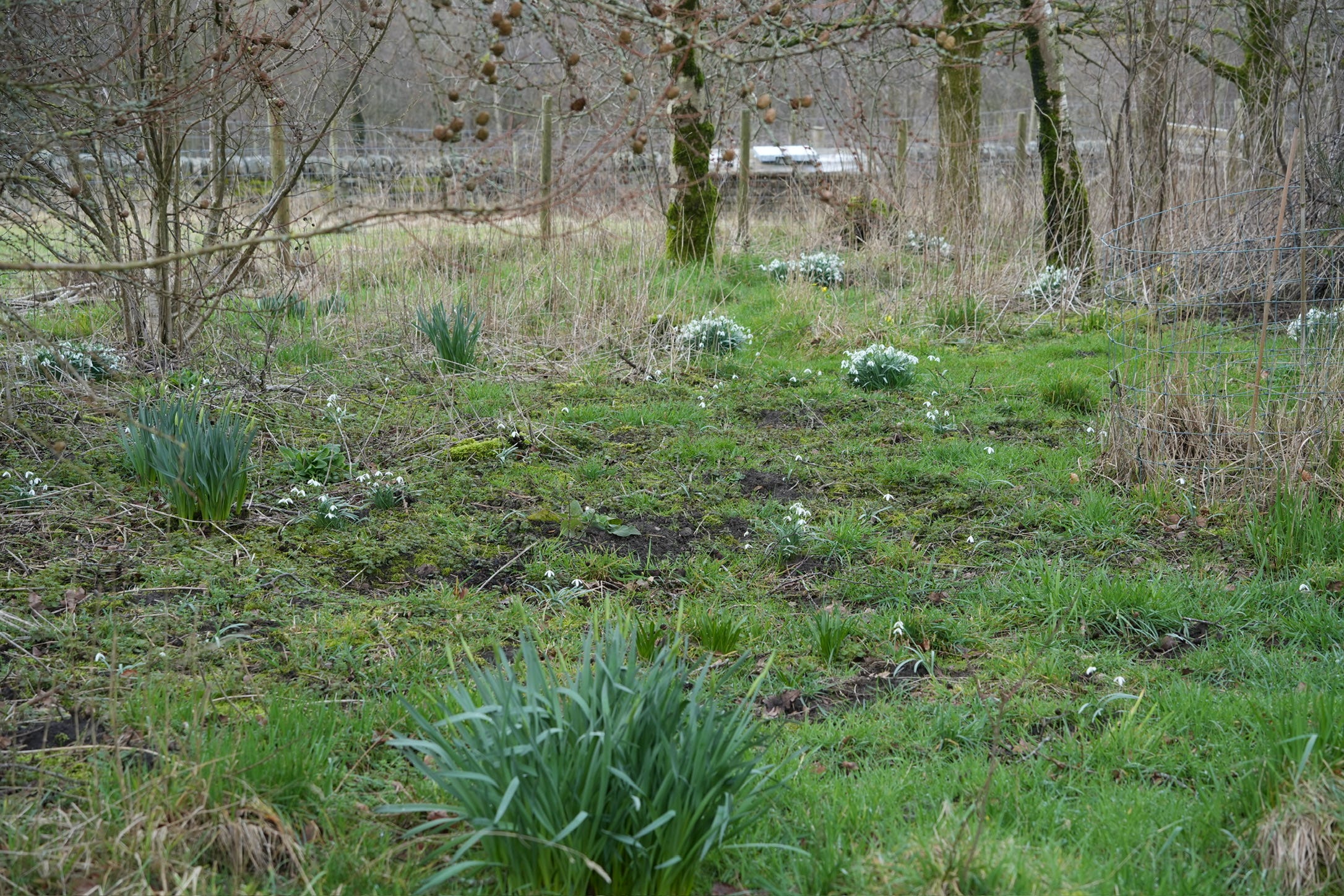
This week we’ve had a few glorious days that have felt like spring. At times the sun has come out and I’ve been warm enough to cast aside my jacket in a spring delirium.
I’m not the only one, the dawn chorus has begun for us giving me a euphoric feeling. Especially as I walk around and see all of the plants racing to grow leaves and buds.
In our wilder area at the bottom of our garden below our polytunnel the primroses and daffodils are about to pop - going from zero to flower-hero within days.
I’ve taken the moment to spread clumps of snowdrops around in flower, which you can see in the above photo (the single ones). This is much easier because I can see what I’m doing as I arrange them. From just two small patches of snowdrops I have now begun to smother our entire garden!
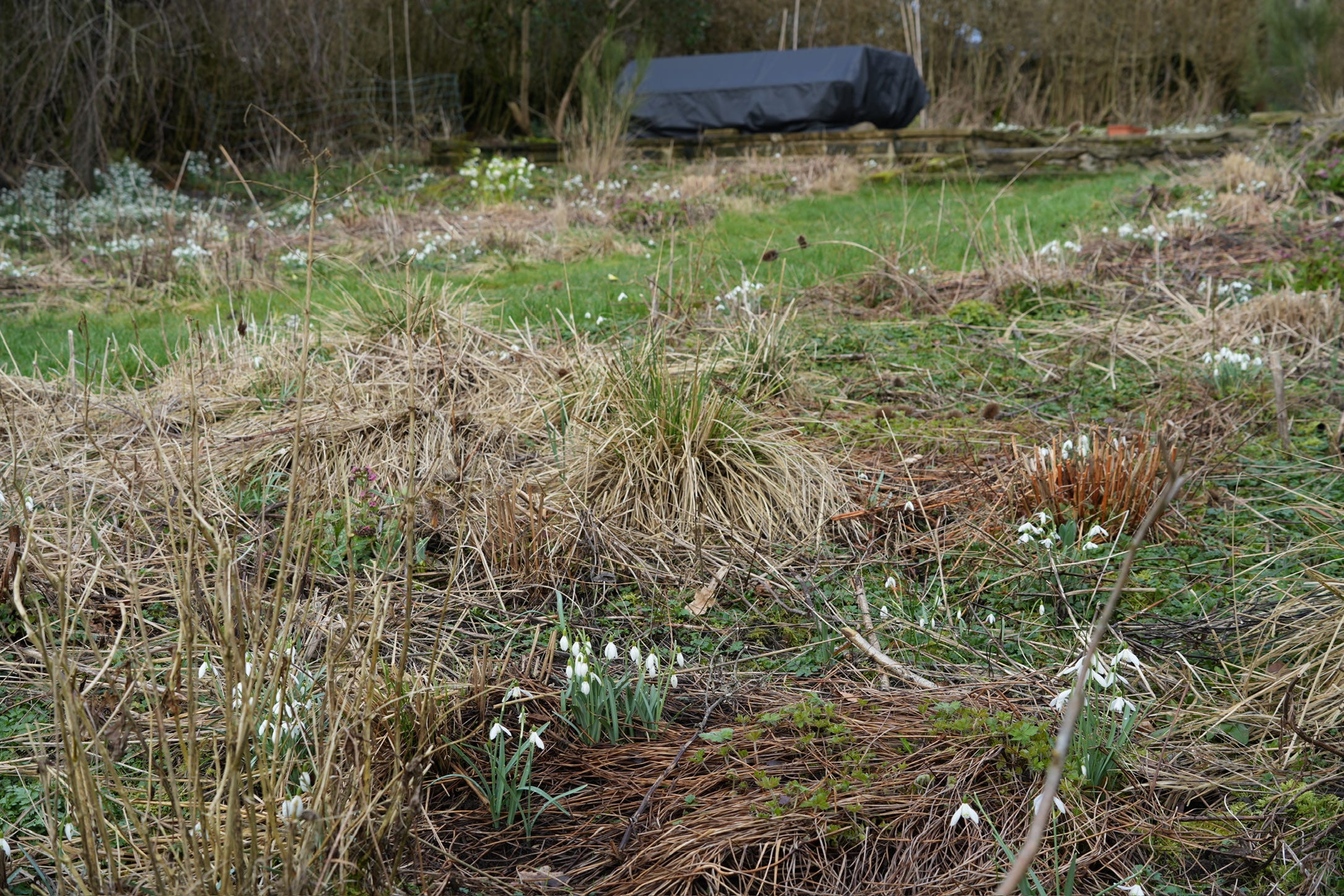
In the main garden the same is happening but the clumps I’ve been dividing over the last five years have really taken hold. The impact in person is a garden filling with snowdrops. I’ve been dividing and planting them in the visible gaps ready for next year.
Here the pink pulmonaria I’ve divided from a single plant is beginning to flower across the entire garden - we must have at least 15 established clumps now. All of this for free!
I took the opportunity to chop and drop the spent perennial stems from last year, leaving them on the ground. If you look at the above photo closely you’ll see shoots of geranium and other plants already growing through and covering last year’s stems.
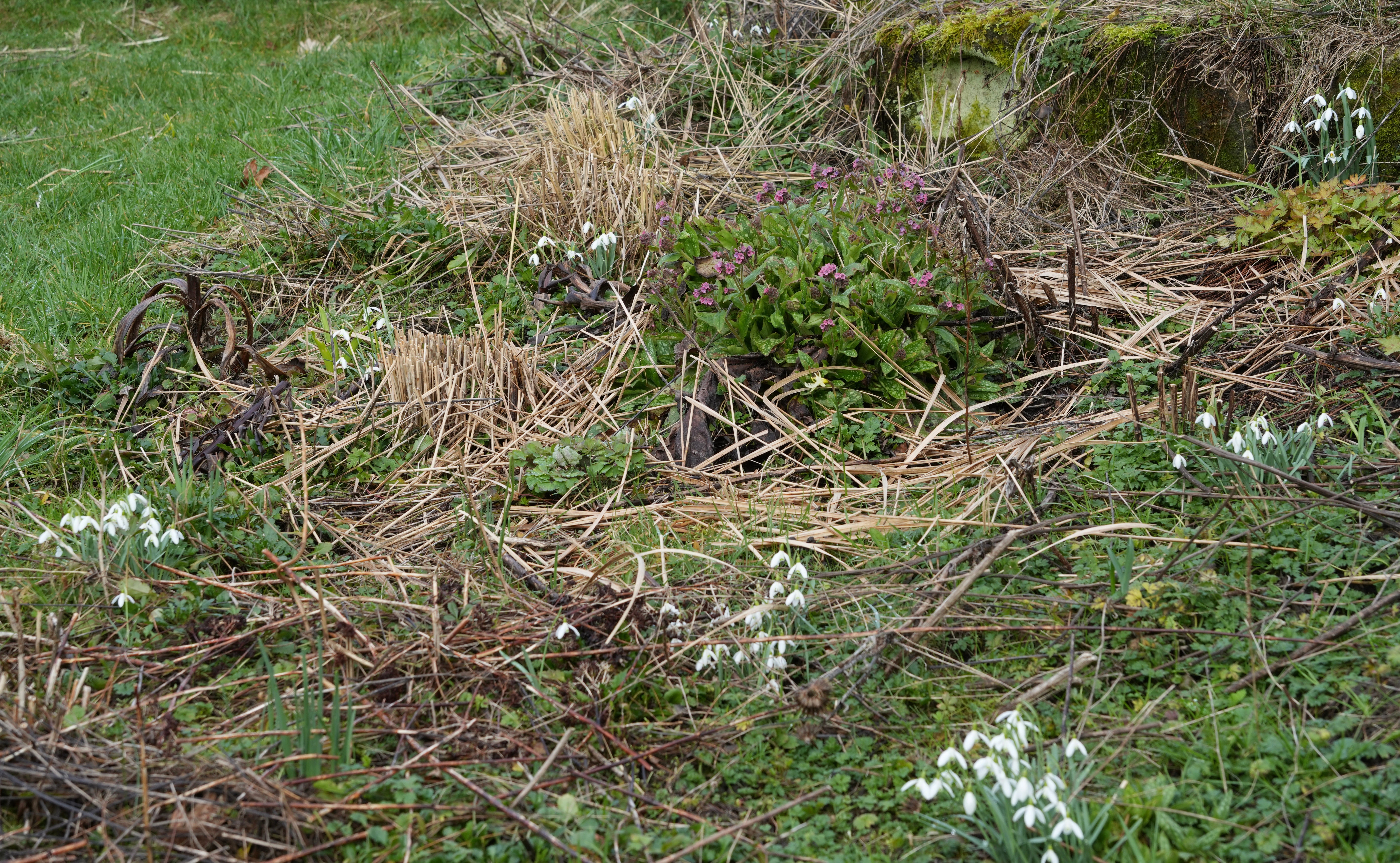
Personally I am feeling the spring excitement more than ever - perhaps I always feel like this and forget? I mentioned euphoria and that’s what it is. My mood is feeling the lift from all of the thousands of plants and animals.
And it’s partly to do with the joy of creativity too, the fact I have had a hand in choosing the colours and feel of the garden habitat. The pink of the pulmonaria is my favourite right now. It’s so warm and, I guess, exotic feeling against the chill of winter.
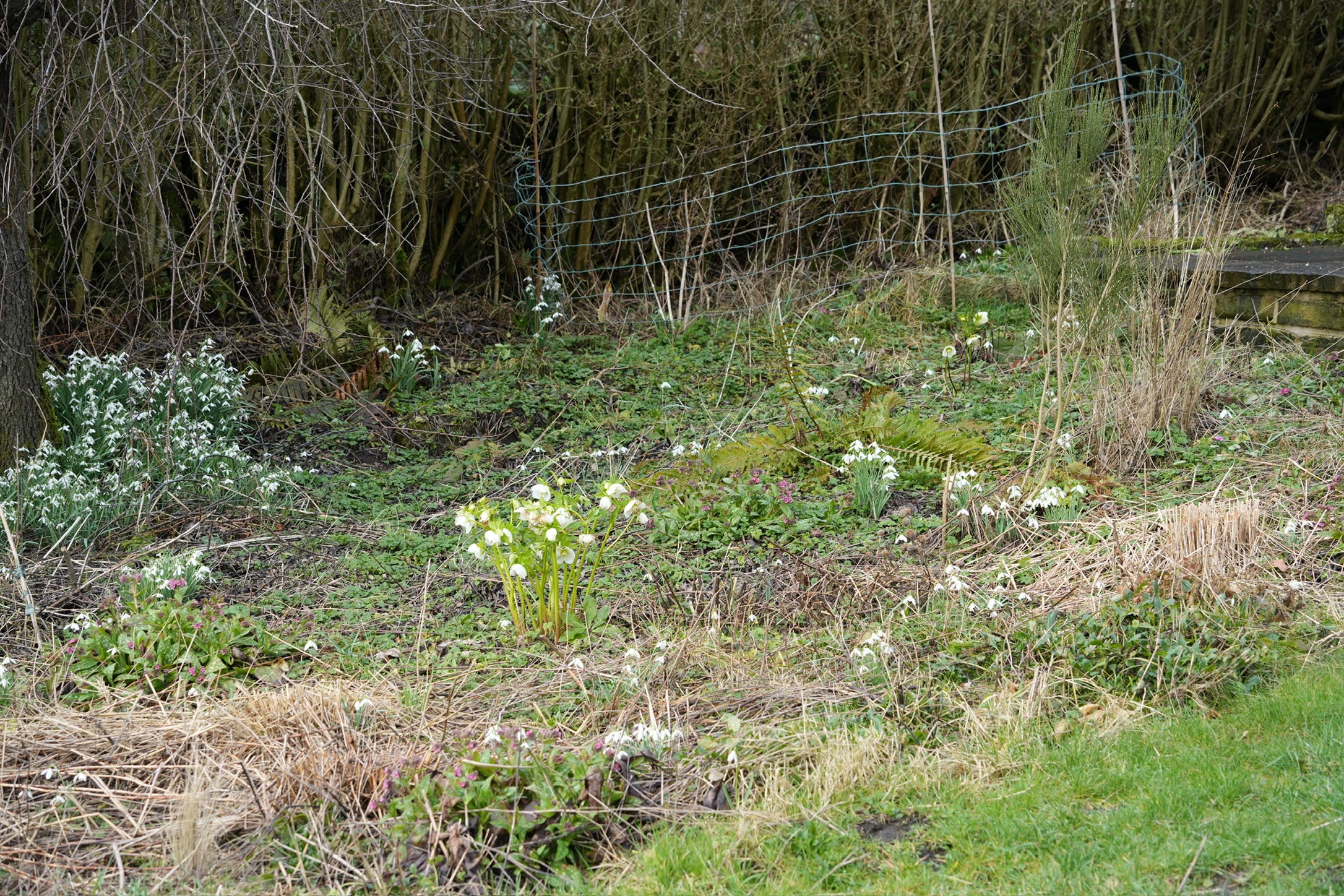
All of the above is a new planting area except for the dense patch of snowdrops on the top left. The rest used to be lawn. Aside from an initial cardboard and compost layer to kill the grass, I haven’t weeded this. Instead I have planted into it using the concept of plant vigour (discussed in this paid lesson). I have pulled out the odd plant or torn some leaves to let light in, but hardly at all, and not enough to call it ‘weeding’. It’s working very nicely.
While this spring weather undoubtedly signals the turn of the season - the plants and animals feel it too - we are still likely to see temperatures plunge again. So hold off on sowing most seeds just yet, wait until mid-March for a little more warmth and a little more light.
Instead, when the sun shines this week, head outside and enjoy it. Lift your face to warm in the sun and soak in the sound of the birds.
Some timely guides for spring inspiration…
How to establish permanent wildflower plantings

You don’t need a meadow to grow wildflowers, I dot them in our garden borders among cultivated plants. By their nature, most wildflowers are easy plants - they grow where they grow because they like and evolved in exactly those conditions. Once established, they tend to look after themselves but establishing wildflowers in the first place isn’t always straightforward. Here I’ll share some tips and tricks I’ve learnt over the years for starting wildflowers in your garden.
How big should a patio be?

Are you thinking of making a new patio in your garden? Perhaps you have a patio and are thinking of updating it. Or you may have an existing patio and are thinking of reducing it for more plants. Whichever angle you come from, the big question is what exactly is the best size of patio? How do you work it out? And can patios coexist with a wildlife supporting garden?
Ponds in garden ecosystems

Over 50% of ponds in the UK have vanished in the last fifty years according to the Wildfowl and Wetlands Trust. Making it extremely worthwhile and joyful to add one in your garden.
10 essential tips for choosing plants for your garden

If you're thinking about new plants for your garden, as I am, my best advice to everyone is to follow the below steps to selecting plants as the professionals do.
Primula vulgaris | primrose

Primroses are known by the botanical name Primula vulgaris, vulgaris meaning ‘commonly seen growing all over the place’. They are indigenous to Europe, north Africa and the caucasus.
Taraxacum officinale | dandelion

When the first wave of dandelion flowers hits in spring, they are the most wondrous blaze of gold. Looking at our garden, with all of the emerging perennials and allium shoots, it is the humble dandelion that is suddenly doing the heavy lifting. Weaving around all of the other plants in a beautiful forking river of warm yellow. If I’d have weeded, I would have been denied this natural superbloom.
February gardening: end of winter

February is one of the bleakest winter months but it is also fresh with signs of early growth. Trees and meadows are at their most bare and flat, dead stems of dormant garden perennials collapsed or ready to be clipped. Days are lengthening rapidly and we barely notice sunrise is shifting to before we wake.
Chop and drop plants to feed your garden

Up until I started posting about my practice of chopping all of the garden at the end of winter and leaving the clippings for everything to grow through, I’d never seen anyone else do it. I’d only ever read or seen the traditional practice of clearing the clippings away to compost heaps to keep gardens ‘tidy’ - in fact, most people scoffed at my daffodils growing through untidy stems and weeds! Lots of people still do.
Crataegus monogyna | hawthorn

Wind twisted, gnarling and angular. Weather cragged bark, vicious thorns of dagger. Frozen in motion. Overlooked contemporary tree of our time. Loved by moths and butterflies, birds and mammals. Hawthorn captures the wild way like no other plant.

p.s. I should have an article on easy edibles to grow in The Guardian gardening section on Saturday and online
p.p.s I have two big announcements to share this year and the first is coming next week!
I get caught by false spring every year, I also sow my seeds too early. I think I'm just too impatient!
I used this suspiciously sunny opportunity to put some underground drainage in to try and help our extremely clay heavy soil that I’ve been gradually trying to make less boggy. Hopefully it helps with the puddles at least…